




The type of box you choose decides how well a product survives the trip and how it looks on a shelf. It also sets how much you pay for every unit. A heavy glass jar in a thin carton breaks while a light lipstick in a rigid box costs three times what it needs to.
This guide sorts the main types of boxes by material and by structure so you can see how each one is built. It covers ten box styles with the board they use and the products that suit them. Each style links to a page where you can order it.
Every figure here comes from the way we build boxes in our own plant. That includes board thickness and the size rule we cut every box to. The last sections show how to choose between the styles and which packaging trends are worth your money.
Key takeaways
- Most boxes fall into three material groups: paperboard for retail cartons and corrugated for shipping and rigid board for premium gifts.
- Folding cartons use paperboard of about 0.4 to 0.6 mm, mailers use corrugated of 1.6 to 3 mm and rigid boxes use grayboard of 1.5 to 2.5 mm.
- Tuck end boxes suit light retail products while auto lock and snap lock bottoms carry heavier jars and bottles.
- Mailer boxes ship on their own and replace a carton and a gift box with one printed box.
- Size any box to the product plus 6 mm in length and width so it fits snug without rubbing.
What Are the Main Types of Boxes?
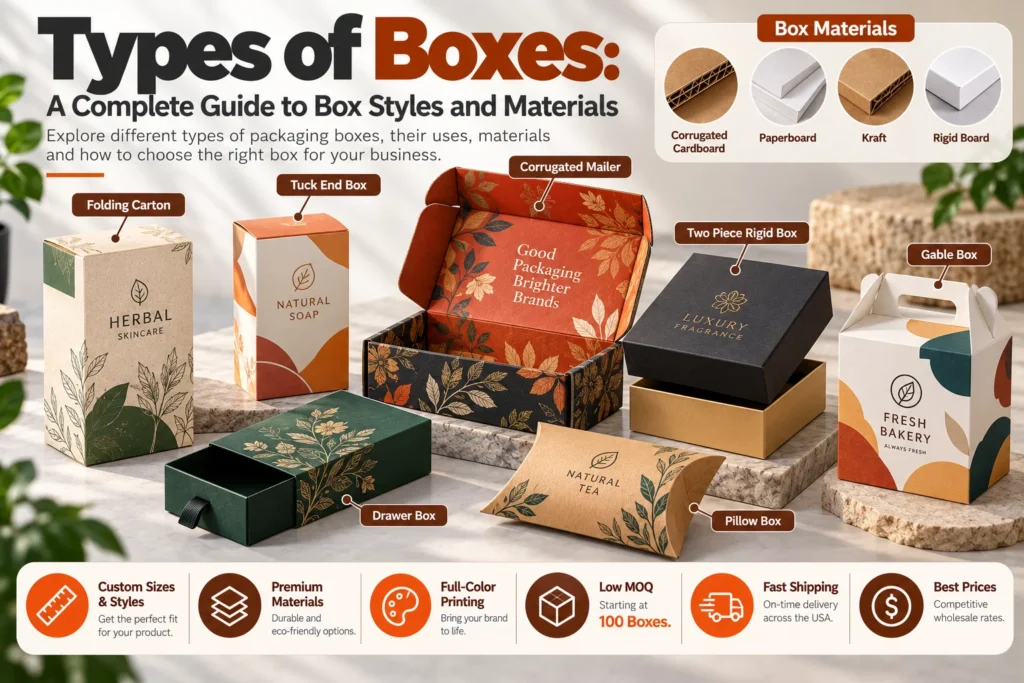
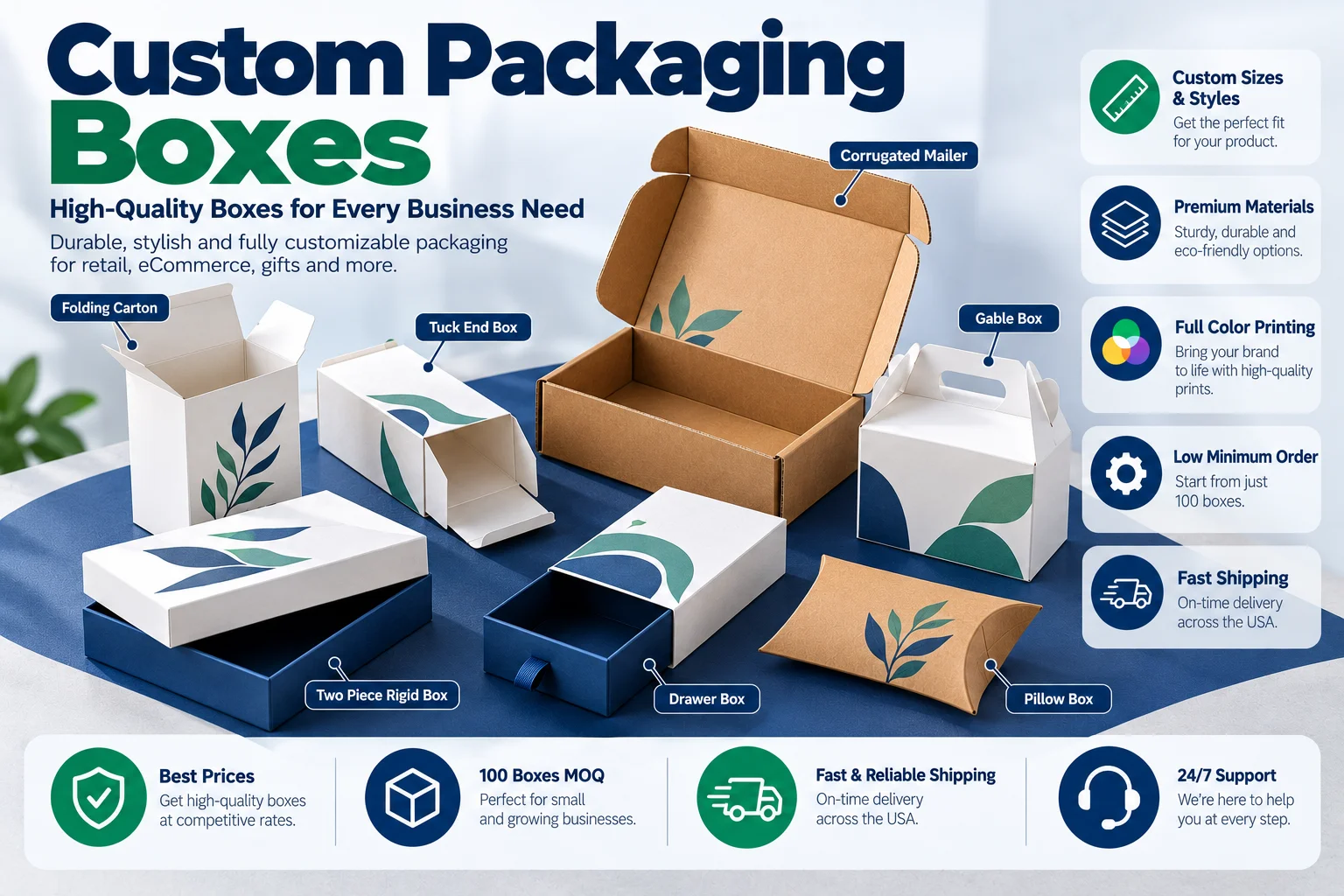
The main types of boxes start with folding cartons and the tuck end and lock bottom boxes built from them. Mailer boxes and rigid boxes follow with sleeve and drawer boxes, while gable and pillow boxes and display boxes cover carrying and selling at the counter.
Each style is defined by how it is folded and how it closes and by the board it uses. The table below gives the short answer for all ten before the sections explain each one.
| Box type | How it is built | Typical board | Best for |
|---|---|---|---|
| Folding carton | Ships flat, folds at packing | Paperboard 0.4 to 0.6 mm | Cosmetics, food, supplements |
| Tuck end box | Flaps tuck in at both ends | Paperboard | Light retail products |
| Auto lock bottom box | Pre glued base opens flat | Paperboard | Jars, bottles, candles |
| Snap lock bottom box | Four base flaps lock by hand | Paperboard | Medium weight products |
| Mailer box | Hinged lid, tuck front, no tape | Corrugated 1.6 to 3 mm | Online orders, subscriptions |
| Two piece rigid box | Separate lid and base | Grayboard 1.5 to 2.5 mm | Gifts, jewelry, electronics |
| Sleeve box | Tray with a sliding sleeve | Paperboard or rigid | Chocolates, cosmetics |
| Drawer box | Tray slides out of a shell | Rigid grayboard | Jewelry, watches, gift sets |
| Gable box | One piece with a top handle | Paperboard | Bakery, favors, takeout |
| Pillow box | Curved shape, closes at both ends | Paperboard or kraft | Small gifts and favors |
The board column matters as much as the style because the same tuck end shape behaves very differently in paperboard and in corrugated. That is why this guide explains the materials before the box styles.
Which Box Materials Should You Know Before Choosing a Style?
The box materials to know are paperboard and kraft board along with corrugated board and rigid grayboard. Each one sets both the strength and the look of the box.
| Material | Thickness | Strength | Used for |
|---|---|---|---|
| Paperboard (SBS and recycled grades) | About 0.4 to 0.6 mm (16 to 24 pt) | Light to medium | Folding cartons, tuck end and lock bottom boxes |
| Kraft board | Paperboard or corrugated | Light to heavy | Natural look cartons and mailers |
| Single wall corrugated | About 1.6 mm (E flute) to 3 mm (B flute) | Medium to high | Mailers and shipping boxes |
| Double wall corrugated | About 4.5 to 7 mm | High | Heavy and fragile shipments |
| Rigid grayboard | About 1.5 to 2.5 mm, wrapped in paper | High and does not fold | Two piece, drawer and magnetic boxes |
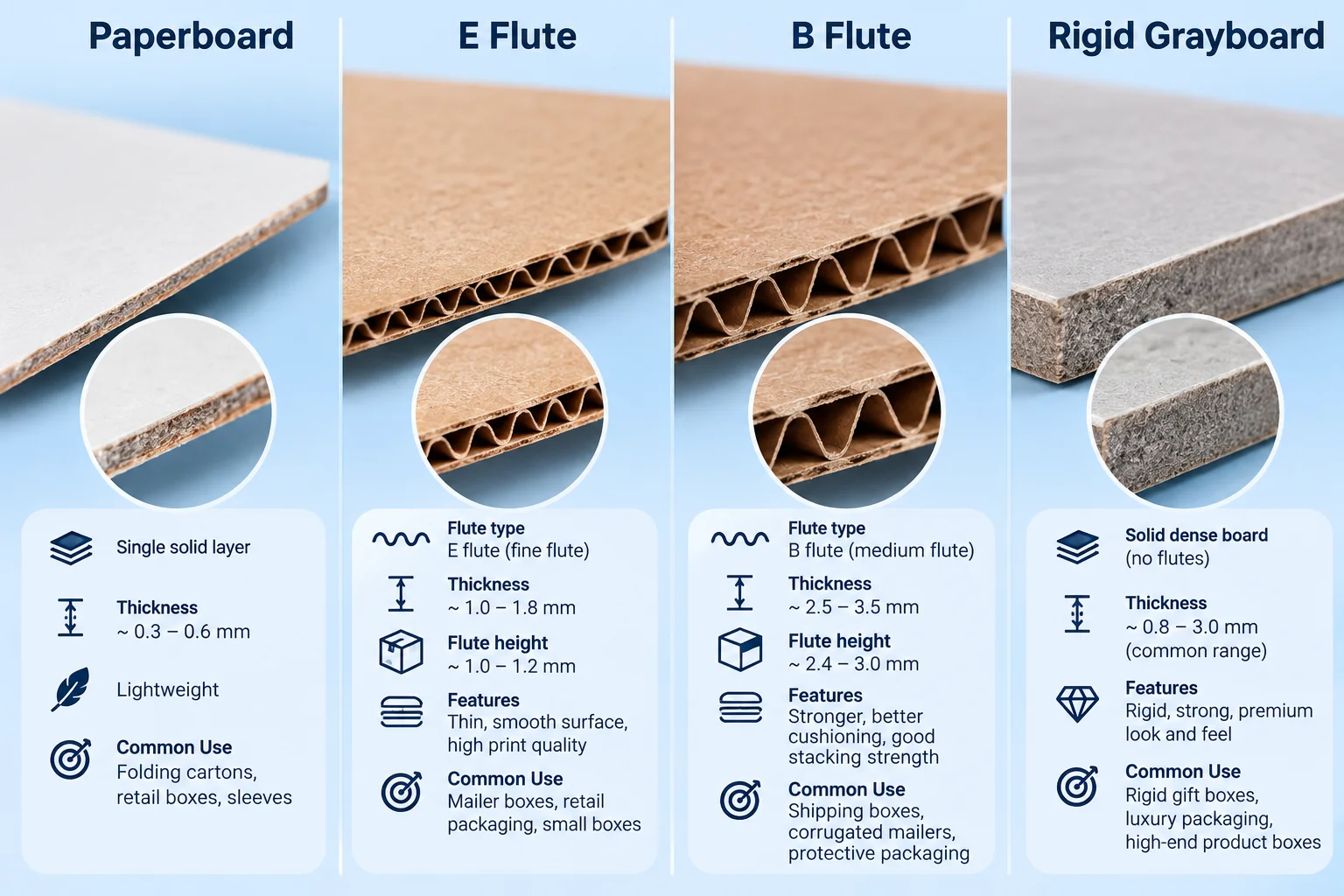
Paperboard is the thin single ply board behind most retail cartons. Cardstock is simply a lighter grade of the same material. Our guide to the types of paperboard explains SBS and the recycled grades. Our post on solid bleached sulfate board covers the bright white grade used for cosmetics and food.
Corrugated board adds a wavy fluted layer between two liners. That layer is why our custom corrugated boxes carry weight that paperboard cannot. Single wall board has one flute and double wall has two. That means a corrugated box is not always built from three layers of paper.
Kraft is a color and a fiber rather than a box style. Our kraft boxes come in both paperboard and corrugated versions for retail and shipping. Rigid grayboard is thick board that does not fold flat. That is what gives rigid boxes their weight in the hand. With the board clear the box structures in the next sections make more sense.
What Are Folding Cartons and Tuck End Boxes?
Folding cartons are paperboard boxes that ship flat and fold into shape at packing. Tuck end boxes are the most common folding carton style.
A flat carton takes a fraction of the space of a built box and lets you store thousands in a small room. The smooth paperboard surface prints sharp detail for cosmetics and supplements as well as candles and food. Our custom folding cartons page covers the sizes and finishes for each product type.
Tuck end boxes close with a flap at each end that tucks inside the box. They come in two main versions that differ in which way the end flaps close.
| Tuck style | How the end flaps close | Best for |
|---|---|---|
| Straight tuck end (STE) | Top and bottom flaps tuck toward the same side | Premium retail with a clean front panel |
| Reverse tuck end (RTE) | Top and bottom flaps tuck toward opposite sides | Everyday retail at a lower board cost |
| Tuck top auto lock bottom | Tuck at the top, pre glued base | Heavier products on a fast packing line |
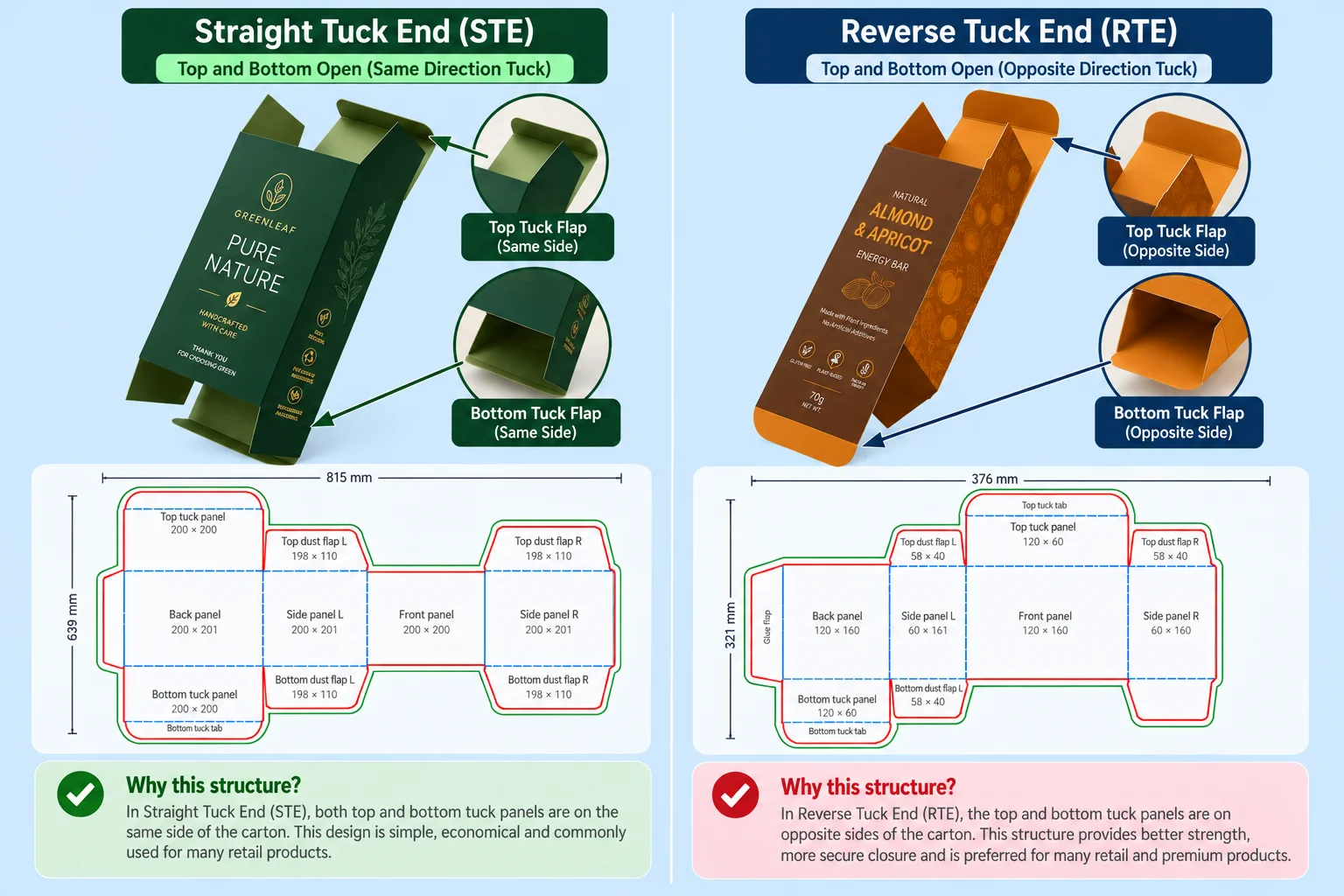
A straight tuck end keeps the front panel clean for premium retail. A reverse tuck end uses less board and costs a little less. Our custom reverse tuck end boxes page explains when it fits and our custom tuck boxes page covers both styles. Tuck ends suit light products and heavier items need a stronger base.
When Do You Need an Auto Lock or Snap Lock Bottom Box?
You need an auto lock or snap lock bottom box when the product is heavy enough to push through a tuck end flap. Glass jars and bottles and candles are the usual examples.
| Bottom style | Assembly | Weight it carries | Cost |
|---|---|---|---|
| Tuck end bottom | Fold one flap | Light | Lowest |
| Snap lock bottom | Fold and interlock four flaps by hand | Medium | Low |
| Auto lock bottom | Opens flat by itself, pre glued | Medium to heavy | Slightly higher |
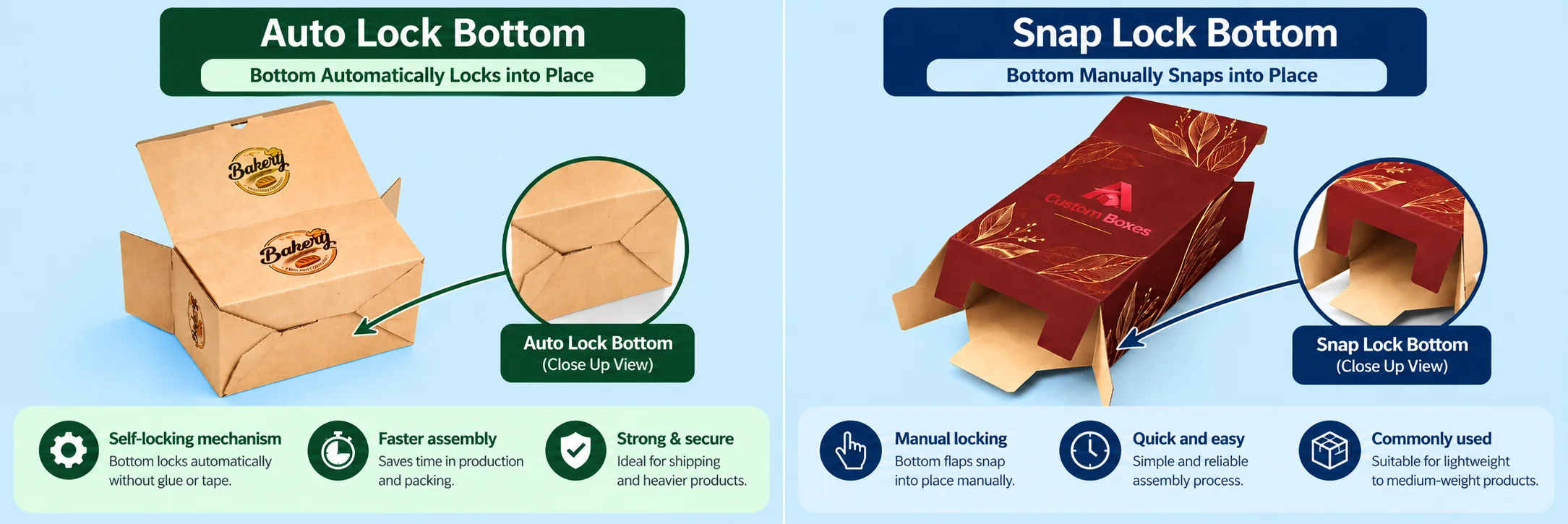
An auto lock bottom is glued at the factory and springs into a flat base when you open the carton. That one step saves real time on a busy packing line. A snap lock bottom has four flaps that you fold and interlock by hand. It costs less but takes a few seconds longer to build.
Both bottoms keep a tuck end at the top and the customer opens the box the same way as any retail carton. When the box has to travel through the mail on its own the board itself has to change.
Not sure which box type fits your product?
Send the product size and how you sell it. We suggest the style and return a dieline and a price.
Which Boxes Are Built for Shipping?
Mailer boxes and regular slotted shipping boxes are the two corrugated styles built for shipping. The choice depends on how the customer should feel at the door.
A mailer box has a hinged lid with dust flaps and a front tuck that locks without tape. It opens like a gift and can print inside and out. That is why our custom mailer boxes suit online brands and subscription orders.
A regular slotted container known as an RSC is the classic brown carton with four top flaps and four bottom flaps sealed with tape. It is the cheapest way to ship heavy or bulky goods. Our shipping boxes page covers the common sizes and board grades for each load.
Both styles use E flute at about 1.6 mm for lighter products and B flute at about 3 mm for heavier ones. A box cut close to the product also costs less to ship and our guide on how to measure a box explains why. Some products need more than protection and call for a premium box.
Which Box Styles Feel Premium?
The box styles that feel most premium are two piece rigid boxes and magnetic closure boxes along with drawer and sleeve boxes. All of them are built on thick board that keeps its shape.
| Premium style | How it opens | Best for |
|---|---|---|
| Two piece rigid box | Lift the lid off the base | Gifts, apparel, electronics |
| Magnetic closure box | Hinged lid held by a hidden magnet | Cosmetics sets, client gifts |
| Drawer box | Pull the tray out of the shell | Jewelry, watches, chocolates |
| Sleeve box | Slide the sleeve off the tray | Chocolates, candles, cosmetics |
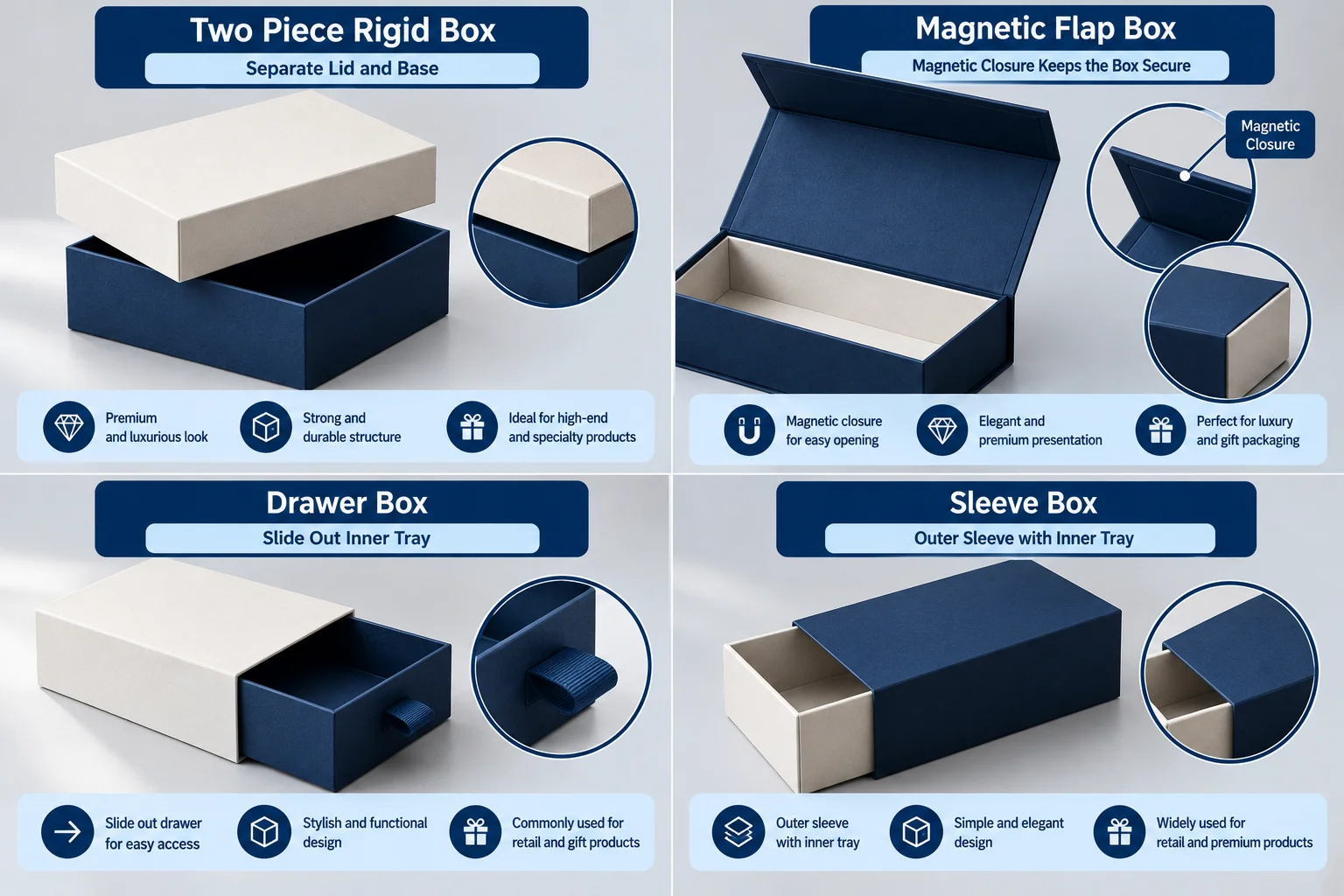
Two piece rigid boxes have a separate lid and base wrapped in printed paper. Our rigid boxes page covers the lid heights and paper wraps you can choose. Magnetic closure boxes hide a magnet in the flap so the lid closes with a soft click. Our custom magnetic closure boxes page shows the build in detail.
Drawer boxes slide a tray out of an outer shell while sleeve boxes slide a printed sleeve over a tray. Both give the customer a moment of reveal that suits jewelry and chocolates and gift sets. Rigid boxes cost more than cartons because the board is thicker and wrapped by hand. Customers keep them for storage and the brand stays in the home. Two other styles are built around how the box is carried and shown.
What Are Gable and Pillow Boxes Used For?
Gable boxes are carry boxes with a built in handle on top. Pillow boxes are small curved boxes for light gifts and favors.
A gable box folds from one piece of paperboard into a box with a handle and the customer carries it without a bag. Bakeries use it for cupcakes and pastries while event planners use it for party favors and takeout.
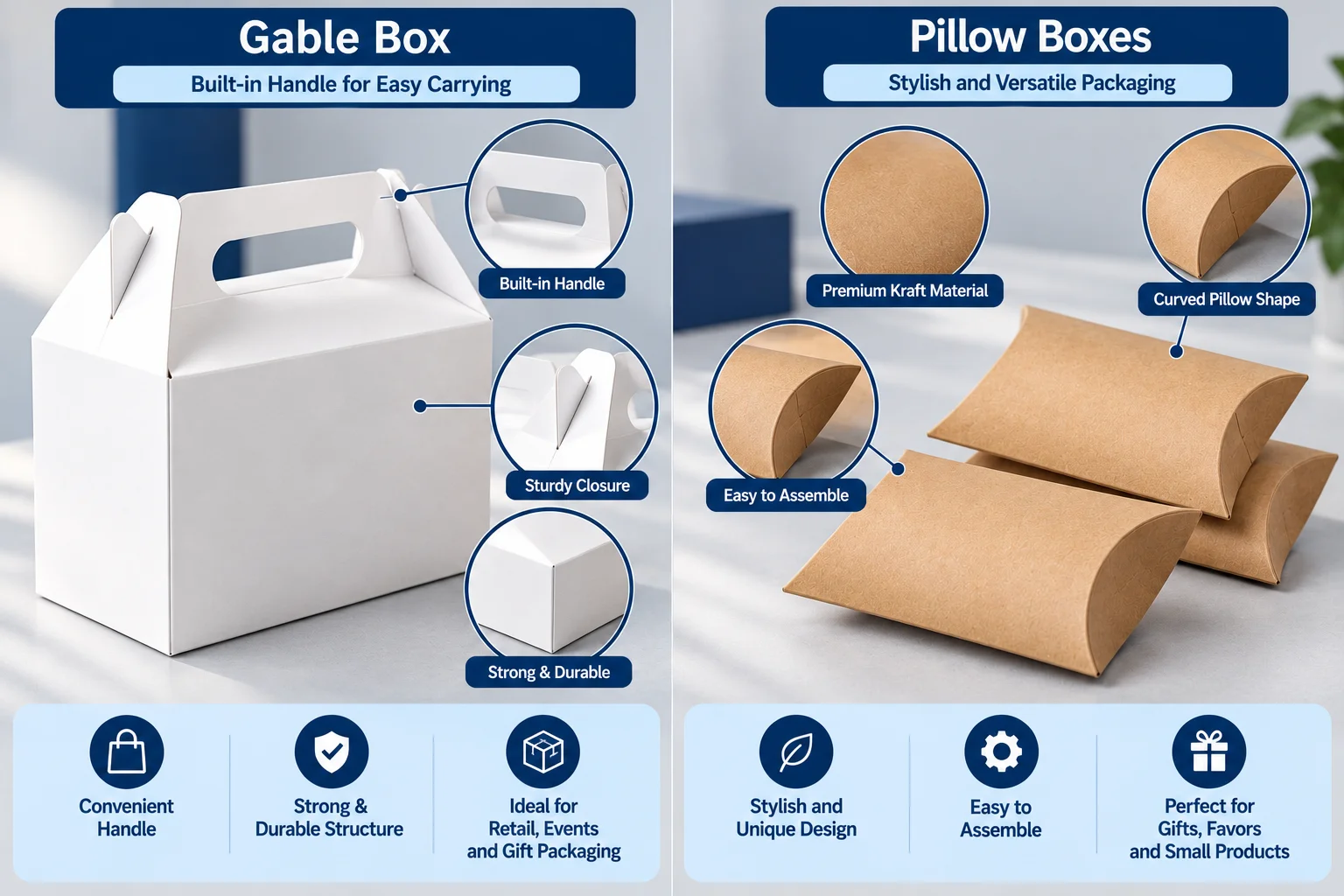
A pillow box folds from a flat sheet into a curved shape that closes at both ends. It suits jewelry and gift cards as well as soaps and wedding favors that weigh very little. Our pillow boxes page covers the sizes and printing options in detail. The last format is built for the shop counter rather than the customer bag.
How Do Display Boxes Help Products Sell?
Display boxes help products sell by standing on a counter or shelf with the products facing the customer. A shopper can then pick one up without asking a member of staff.
Most counter displays ship closed and open along a perforated tear line into a tray with a printed header. They suit small products bought on impulse such as lip balm and snacks. Our display boxes page covers both counter and shelf styles.
A display box needs strong board at the front lip because customers pull products out all day. With all ten styles covered the next step is matching one to your product.
How Do You Choose the Right Type of Box?
You choose the right type of box by matching four things. These are the weight of the product and how it reaches the customer as well as the impression you want and the cost per unit.
| If your product is | And it reaches the customer by | Choose |
|---|---|---|
| Light and sold in stores | Retail shelf | Tuck end folding carton |
| A jar, bottle or candle | Retail shelf | Auto lock or snap lock bottom box |
| Any size sold online | Mail or courier | Mailer box |
| Heavy or bulky | Courier or pallet | Regular slotted shipping box |
| A premium or gift item | Hand or retail | Two piece, magnetic or drawer box |
| Small and bought on impulse | Counter | Display box |
| A bakery item or favor | Carried by hand | Gable or pillow box |
Once the style is set size the box to the product plus 6 mm in length and width and the tallest point plus 10 mm in height. That gap lets the product slide in without rubbing and stops it moving once the box is closed.
Our free dieline generator draws your chosen style at your size and the 3D box studio shows it folded with your artwork before you order. Choosing well also means knowing which packaging trends deserve your budget.
Which Packaging Box Trends Are Worth Following?
The packaging box trends worth following are right sized boxes and paper based materials that recycle easily. Digital print for short runs and printed insides for the unboxing complete the list.
Right sizing cuts the empty space that you pay to ship and removes the need for loose filler. Paper based boxes keep packaging in one material stream that recycles easily. EPA data puts the recycling rate of corrugated boxes at 96.5 percent.
Digital printing removes printing plates and lets a small brand can order a seasonal design without a large run. A printed inside lid costs one more pass on press and is the part of the box that customers film. The final step is turning the style you chose into an order.
How Do You Order Custom Boxes in Any of These Styles?
You order custom boxes in any of these styles by sending the product size and style with the quantity through our quote form. We return a dieline drawn to your product and a price for the run.
- Minimum order is 100 boxes per size and design and the price per box falls as the run grows
- Price breaks arrive at 500 and 1,000 units on one artwork
- Production takes 8 to 10 business days after dieline approval and 10 to 12 for rigid boxes
- A plain sample takes 3 to 5 business days and a printed one takes 7 to 10
- No setup or tooling fees apply on the first order or any reorder
- Shipping is free across the United States on every order
Test a plain sample with your real product before the printed run because holding the box is the only way to check the fit. Every one of our custom boxes is cut from your measurements rather than picked from a stock list.
Frequently asked questions
The short version
Boxes fall into paperboard cartons for retail and corrugated mailers for transit and rigid boxes for premium gifts. Pick the structure by the weight of the product and the way it reaches the customer.
Size every box to the product plus 6 mm and test a plain sample before printing. We make every style in this guide from 100 boxes per size and design with free shipping across the United States.
Ready to order the right type of box?
At The Customized Boxes we print every style in this guide from 100 boxes per size and design with no setup fees, production in 8 to 10 business days after dieline approval and free shipping across the United States.
