





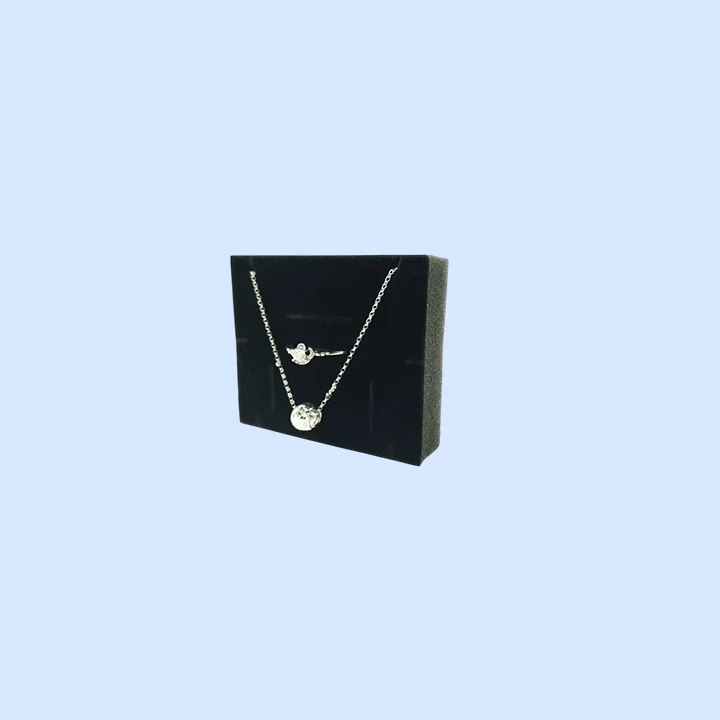


Why Does The Insert Fail Before The Box Does?
A box protects the piece against crushing while the insert protects it against movement. The second job is the one customers notice, because a piece arriving loose reads as cheap even in a good box.
Movement inside the box causes three different problems rather than just one. A chain tangles and a clasp snags on the fill, while a polished surface picks up scratches from its own packaging. All three get blamed on the box rather than the pad. The fix is a cut that grips the piece rather than a cavity that clears it. That single idea decides the material and the density and the slot width on every insert we quote.
Foam Density Rather Than Foam Thickness
Density is measured as weight per volume and it tells you how hard the foam pushes back. Thickness only tells you how much foam is sitting inside the box.
| Foam grade | Density | Holds | Typical use |
|---|---|---|---|
| Soft | 25 to 33 kg per cubic meter | Very light pieces only | Jewelry box padding and dust layers |
| Medium | 45 to 60 kg per cubic meter | Rings, studs, thin chains | The default for most jewelry |
| Firm | 80 to 110 kg per cubic meter | Watches, cuffs, heavy pendants | Anything above 40 grams |
A heavy piece in soft foam sinks on the first drop and never sits straight again after that. A light piece in firm foam sits proud of the slot and looks unfinished. Matching the grade to the weight matters far more than adding millimeters.
How Wide Should A Slot Be Cut?
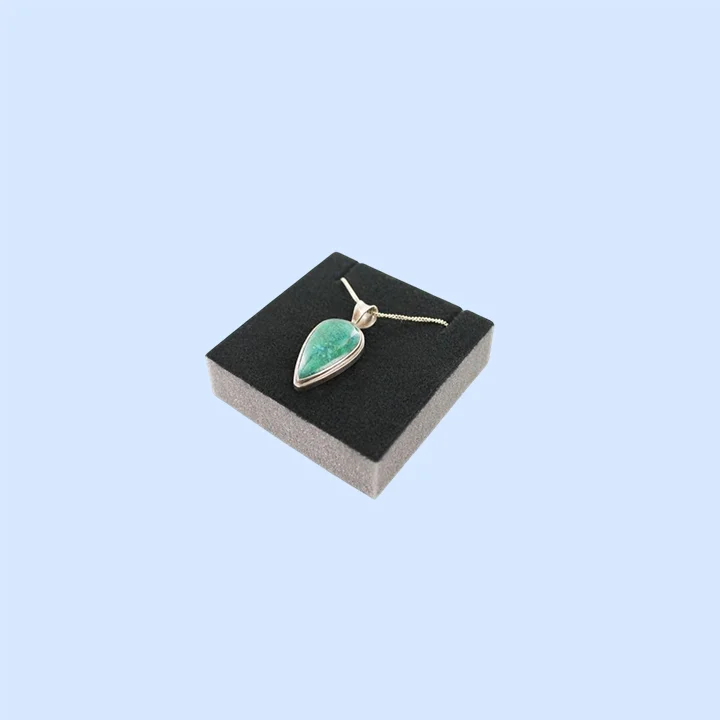
This is where most briefs go wrong and the correct answer runs against instinct. A foam slot is cut slightly narrower than the piece rather than slightly wider because the foam compresses and grips.
| Piece | Cut the slot | Why |
|---|---|---|
| Ring band | 1 to 2 mm narrower than the band width | Jewelry box ring inserts pinch the band and hold it upright |
| Stud earring | Post diameter plus 0 mm, pierced not cut | The foam closes around the post |
| Pendant recess | 1 mm wider than the pendant outline | A stone must not be squeezed |
| Bangle or cuff | 2 mm narrower across the opening | The spring in the metal does the rest |
Read the pendant row beside the ring row before signing anything off, because a band wants compression while a set stone does not.
Cotton Filled Boxes And Where They Stop Working
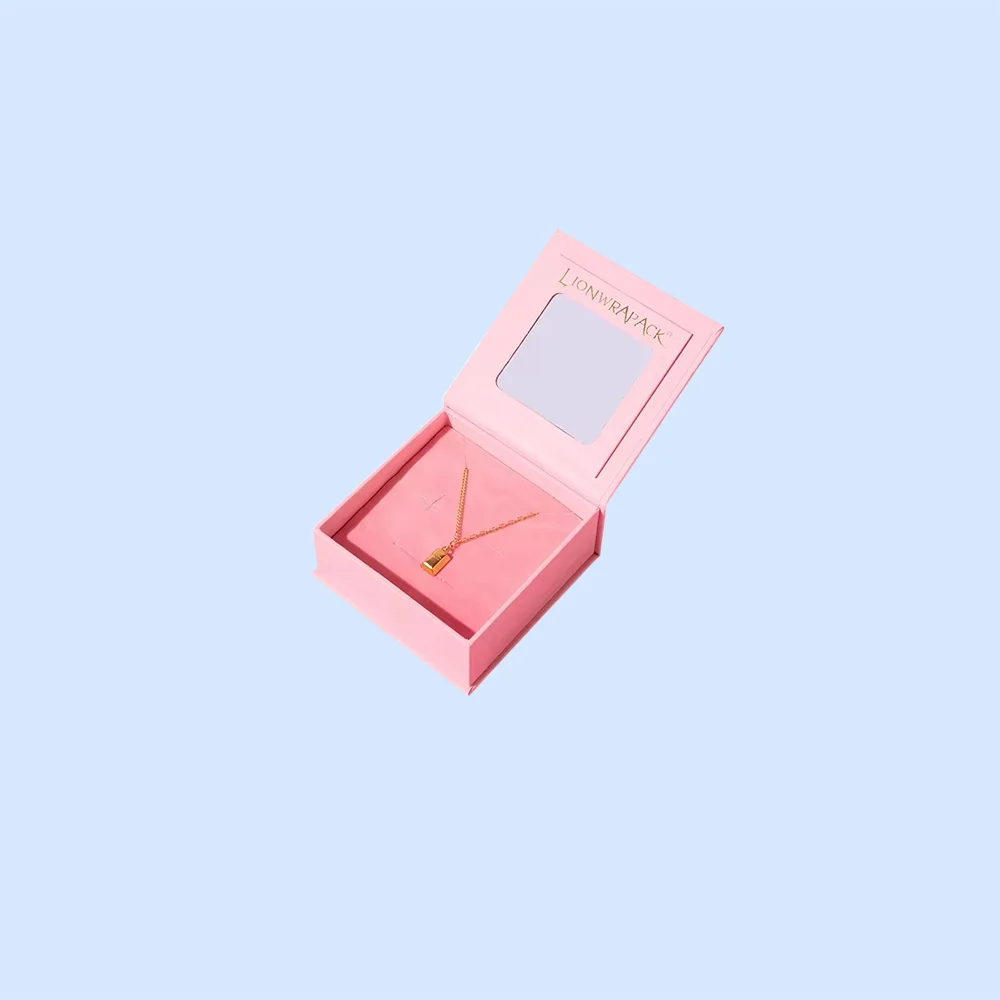
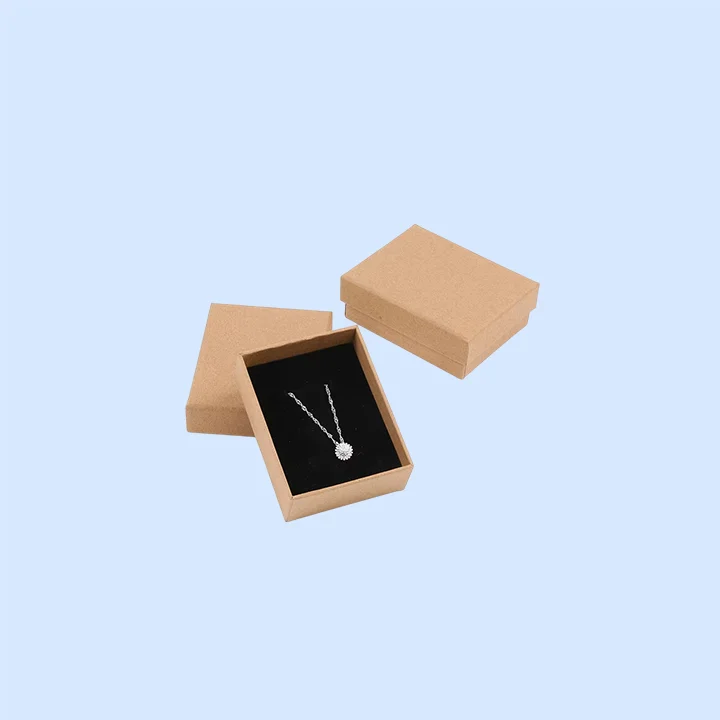
Cotton filled jewelry boxes are not inserts in the engineering sense. Each one carries a loose fiber pad under a printed top sheet rather than a cut cavity. Cotton filled boxes are the cheapest way to fill a small shell.
It works well for light pieces that carry no moving parts, so studs and plain bands and small charms sit well on a plain cotton pad. It stops working the moment a piece carries a clasp or an open prong. Lobster clasps and claw settings both catch the loose fibers, and a customer who picks cotton out of a setting remembers it. Anything above roughly 30 grams also pushes through the pad to the board.
Which Insert Material Should You Use?
| Material | Cost | Best for | What it will not do |
|---|---|---|---|
| Cotton filled pad | Lowest | Studs, plain bands, charms | Hold a clasp or a claw setting |
| Cut foam | Low to medium | Rings, chains, most pieces | Look premium on its own |
| Fabric covered foam | Medium | Retail presentation | Take a print |
| Molded pulp | Medium | Recyclable programs at volume | Hold fine detail |
| Folded board tray | Low | Flat pieces and sets | Grip a piece firmly |
| Velvet covered board | Highest | Fine jewelry and bridal | Take a print |
Fabric covered foam is the one most brands settle on because it grips like foam while presenting like velvet. Printing goes on the box rather than on the insert in every row except the folded board tray.
A multi piece set changes the question again in a useful way. A tray with dividers keeps a necklace and a bracelet and two earrings from touching, and it costs less than four cavities in one pad.
Inserts For A Box You Already Hold
We cut inserts for boxes we did not make ourselves, and most other suppliers refuse that work outright. Send the box or its measured internal dimensions and we cut to those figures. Wall thickness takes 3 to 6 mm out of a rigid box and 1 to 3 mm out of a folding carton.
Inserts for non jewelry products are settled on our custom box inserts product, which covers the same work across every other category we print.
Minimum Order, Lead Time And Samples
- Minimum order is 100 units per size and design across every material in this range
- Price breaks arrive at 500 and 1,000 units on one artwork and not across mixed designs
- Production takes 8 to 10 business days for folding carton and 10 to 12 for rigid
- A plain sample takes 3 to 5 business days and a printed sample takes 7 to 10
- No setup or tooling fees apply because the die sits inside your unit price
- Shipping is free across the US and export orders are quoted separately
Request a Quote
Send the piece dimensions and the weight and the shell you are filling through our quote form. We return a dieline and a price within the week. Brands buying across several lines will find the wider catalog of customized boxes we print and make.
 The Customized Boxes