








Why Do Electronics Need a Different Shipping Box?
Three things damage electronics in transit, and only one of them is the drop everyone worries about.
The first is shock, and a device that lands on a hard edge sends that energy straight into solder joints, connector pins and mounting screws. The board can survive the impact and still develop a hairline crack that fails weeks later.
The second is vibration, which builds over the hours a parcel spends on a conveyor and in a truck bed. If the device can move inside the box it will keep tapping against the wall for the whole journey. Low energy, repeated thousands of times, is enough to loosen a heatsink or fret a connector.
The third is static, and it has nothing to do with how strong the box is, because a thicker board does not help at all. We cover it in its own section below because most buyers do not know their board is part of the problem.
A good electronic shipping box has to answer all three of those problems rather than only the obvious one. It absorbs the drop, it stops the device moving, and it does not sit against a bare board if the product is static sensitive.
What Size Should Your Electronic Shipping Box Be?
The internal dimension is not your product dimension, because you need the product, plus whatever holds it still, plus the cushioning space that absorbs the impact.
We set that cushioning space from two things you tell us, and the first of them is the weight of the device. The second is the drop height the pack needs to survive, which depends on parcel weight because heavier parcels get handled differently. A 400 gram accessory and a 6 kilogram desktop unit do not get the same clearance even if the boxes look similar.
| What you send us | What we build from it |
|---|---|
| Product length, width and height in mm | The internal cavity, measured to the insert face |
| Product weight | Cushion thickness and board grade |
| Whether it ships alone or with cables and a manual | Compartment layout inside the insert |
| Whether it goes to a carrier or into a retail carton | Outer print and any regulatory marks |
| Whether the device is static sensitive | Liner or bag specification |
Send us a sample device if you have one, and we will measure it here and cut a physical mock-up rather than working from a drawing. That single step catches more fit problems than any amount of checking on screen.
Which Board Grade Protects the Weight You Are Shipping?
Flute is the wave of paper glued between the liners, and it sets both the thickness of the wall and how much energy that wall can absorb.
| Flute | Thickness | Where it works for electronics |
|---|---|---|
| F | 0.8 to 1.0 mm | Small accessory boxes, retail-facing print |
| E | around 1.6 mm | Cables, chargers, small devices, crisp print |
| B | 2.5 to 3.2 mm | Light devices, good crush resistance |
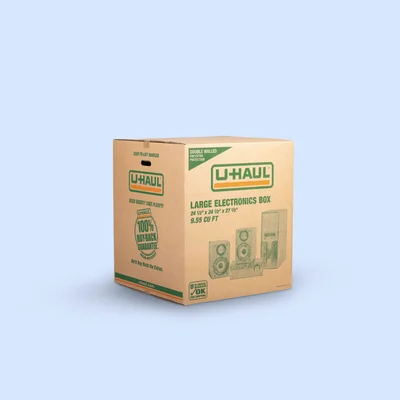
| C | 3.2 to 4.0 mm | General shipping boxes, most common outer |
| A | 4.0 to 4.8 mm | Maximum cushioning for a single wall |
| EB double wall | around 4.8 mm | Print quality outside, strength inside |
| BC double wall | 5 to 7 mm | Heavy units and long transit routes |
Suppliers quote B flute slightly differently, which is why it is shown as a range here rather than a single figure.
Edge crush test, written as ECT, is the number that tells you how much weight the box can carry stacked. It matters because your box will sit under other parcels in a trailer.
| ECT rating | Maximum gross weight |
|---|---|
| 26 ECT single wall | about 35 lb |
| 32 ECT single wall | about 65 lb |
| 44 ECT single wall | about 95 lb |
| 48 ECT double wall | 86 to 100 lb |
| 51 ECT double wall | up to 120 lb |
When you compare shipping boxes for electronics, pick the rating from your gross packed weight rather than from the device weight alone. Inserts, manuals and a power supply add up faster than most buyers expect before the box is even sealed.
Does a Plain Corrugated Box Protect Against Static Damage?
No, and this is the point most buyers miss, because plain corrugated is not neutral at all. Under ANSI/ESD S541, the packaging standard for static sensitive items, materials fall into three bands by surface resistance.
| Classification | Surface resistance |
|---|---|
| Conductive | less than 1.0 × 10⁴ ohms |
| Static dissipative | 1.0 × 10⁴ up to less than 1.0 × 10¹¹ ohms |
| Insulative | 1.0 × 10¹¹ ohms and above |
Ordinary kraft corrugated sits in the insulative band, and an insulator holds charge instead of letting it bleed away. A bare board rubbing against a plain box wall is not protected by that wall, because it is sitting on the thing that generates the problem.
The 2019 revision of S541 moved to surface resistance measured in ohms and dropped the older ohms per square wording. If you see a supplier still quoting ohms per square, they are working from a superseded edition.
If your product is a finished device in a sealed enclosure, none of this applies and a standard box is correct. If you ship bare boards, modules or anything with exposed contacts, tell us at the quote stage. We will specify the liner or the bag with you rather than assuming the outer box is doing a job it cannot do.
Which Box Style Suits Your Product?
| Style | How it works | Best for |
|---|---|---|
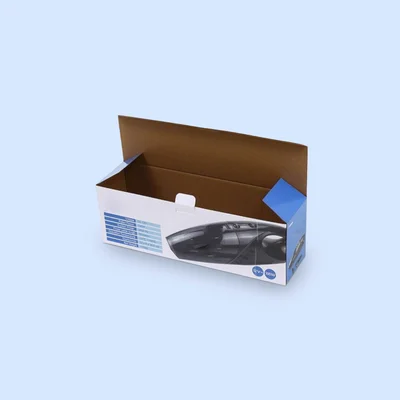
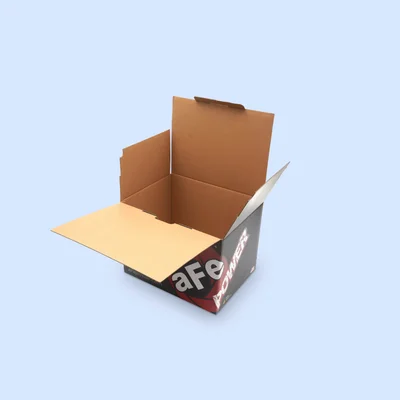
| Regular slotted container | Flaps meet in the middle, sealed with tape | Standard outer for most devices |
| Full overlap | Outer flaps overlap fully, doubling the panel | Heavy units, long routes, extra corner strength |
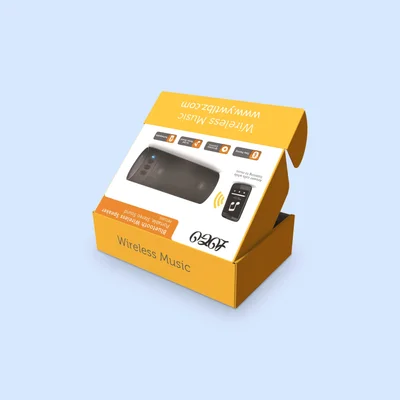
| Die cut mailer | One piece, folds and locks, no tape needed | Accessories, small devices, unboxing moments |
| Roll end tuck top | Front tuck closure with side wings | Retail-facing devices, clean opening |
| Telescoping two piece | Separate lid over a base tray | Tall or awkward units, easy repack for returns |
The mailer is worth a closer look if your customer opens the box in front of a camera. It opens flat, it holds print well on E flute, and it does not need a knife.
What Insert Stops the Device Moving Inside the Box?
The box handles the drop, and the insert handles everything that happens after it.
| Insert | What it does | Notes |
|---|---|---|
| Corrugated fitment | Folded board cradle cut to the device outline | Recyclable in the same stream as the box |
| Molded pulp | Formed fiber tray that wraps the contours | Good for curved units, fully paper based |
| Die cut foam | Foam block with a cavity cut to shape | Highest cushioning, best for fragile boards |
| Suspension film | Device held between two membranes, floating | Excellent for flat items and bare boards |
| Compartment divider | Separates device, cable and accessories | Stops parts knocking together |
Corrugated fitments are the default we recommend when the device can take it. They cost less than foam, they ship flat, and your customer can put the whole pack in one recycling bin without separating materials.
Do You Need a Laptop Mailer Instead of a Standard Box?
Laptops and tablets are a different problem from a boxy device, because they are wide, thin, and rigid in one direction while flexing in another. A standard cube leaves too much empty air, and empty air is where a device builds up speed before it hits a wall.
A laptop mailer is built to the depth of the machine and no deeper. The screen face gets a flat cushioning layer, and the corners get separate protection because that is where drops land. The whole pack also stays thin enough to avoid the oversize handling that adds cost to every parcel. If you take trade-ins or run a repair channel the same mailer has to survive the trip twice. For that version we move up to a double wall board and a tuck closure that reseals without tape.
Tell us the machine you build around and we will cut the mailer to it. If you handle mixed models, we can build one cavity with removable spacers so a single mailer covers a size range.
What Changes When Your Product Contains a Lithium Battery?
Almost every powered device now falls under lithium battery rules for air transport, and the packaging carries part of the obligation.
Batteries installed inside the equipment ship as UN 3481 under Packing Instruction 967. Under Section II of that instruction the limits are 20 Wh per cell and 100 Wh per battery. A single package may hold a maximum of 5 kg net of cells or batteries, and that last number is the one that decides your carton size. If each unit holds a 25 gram battery you reach the 5 kg ceiling at roughly 200 units. The master carton then has to be built to stop at that count rather than to fill the space.
Batteries packed alongside the equipment rather than installed in it fall under Packing Instruction 966 instead. From 1 January 2026 those shipments must be offered at a state of charge no higher than 30 percent of rated capacity. A device with the battery already fitted inside it is not caught by that particular limit.
We build the outer carton to your unit count and leave the marking panel clear, so the lithium battery mark goes on flat and stays readable. We are a packaging manufacturer and not your dangerous goods advisor, so confirm the classification with your carrier before you ship.
What Printing Works on an Electronic Shipping Box?
Print quality on corrugated depends on the flute more than on the press. Fine flutes give a flatter surface and hold small type and photographic detail. Coarse flutes show washboarding, which is the faint ribbing you see across a large solid color.
- E and F flute take high resolution litho lamination and hold small type cleanly
- B and C flute suit flexo print, solid brand colors, line art and large logos
- Kraft with one color is the cheapest route and reads as deliberate rather than cheap on a technical product
- White top liner is needed for accurate brand color, because kraft shifts everything warm
- Interior print costs little on a mailer and is the surface your customer sees first
Spot gloss, soft touch lamination and foil all work on laminated fine flute. They do not survive well on a heavy shipping outer that gets scuffed in transit. We usually keep the finish on the retail box and leave the shipper functional.
Why Work With a US Packaging Supplier for Electronic Shipping Boxes?
An overseas quote can look attractive on a spreadsheet, but the calendar is usually where it falls apart. Working with a packaging supplier in the USA puts your dieline approval, your sample and your production run inside your own working week. You send an artwork change at nine in the morning and you have an answer before lunch, not the following day.
The timings are fixed and we publish them so you can plan against them. A plain structural sample takes 3 to 5 business days, and a printed pre production sample takes 7 to 10 business days. Once you approve the dieline, corrugated and folding carton production runs 8 to 10 business days. You can build a launch date around those numbers instead of guessing at one.
The commercial terms are just as plain, because we do not charge setup or tooling fees at any stage. The die and the printing plates sit inside your unit price on the first order and on every reorder after it. Delivery is free across the contiguous US and any export order is quoted separately. The number you approve on the quote is the number you pay, with no extra charge appearing later. A reorder of the same electronic shipping box goes straight to press on the die we already hold.
You also get to look at the box before it becomes ten thousand boxes. We produce a physical sample of your electronic shipping box, in your board grade and with your print applied, and we ship it to you for approval. If the fit is tight around your device or the insert needs another millimeter of clearance, that gets corrected on the sample and not on the production floor.
Minimum Order, Lead Time, and Samples
- Minimum order: 100 boxes per size
- Plain structural sample: 3 to 5 business days
- Printed pre production sample: 7 to 10 business days
- Production: 8 to 10 business days after you approve the dieline
- Price breaks: at 500 and at 1,000 units on the same artwork
- Setup and tooling: no charge, on the first order and on every one after it
- Artwork: vector PDF or AI on our dieline, 3 mm bleed, Pantone numbers identified
- Shipping: free across the contiguous US. Export orders quoted separately
Request a Quote for Electronic Shipping Boxes
Tell us the device dimensions, the packed weight and the annual volume you expect to run. We will come back with a board specification, a dieline and a unit price.
If you would rather see the structure first, build it yourself on our free dieline generator in any size you like. It exports to AI, PDF or SVG in a few seconds, with no charge and no sign up.
 The Customized Boxes