





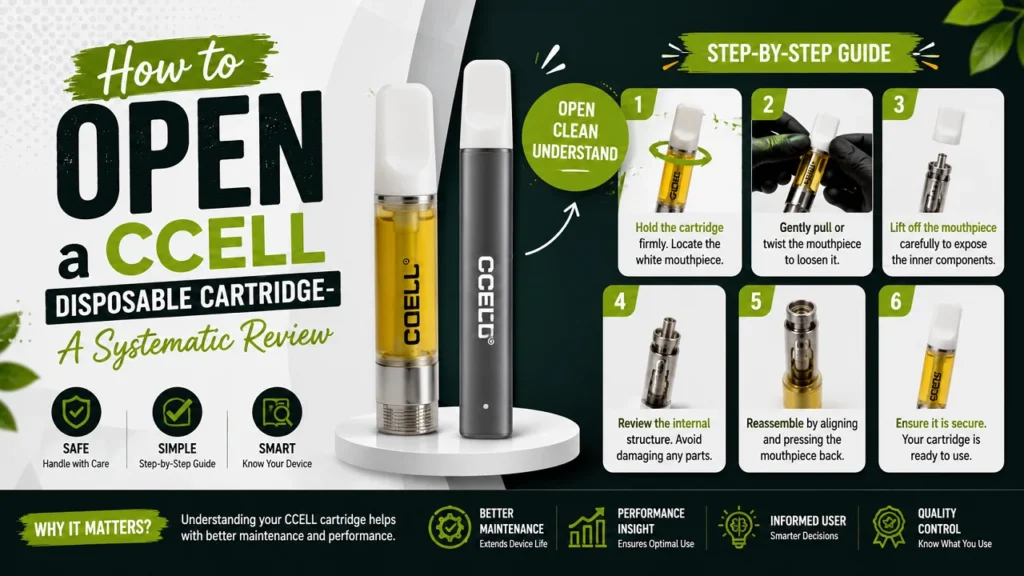
You can open a CCELL cartridge only when it has a screw-on mouthpiece. Snap-fit and press-fit mouthpieces are capped once on the filling line and are built so they never come off again. All-in-one CCELL disposables are sealed devices with the battery and tank in one body, so they are not meant to be opened at all.
This guide shows you how to tell those builds apart by looking at the mouthpiece. It then walks through the safe way to open a screw-on cartridge. It also explains why forcing a snap-fit cap breaks the glass far more often than it opens it. The second half is written for brands that fill CCELL hardware and need to cap it, store it and box it the right way. That part draws on the cartridge boxes we make for brands across the United States.
One fact clears up a lot of confusion before you start. CCELL makes empty hardware, and its own website states that “CCELL does not produce, distribute or sell any material filled in cartridges and pods.” The oil inside your cartridge came from the brand on the label, so that brand is the one to ask about what is inside it.
This guide covers hardware and packaging only, and it is general information rather than legal advice. Cannabis, hemp and nicotine rules differ from state to state and change often. Check the rules where you fill, sell or ship before you act on anything in this guide. Vape and cannabis products are for adults of legal age only, and that age is 21 for nicotine across the United States. The Customized Boxes makes packaging only and does not sell cartridges, oil or batteries.
Key takeaways
- You can open a CCELL cartridge only when it has a screw-on mouthpiece, and you open it by hand without pliers.
- Snap-fit and press-fit caps lock once on the filling line and are built so they never come off again.
- All-in-one CCELL devices are sealed with a lithium battery inside, so they should never be pried apart.
- Only an empty cartridge sold as refillable is meant to be refilled, and the core needs time to soak.
- Take an empty all-in-one device to a household hazardous waste site and never put it in the trash.
What Is a CCELL Disposable Cartridge?
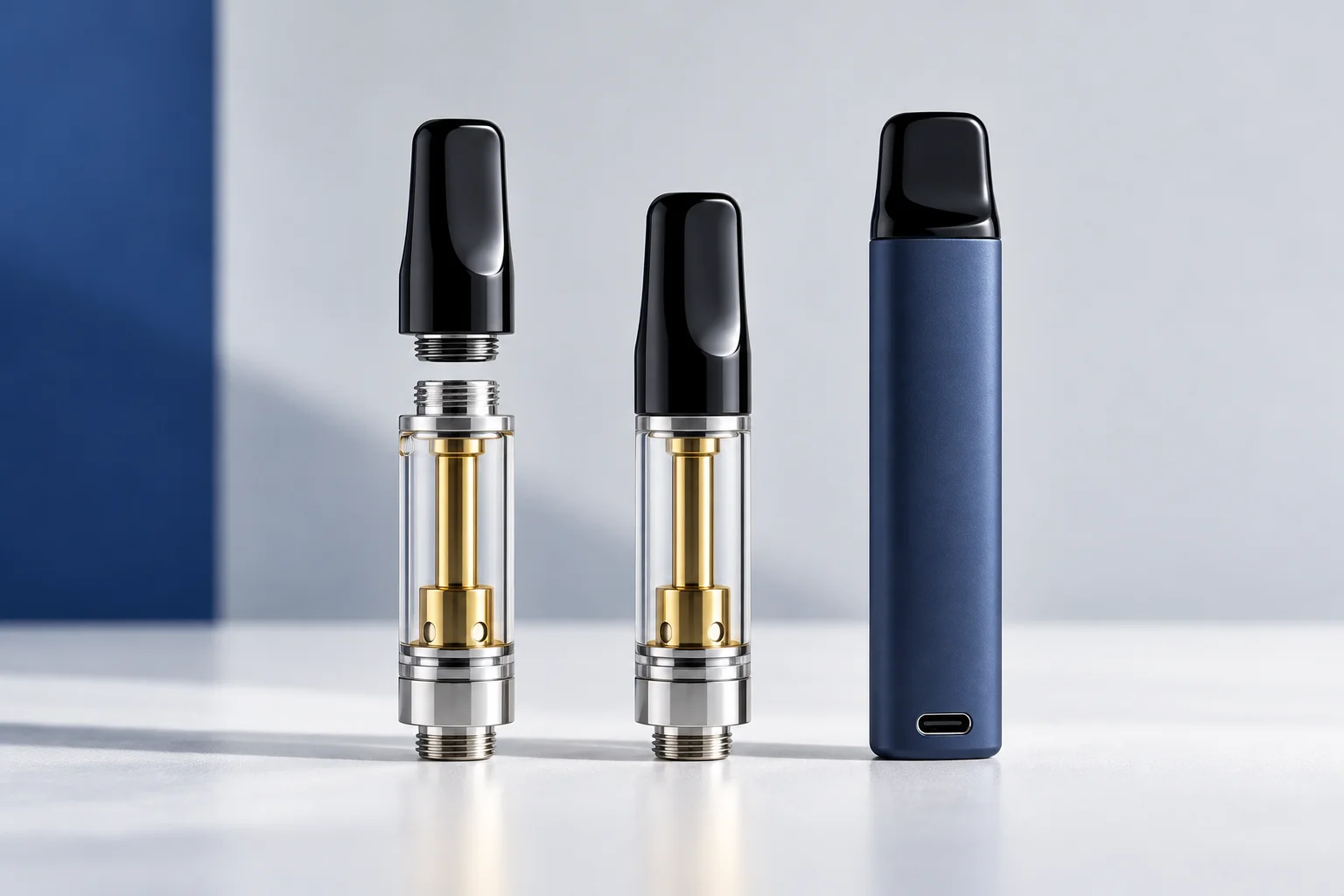
A CCELL cartridge is a 510 thread vape cartridge built around a ceramic heating element instead of a cotton wick wrapped around a wire coil. The brand was established in 2016 at the headquarters of Shenzhen Smoore Technology, a vaping hardware maker in China. Its cartridges are widely used as empty carts that licensed cannabis brands and CBD brands fill and sell under their own names. Each of those brands needs custom packaging boxes that hold the glass cartridge still and carry the labels its state requires.
The word disposable causes most of the confusion around these cartridges. A brand calls its cartridge disposable because it sells the cartridge filled and capped for a single use. The hardware itself comes from the same family of glass and ceramic parts that CCELL supplies to every filler. The TH2-SE is a useful example because CCELL publishes its full specification.
| Feature | TH2-SE figure |
|---|---|
| Capacity | 0.5 ml, 1 ml or 1.2 ml |
| Size | 10.5 mm across, 52, 62 or 66 mm tall |
| Tank | Borosilicate glass |
| Center post | Low lead brass |
| Heating element | CCELL ceramic heating element |
| Resistance | 1.4 ohms |
| Oil inlets | 4 holes, each 2 mm across |
| Thread | Standard 510 |
| Mouthpiece | Snap-fit or screw-on on 0.5 ml and 1 ml, snap-fit only on 1.2 ml |
The last row of that table decides whether your cartridge opens at all. Two cartridges can look the same from the side and still close in completely different ways. That is why the next step is to read the mouthpiece itself rather than the brand name printed on the box.
How Can You Tell Which Mouthpiece Your CCELL Cartridge Has?
Look closely at the joint where the mouthpiece meets the glass tank and check three things. See whether threads show at that joint, whether the mouthpiece sits flush on a collar and whether the device has a battery built in. The table sorts the four builds you are most likely to find on the shelf.
| Build | What you see | Opens again | Usually sold as |
|---|---|---|---|
| Screw-on mouthpiece | Fine threads at the joint between mouthpiece and tank | Yes, by hand | Empty refillable cartridge |
| Snap-fit mouthpiece | Smooth joint, mouthpiece seated on a collar with no threads | No, it locks on the first press | Prefilled cartridge from a brand |
| Press-fit mouthpiece | Flat or flush top pressed straight down onto the center post | No, it is built to stay on | Prefilled single use cartridge |
| All-in-one disposable | Battery and tank in one body, charging port, no 510 thread | No, the unit is sealed | Complete device from a brand |
When you still cannot tell which build you have, check the box or the brand website for the word refillable. Most prefilled cartridges sold in licensed stores use a snap-fit or press-fit cap. A cartridge you bought already filled was almost never meant to come apart. The right method follows directly from the build you found in the table.
How Do You Open a Screw-On CCELL Cartridge?
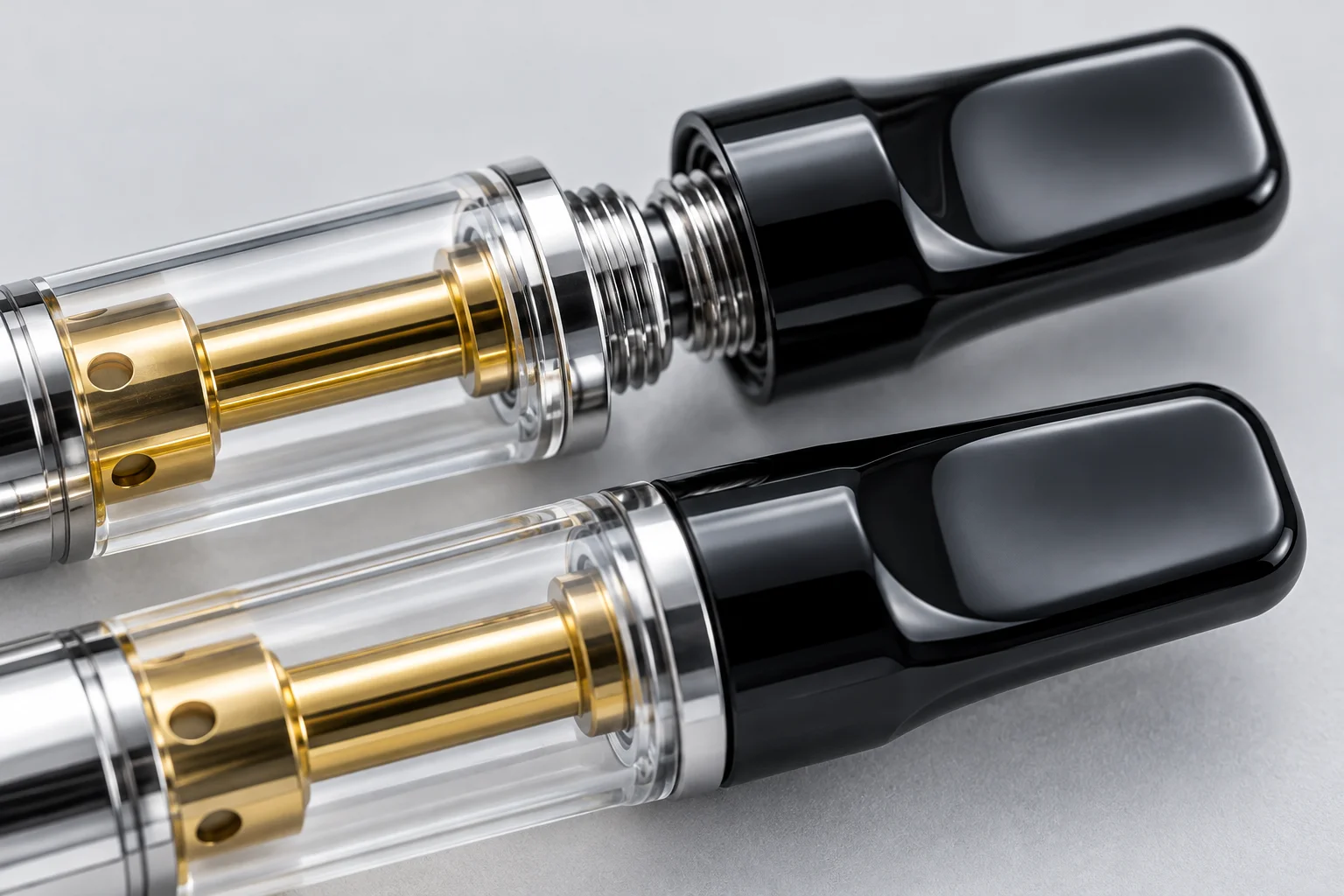
A screw-on CCELL cartridge opens by hand in under a minute when you follow a few careful steps. The goal is to turn the mouthpiece without putting any twisting force on the glass tank. The glass is the part that cracks, so every step below keeps your grip and your force away from it.
- Unscrew the cartridge from the battery first, because a connected cartridge can heat while you handle it.
- Let the cartridge sit at room temperature for a few minutes, since cold oil makes the threads feel stuck.
- Hold the metal base of the cartridge between your thumb and finger and keep your grip off the glass.
- Turn the mouthpiece counterclockwise with gentle and even pressure until it lifts free.
- Stand the open cartridge upright on a clean paper towel so oil on the center post stays inside the tank.
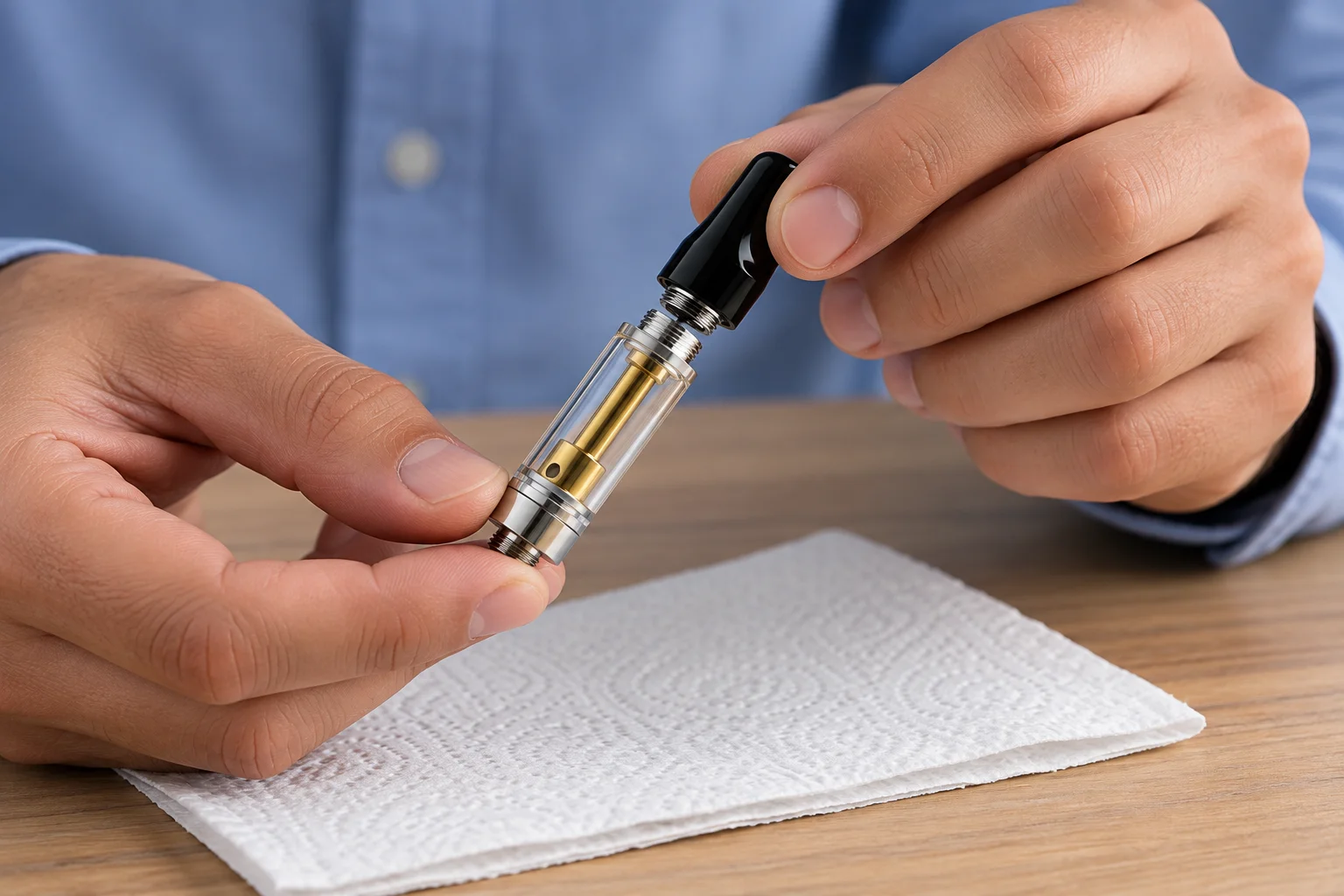
Stop if the mouthpiece will not turn under finger pressure alone. A stuck screw-on cap usually means oil has dried in the threads. Gripping it with pliers puts the full load onto the glass tank and can crack it in a single turn. That leaves you with a leaking cartridge and nothing gained for the effort.
Closing the cartridge again works the same way in reverse. CCELL describes its screw-on caps as simply turned clockwise until they seat, so hand tight is enough and extra force only strains the threads. That simple open and close is exactly what snap-fit and press-fit caps are designed to prevent. The reason sits in how they are closed in the first place.
Why Can You Not Open a Snap-Fit or Press-Fit CCELL Cartridge?
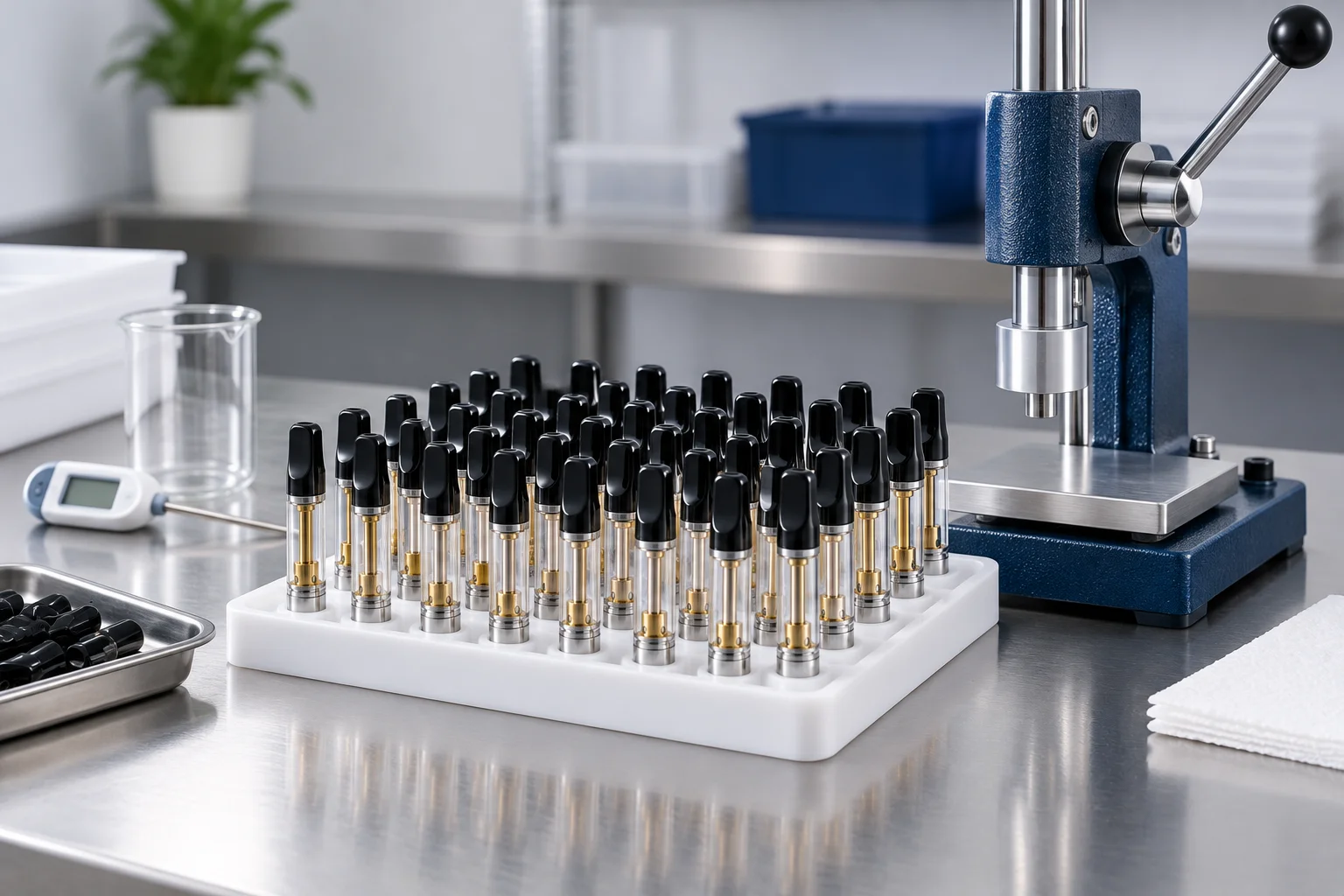
Snap-fit and press-fit caps are designed to lock once and stay locked for the life of the cartridge. On a snap-fit cartridge the mouthpiece clicks over a collar when it is pressed straight down. CCELL batch caps the snap-fit TH2-SE on a press at 50 pieces at a time. The screw-on version of the same cartridge is simply turned by hand instead.
A published filling and capping guide for press-fit cartridges puts numbers on that lock. It calls for about 3 to 4 kilograms of force on one cartridge line. Its Easy-press line needs 7 to 8 kilograms, applied with a light duty arbor press. The guide states plainly that “Once locked, Easy-press cartridges cannot be opened.” It also warns fillers not to reuse a mouthpiece that failed to seat on the first try.
That one-way design is deliberate and should not be read as a flaw in the hardware. Brands that sell prefilled cartridges need the buyer to see at a glance whether a cartridge has been opened. California law goes further and requires cannabis products to sit in a tamper-evident and child-resistant package before they are sold. A cap that cannot come off without visible damage shows that the product reached you exactly as it left the line.
Forcing one of these caps rarely ends the way you hope. The glass tank, the brass center post and the ceramic core are pressed together tightly. Prying or twisting usually cracks the tank or loosens the post before the cap moves at all. A cracked tank leaks, and oil exposed to open air and metal tools is no longer the product the brand tested. Most prefilled carts are not meant to be refilled either, which is the next question readers ask.
Can You Refill a CCELL Cartridge?
You can refill a CCELL cartridge that was sold empty with a screw-on mouthpiece, because that version is built for repeat filling. Hamilton Devices, a US hardware supplier that sells CCELL cartridges, describes the TH2-EVO with a screw-in mouthpiece as refillable. The same supplier sells a single use version of that cartridge with a press-fit cap for brands that sell it prefilled.
A prefilled cartridge from a licensed brand is a different case altogether. Its cap was pressed on to stay, and its label describes the oil that was tested when it was filled. Its packaging was approved for that one product as well. Once the cartridge has been opened and refilled, none of those statements still holds. The sensible choice is to treat a prefilled cartridge as single use and dispose of it the way local rules direct.
If you fill an empty refillable cartridge yourself, give the ceramic core enough time to soak before the first draw. Hamilton Devices suggests waiting about half an hour after filling. The capping guide adds that thick oils can take more than 24 hours to saturate the core fully. A dry or burnt first draw usually means the core needed longer, not that the cartridge is faulty.
Brands face the same saturation and capping questions on a much larger scale. Most of the real craft in a CCELL cartridge happens on the filling line long before it reaches a buyer. That process explains a great deal about how the finished cartridge behaves in your hand.
Filling CCELL cartridges under your own brand?
Send us one filled cartridge and the quantity you need. We will return a dieline and a price for a box that holds it upright within the week.
How Do Brands Fill and Cap CCELL Cartridges?
Brands fill CCELL cartridges with warm oil, leave room at the top and cap each one once the oil reaches the inlet holes. The figures below come from the published filling and capping guide and from the CCELL product page for the TH2-SE.
| Step | Figure | Source |
|---|---|---|
| Oil temperature, thick distillate | 80°C (176°F) or below | Filling and capping guide |
| Oil temperature, thinner oil | 60°C (140°F) or below | Filling and capping guide |
| Headspace | Keep the top 4 mm of the tank free of oil | Filling and capping guide |
| When to cap | As soon as the oil reaches the inlet holes | Filling and capping guide |
| Capping force | 3 to 4 kg on one line, 7 to 8 kg on Easy-press | Filling and capping guide |
| Batch capping | 50 snap-fit cartridges at a time | CCELL TH2-SE product page |
| Saturation time | More than 24 hours for thick oil | Filling and capping guide |
| Failed cap | Fit a new mouthpiece, never press the old one again | Filling and capping guide |
Every one of those figures protects the same result, which is a cartridge that reaches the buyer full, sealed and unchanged. A tank filled too high pushes oil out as the cap goes on. A cap that seats unevenly leaves a gap that a second press will not close reliably. That is why the guide tells fillers to fit a fresh mouthpiece instead.
Quality testing belongs after the core has saturated and never straight off the line. A cartridge fired straight away can taste burnt even when nothing is wrong, because the core has not soaked through yet. Once the cartridge is filled and capped correctly, the battery it meets decides how it performs.
Which Battery Works With a CCELL Cartridge?
Any battery with a standard 510 thread connects to a CCELL cartridge, because the 510 thread is the shared connection across this market. The heating element in the TH2-SE is rated at 1.4 ohms. CCELL also makes its own 510 batteries, and the table lists current models with the figures the company publishes.
| Battery | Capacity | Setting |
|---|---|---|
| M3 Plus | 350 mAh | Dual temperature settings |
| M3B Plus | 550 mAh | 3 voltage settings |
| Palm Pro | 500 mAh | Not listed on the product grid |
| Stylo | 500 mAh | Not listed on the product grid |
| Sandwave | 400 mAh | Variable voltage |
| Go Stik | 280 mAh | Dual heat |
| Fino | 190 mAh plus 1,000 mAh | 8 variable voltage settings |
Start on the lowest setting with any new cartridge and step up only when the draw feels thin. A higher setting heats the oil faster and also uses it faster. The setting you choose shapes how long a cartridge lasts almost as much as its size does. Always unscrew the cartridge from the battery before you open, clean or store it. A connected cartridge can heat if the button is pressed by accident in a bag or a pocket.
How Long Does a CCELL Cartridge Last?
A CCELL cartridge lasts exactly as long as its oil, and that depends on three things you control and one you do not. The three you control are the capacity you buy, the setting you run and how long each draw lasts. The one you do not control is how thick the brand made the oil.
Capacity is the easiest of those to compare across brands. The TH2-SE comes in 0.5 ml, 1 ml and 1.2 ml sizes. A 1 ml cartridge holds twice the oil of a 0.5 ml one in a tank only 10 mm taller. Longer draws and higher settings both pull more oil with every puff. That is why two people using the same cartridge can see very different results.
A cartridge that stops producing vapor while oil is still visible in the tank is usually not empty. Thick oil can pull away from the inlet holes when it gets cold. Leave the cartridge upright at room temperature for a while so the oil can settle back against the core. It costs nothing to try before you decide the cartridge is finished.
Why Is My CCELL Cartridge Clogged or Leaking?
Most clogs and leaks come from temperature, storage or force rather than from a faulty cartridge. The ceramic core holds oil in its pores, so anything that moves oil away from the core or past the seal shows up quickly. The table matches the usual signs to their most likely cause and the first thing to try.
| What you notice | Likely cause | What to try |
|---|---|---|
| Hard draw with oil in the tank | Thick oil has cooled and pulled away from the inlet holes | Stand it upright at room temperature, then take a short draw on the lowest setting |
| Oil in the mouthpiece | Long or hard pulls, or a cartridge stored on its side | Store it upright and take shorter and gentler draws |
| Oil on the battery or the base | A cracked tank or a post loosened by forcing the cap | Stop using it, because a cracked cartridge cannot be sealed again |
| Burnt taste on a new cartridge | The core has not finished soaking | Wait before the next draw and start on the lowest setting |
| Burnt taste on an old cartridge | The oil level has dropped below the inlet holes | Treat the cartridge as finished |
| No vapor and no light on the battery | A loose or dirty 510 connection | Unscrew it, wipe both threads with a dry cloth and reconnect hand tight |
Leaks after a cartridge has been forced open are the one case with no fix. Once the tank or the seal around the post is damaged, oil will find the gap every time the cartridge warms. For a brand, a run of leaking returns is usually worth tracing back to headspace and capping pressure on the line. Many readers then ask whether these cartridges are worth using at all, so it helps to weigh the pros and cons.
What Are the Pros and Cons of a CCELL Cartridge?
The strengths of a CCELL cartridge come from its materials, and its weaknesses come mostly from its single use design. The table sets them side by side using the figures CCELL publishes for the TH2-SE.
| Part | Pro | Con |
|---|---|---|
| Heating element | Ceramic core with no cotton wick to scorch | Thick oil can starve the inlets when cold |
| Tank | Borosilicate glass shows the oil level | Glass cracks when a cap is forced |
| Center post | Low lead brass | Mixed metal and glass is hard to recycle |
| Connection | Standard 510 thread fits most batteries | Heat varies from one battery to the next |
| Mouthpiece | Snap-fit and press-fit caps show tampering | Prefilled carts cannot be reopened or refilled |
| Sizes | 0.5 ml, 1 ml and 1.2 ml | Each size needs its own box insert |
For a buyer the main tradeoff is convenience against waste. A prefilled cartridge is simple to use, yet it ends its life as glass, brass and ceramic that local rules usually keep out of household recycling. For a brand the tradeoff is control, since a locked cap protects the product but leaves no room for a second attempt at the fill. Many brands weigh the same points when they choose between a cartridge and a complete disposable device.
What Is the Difference Between a CCELL Cartridge and an All-In-One Disposable?
A cartridge is only the tank and the heating core, while an all-in-one disposable adds the battery and charging port in one sealed body. A cartridge needs a separate 510 battery before it will work. An all-in-one works straight from the box and is disposed of as a single unit once it is empty.
CCELL lists several all-in-one devices on its website, including the Tank, the Eco Star, the Mini Tank, the Rosin Bar and the Voca Pro. It also lists disposables such as the BlancTank and the SlymTank. Some of these devices carry their own child safety features built into the body. The company describes a child-resistant lock on the Tank and a preheat and child-resistant button on the Voca Pro.
None of these devices is designed to be opened by the buyer. The battery sits inside the same housing as the oil and the core. Prying an all-in-one apart risks damaging a lithium cell as well as cracking the tank. That battery also changes what you should do with the device once it is empty.
What Should You Do With an Empty CCELL Cartridge?
Treat an empty all-in-one disposable as household hazardous waste, and check your local rules for a plain cartridge. The US Environmental Protection Agency tells individuals “Do NOT put e-cigarettes in your household trash or recycling.” It warns that lithium batteries can catch fire when damaged, and that trash compactors often damage them on the way to a waste facility.
The same EPA guidance tells you to take e-cigarettes to a household hazardous waste collection site instead. It notes that these collections are typically free for residents. Your local solid waste agency can tell you where the nearest one is. A plain cartridge with no battery carries less fire risk, yet it still holds oil residue. Ask your local program whether it takes plain cartridges at the same collection point.
For brands the end of life question reaches back to the box. A carton that tells the buyer how to dispose of the device is one more panel doing useful work. It fits naturally beside the warnings and compliance text the box already carries. That brings us to the part of a cartridge that this site knows best.
How Should CCELL Cartridges Be Packaged?
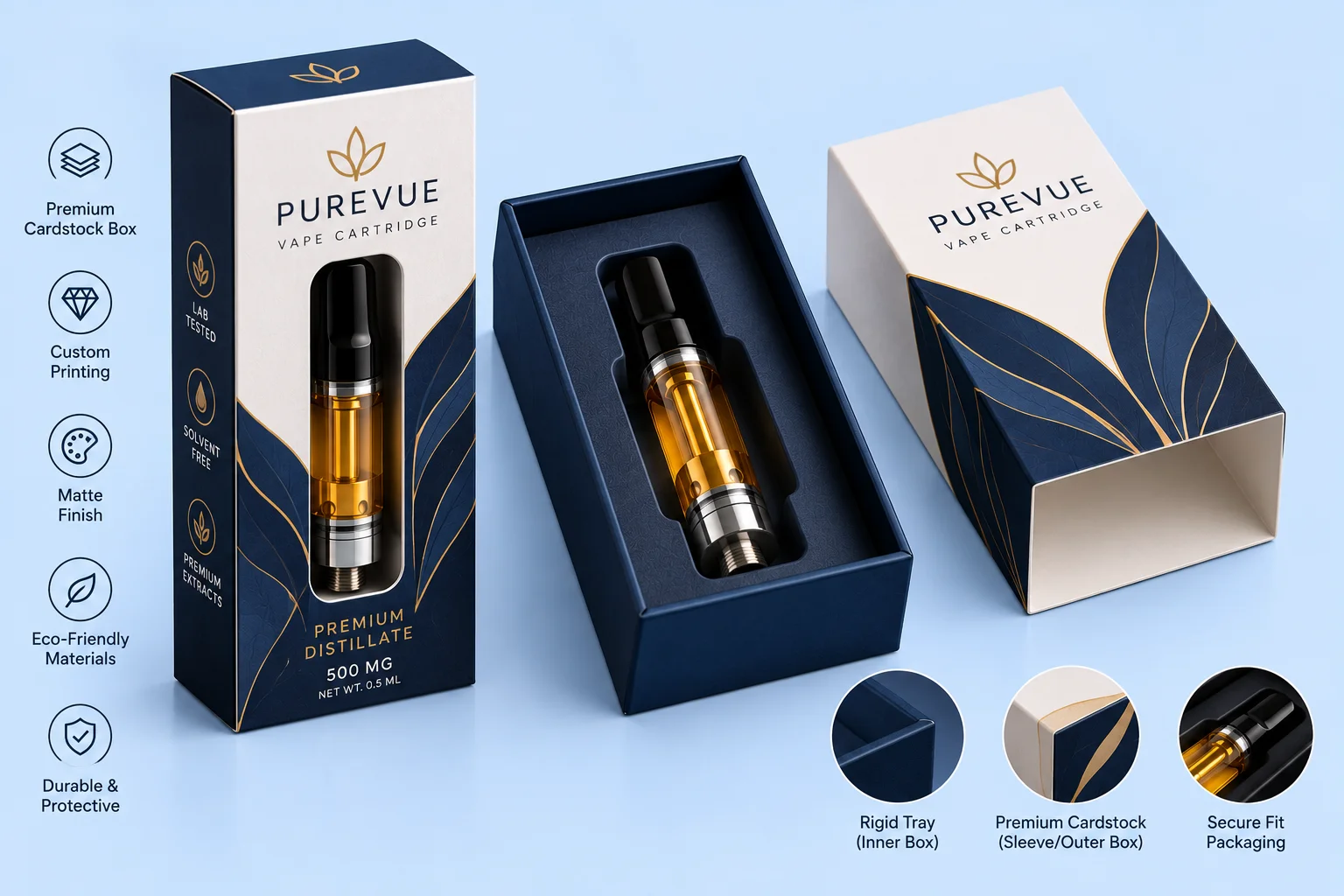
A filled CCELL cartridge needs a box that holds it upright and shows clearly that it has not been opened. It also has to meet the child resistance rules of the state where it is sold. The glass tank is the fragile part, so the box has to stop the cartridge from moving rather than simply cover it.
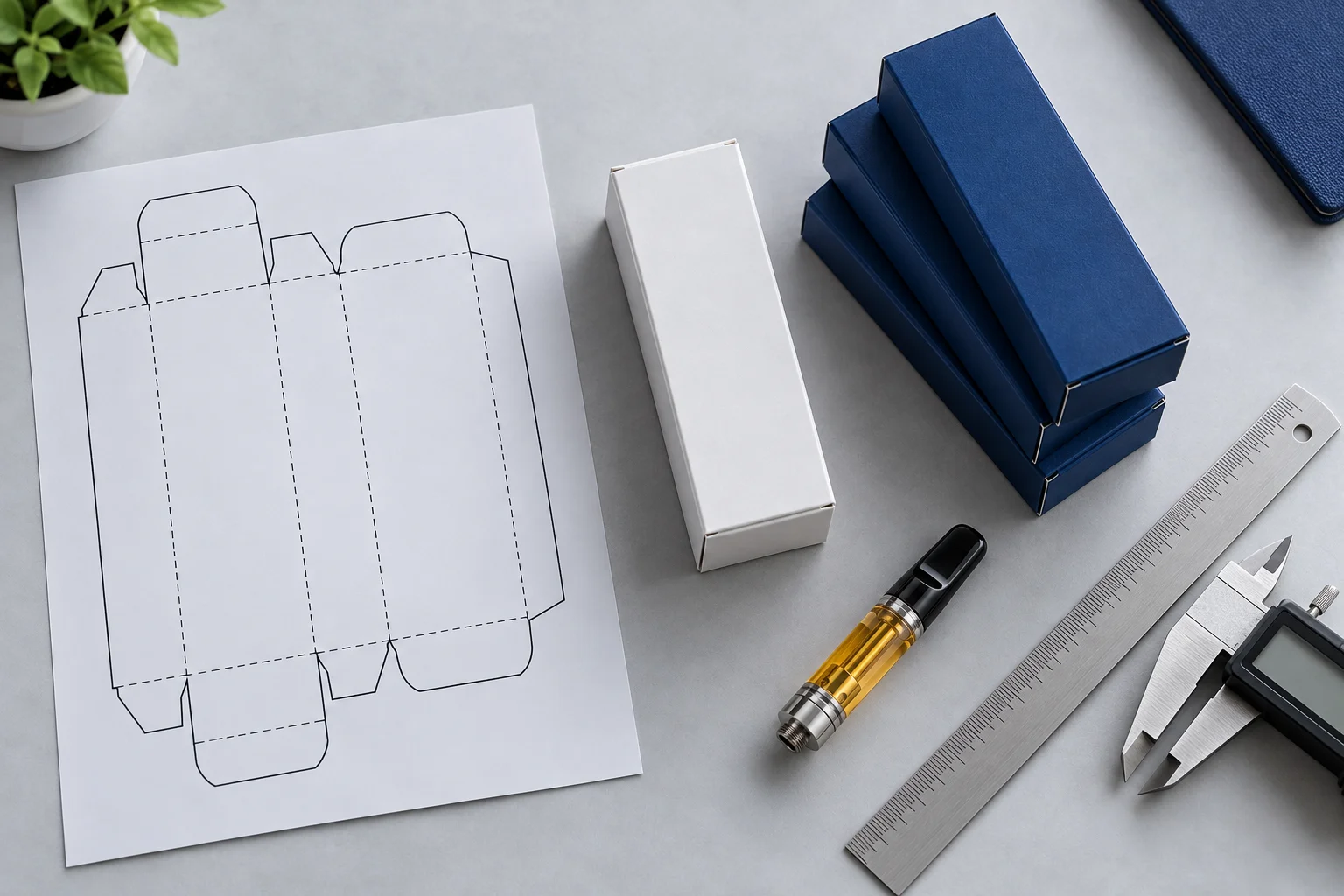
Start from the cartridge you fill rather than from a stock box size. A TH2-SE measures 10.5 mm across and stands 52, 62 or 66 mm tall depending on its capacity. A mouthpiece with a wider tip or a flared base changes those figures. We make custom cartridge boxes in Neptune, New Jersey, and every one starts from the filled cartridge you send. A die cut card or foam bed inside our vape cartridge packaging boxes keeps the glass off the walls.
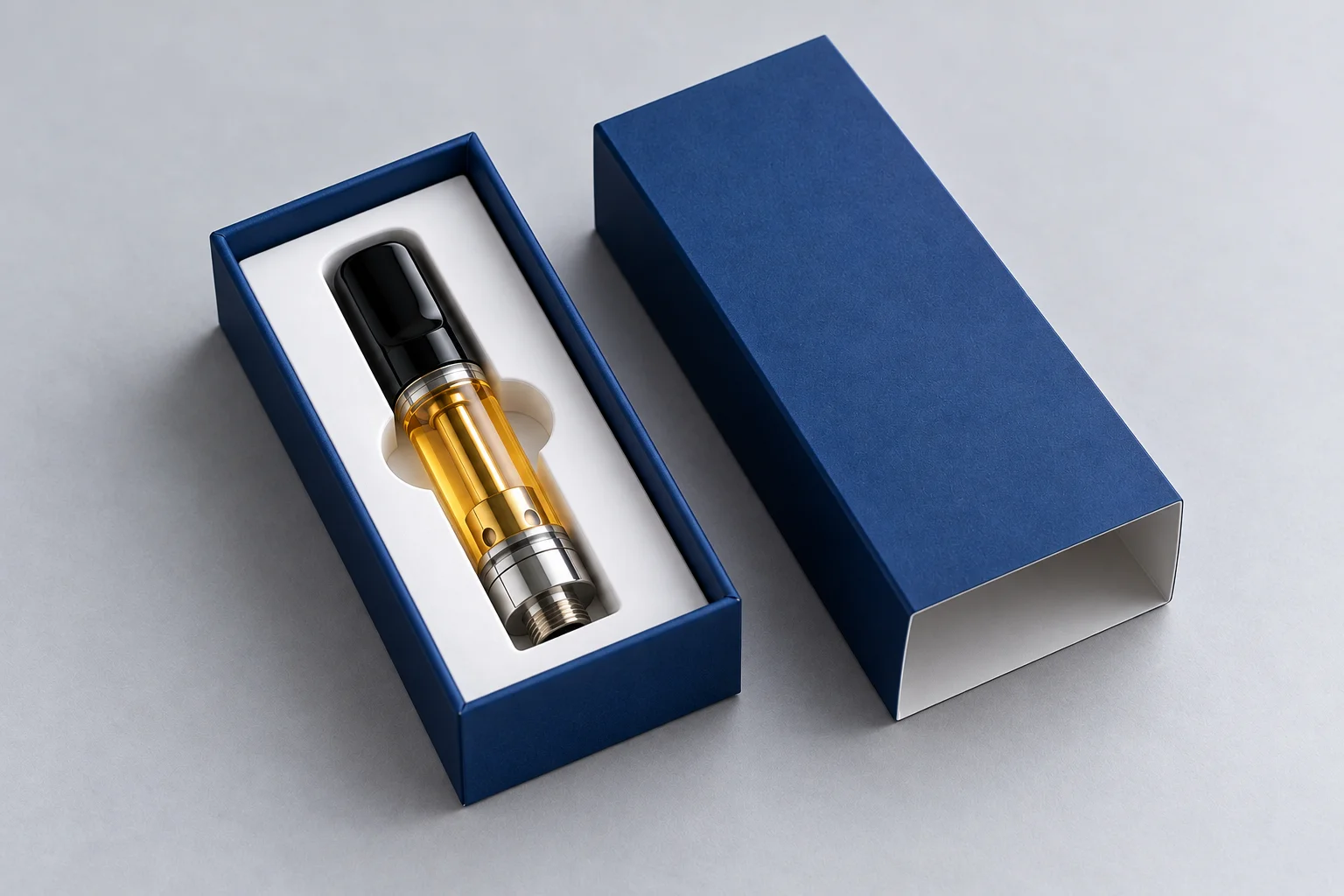
Compliance shapes the rest of the box, and California is the clearest example. California lists vape cartridges under single use child-resistant packaging on the site of its Department of Cannabis Control. That package must be child-resistant until it is opened but does not need to reclose. Its label must state “This package is not child-resistant after opening.” Packaging certified under the Poison Prevention Packaging Act is one of the forms California accepts as child-resistant.
Cartridges that contain nicotine fall under a separate federal rule. Under 21 CFR 1143.3 the nicotine warning must cover at least 30 percent of each principal display panel. Brands that sell several products usually keep one look across the whole range. Our custom vape boxes and CBD boxes use the same board and print options, so a cartridge carton can sit beside a battery box without clashing.
How Do You Order Boxes for CCELL Cartridges?
Send us one filled cartridge or its exact dimensions with the mouthpiece fitted, along with the quantity you need, through our quote form. We return a dieline and a price within the week. The terms below hold whether you order 100 boxes or 5,000.
- Minimum order is 100 units per size and design across every material in this range
- Price breaks arrive at 500 and 1,000 units on one artwork and not across mixed designs
- Production takes 8 to 10 business days for folding carton and 10 to 12 for rigid and wrapped
- A plain sample takes 3 to 5 business days and a printed one takes 7 to 10
- No setup or tooling fees apply because the die and the plates sit inside your unit price
- Shipping is free across the United States on every order we take
Order a plain sample before your first printed run and seat a filled cartridge in the insert yourself. A cartridge that rattles in a box on your desk will rattle much harder in a delivery van. If you want a different style for a pen or a set, our die cut boxes are cut to the exact outline of whatever you send us.
Related reading
How to ship a product with a lithium battery inside covers the battery testing and labeling rules that apply before any product with a lithium cell ships.
How to measure box dimensions explains how to take inside dimensions, which is the first step before any cartridge box is quoted.
CMYK explained shows why the color on a printed carton never quite matches your screen and how to plan artwork around it.
Frequently asked questions
The short version
Open a CCELL cartridge only when it has a screw-on mouthpiece, and turn the cap by hand while you hold the metal base. A snap-fit, press-fit or all-in-one cartridge is built to stay closed, so the safe choice is to finish it and dispose of it properly.
For brands the lesson runs the other way, because a cap that never reopens is part of what keeps a product compliant. Fill to the right headspace, cap each cartridge once and pack it upright in a box that holds the glass still.
Ready to box your CCELL cartridges?
At The Customized Boxes we cut every cartridge box from the filled cartridge you send, from 100 units per size and design with free shipping across the United States.
