







Why Does the Lid Fit the Rim and Not the Ounces?
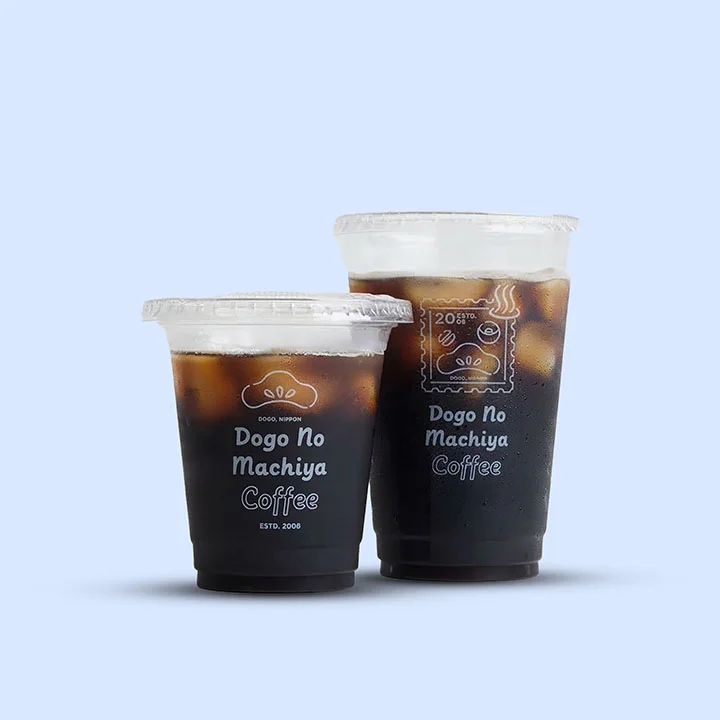
A disposable cup is a tapered cone so the same rim can sit on top of a short cup or a tall one. Manufacturers use that on purpose because it lets a venue stock one lid across three drink sizes instead of three separate lids.
That sharing is genuinely useful to a venue once somebody explains it. A café running 16 oz, 20 oz and 24 oz cold cups on a 98 mm rim buys one lid, holds one line of stock. Never runs out of the wrong size during a rush.
It is also the single most common source of trouble when someone changes supplier. Rim diameters are not standardized across the industry so a 16 oz cup from one factory can measure 95 mm while another measures 98 mm. Both are sold as 16 oz and neither lid fits the other cup.
So the number we actually need from you is the rim measurement rather than the volume. If you already hold cups and want lids that fit them measure across the outside of the rim and send us that figure in millimeters.
What Size Cup Do You Need?
These are the sizes we run most often, with the rim each one normally carries.
| Size | Volume | Usual rim | Best for |
|---|---|---|---|
| 9 oz | 266 ml | 78 mm | Water, juice and tasting samples |
| 12 oz | 355 ml | 92 mm | Soda and smaller iced coffees |
| 16 oz | 473 ml | 98 mm | Iced coffee, beer and soda |
| 20 oz | 591 ml | 98 mm | Large fountain drinks |
| 24 oz | 710 ml | 98 mm | Smoothies and large iced teas |
| 32 oz | 946 ml | 107 mm | Sharing sizes and event drinks |
Read the rim column rather than the volume column when you order lids. The 16 oz, 20 oz and 24 oz sizes share a 98 mm rim in this range which means one lid covers all three of them.
The 32 oz sits on its own and this catches people out regularly. Most 32 oz PET cold cups on the market use a 107 mm rim rather than 98 mm. So adding a 32 oz to an existing range usually means adding a second lid as well. Published charts do vary between factories so confirm the rim before you assume your existing lid will carry over.
Sixteen ounce is the size we print more than all the others combined. It suits iced coffee, soda and beer and it sits in the middle of the rim range so the lid works upward as well.
Which Material Suits Your Drink?
The material decides what the cup can hold before artwork enters the conversation at all.
| Material | Look | Temperature | Where it belongs |
|---|---|---|---|
| PET | Glass clear | Cold drinks only, softens from around 60 to 70°C | Iced drinks and standard clear cups |
| PP | Translucent with a slight haze | Hot drinks up to around 100°C | Coffee, tea and soup |
| PS | Clear but more brittle | Cold drinks only | Lower cost short run work |
| PLA | Clear and plant based | Cold drinks only | Commercial composting programs |
PET is what most people picture when they say clear plastic cup because it is the only one of the four that reads as genuinely glass clear. PP is the workhorse for anything hot and the trade off is that it never looks as clear as PET no matter what you do to it.
PLA looks almost identical to PET on a shelf, which is convenient for the customer and a problem at the recycling bin. The recycling section further down explains why that matters.
Why Are Clear Cups Only for Cold Drinks?
PET starts to lose its shape somewhere between 60 and 70°C, and published figures vary depending on how the material was processed. Coffee is normally served well above that so a clear PET cup filled with hot coffee softens in the hand. The rim can distort enough that the lid stops sealing.
None of that is a quality problem with the cup itself. It is the material behaving the way the material behaves and no supplier can print their way around it.
Polypropylene is the answer whenever any heat is involved. It holds up to around 100°C which covers coffee, tea and soup comfortably. What you give up is clarity because PP is translucent rather than transparent and a drink inside it looks hazy rather than sharp.
If your menu runs both hot and cold, order both materials rather than trying to find one cup that does everything. A single material that serves both does not exist at this price point.
Which Lid Should You Choose?
| Lid | How it works | Best for |
|---|---|---|
| Flat with a straw slot | A cross cut or slot takes a straw | Soda, iced coffee and iced tea |
| Strawless sip through | A raised lip you drink from directly | Venues cutting plastic straws |
| Dome | Extra height above the rim | Whipped cream, toppings and layered drinks |
| Flat with no hole | A sealed lid with no opening | Delivery and prepared drinks in transit |
| Sealing film | Heat sealed across the rim | Bubble tea and anything shaken |
The strawless lid deserves more attention than it usually gets because in several states it is no longer just a preference.
New Jersey has required food service businesses to hand out single use plastic straws only when a customer asks since 4 November 2021. Businesses still have to keep an adequate supply on hand for those who do. California operates a similar rule for its own food service businesses. A sip through lid lets you serve a drink without opening that conversation at every order.
Dome lids cost more and take more space in storage so order them only for the drinks that need the headroom. A café serving both plain iced coffee and topped drinks usually runs flat lids as standard and keeps domes for the menu items that call for them.
How Are Custom Plastic Cups Printed?
Cups are printed round rather than flat which rules out most of the methods used on board packaging. Three processes cover almost everything we run in this category.
| Method | How it works | Best for | Trade off |
|---|---|---|---|
| Dry offset | The cup turns on a mandrel while ink transfers onto it | Logos, solid colors and line artwork | Setup per design so volume makes it work |
| Screen printing | Ink is pushed through a mesh onto the cup | Simple logos in one or two colors | Heavier ink film, limited detail |
| Shrink sleeve | A printed film is slid over the cup and shrunk on | Photographs, gradients and full wraps | Highest cost per cup and an extra material layer |
Dry offset is where the volume sits and it is the reason our minimum is what it is. Plates and a mandrel are prepared around your specific artwork and cup and that preparation costs the same whether you then run 500 cups or 50,000. Spread across 5,000 the cost per cup makes sense, and spread across 500 it does not.
Screen printing is worth asking about when the quantity is genuinely small or the artwork is one flat color. It lays down a heavier film of ink than dry offset which gives strong solid color and struggles with fine detail.
Shrink sleeve is the option when the design has to cover the whole cup with photography or gradients. It gives you almost unlimited print freedom and it costs more per cup. The sleeve adds a second material that affects how the cup is handled at end of life.
Why Do Colors Look Different on a Clear Cup?
The reason is that there is no white surface behind the ink. Every other pack we print sits on white or brown board and that surface reflects light back through the ink to give a color its strength.
A clear PET cup has nothing behind it except the drink and whatever is on the other side of the room. Printed colors go translucent and the drink inside shifts them again so a pale brand blue can almost disappear against a dark cola.
The fix is a white underprint which is a layer of white ink laid down first with your artwork printed on top of it. That gives the color the same white base it would have on board and it makes brand colors behave the way your guidelines expect them to.
Ask for the underprint whenever the artwork uses pale tints or a specific brand color. Skip it when the design is a bold single color meant to read as translucent. Send us vector PDF or AI files with Pantone numbers named, and our artwork guidelines page covers the file setup in detail.
Is the Material Food Safe?
Yes and the specific regulation is worth naming because buyers are increasingly asked for it by their own customers.
Food contact plastics in the United States sit under 21 CFR Part 177 which covers polymers used as components of food contact surfaces. Two sections of it matter for cups in particular. PET is covered by 21 CFR 177.1630, listed as polyethylene phthalate polymers, and polypropylene is covered by 21 CFR 177.1520, listed as olefin polymers.
We supply the documentation for whichever material we are running on request. Ask for it at quote stage rather than after delivery. That is because a food service buyer or a retail account will very often ask you for it before they will list your product.
Can Your Customer Recycle the Cup?
PET carries resin code 1 and is one of the most widely collected plastics in the country. So a clean PET cup has a real route in most places. Whether your local facility actually accepts cups rather than only bottles is a separate question worth checking locally.
PLA is where the confusion happens and it is worth understanding before you print a claim on the cup. PLA and PET look almost identical, and PLA in a PET recycling stream is a contaminant rather than a bonus. It needs commercial composting instead which is a facility most areas do not have.
So a PLA cup is the right choice when your venue has access to commercial composting and the wrong choice when it does not. Choosing it without that access means the cup goes to landfill. Carrying a green claim on the side which is worse for the brand than a plain PET cup would have been.
A shrink sleeve complicates either of those routes considerably. The sleeve is a different material from the cup and it has to be separated before the cup can be processed, and very few customers will do that.
What Should You Send Us Before We Quote?
| What you send us | What we build from it |
|---|---|
| The drink and whether it is hot or cold | PET, PP or PLA |
| The sizes you want to run | Rim diameters and how many lids you need |
| A rim measurement if you already hold cups | Whether your existing lids carry over |
| Your artwork and how much of the cup it covers | Dry offset, screen or shrink sleeve |
| Whether the artwork uses pale or exact brand colors | Whether a white underprint is needed |
| Whether straws are handed out or on request | Flat, strawless or sealing film |
If you already hold cups, measure the rim across the outside in millimeters and send us that number. It settles the lid question in one line and saves a round of samples.
Minimum Order, Lead Time, and Samples
- Minimum order: 5,000 cups per size and per design because printing is set up around your artwork
- Digital proof: 1 to 2 business days from your artwork
- Physical sample: on demand, quoted alongside the job itself
- Production: 12 to 15 business days after you approve the artwork
- Indicative price: roughly $0.10 to $0.30 per cup depending on size, method and quantity
- Setup and tooling: no separate charge, the plates and mandrel setup sit inside your unit price
- Artwork: vector PDF or AI with Pantone numbers named and fonts outlined
- Food contact: FDA 21 CFR compliant material with documentation on request
- Shipping: free across the United States on every order
Cup size moves the price more than the number of colors does. A 32 oz cup uses roughly three times the material of a 9 oz cup while a second print color adds far less than that.
The 5,000 minimum is higher than the minimum on our printed board packaging and there is a reason for the difference. A box needs a cutting die which is quick to make and covers any quantity. A printed cup needs plates and a mandrel set up around one specific artwork. One specific cup and that setup only makes sense spread across a real production run.
Request a Quote
Send us the drink, the sizes you want and your artwork. If you already hold cups, add the rim measurement in millimeters so we can tell you straight away whether your current lids carry over. We will come back with a material, a rim, a print method and a unit price. You can also start on our quote page if you already have your sizes.
 The Customized Boxes