Home Custom Retail Packaging Disposable Plastic Cups
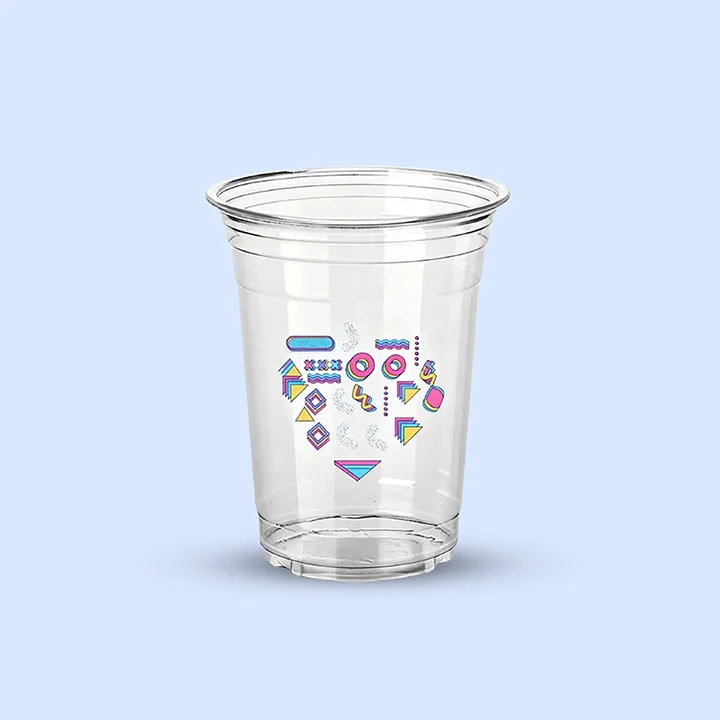
16 oz disposable plastic cups
Disposable Plastic Cup for parties
disposable plastic cups with lids
custom branded 16 oz clear plastic disposable pet cups

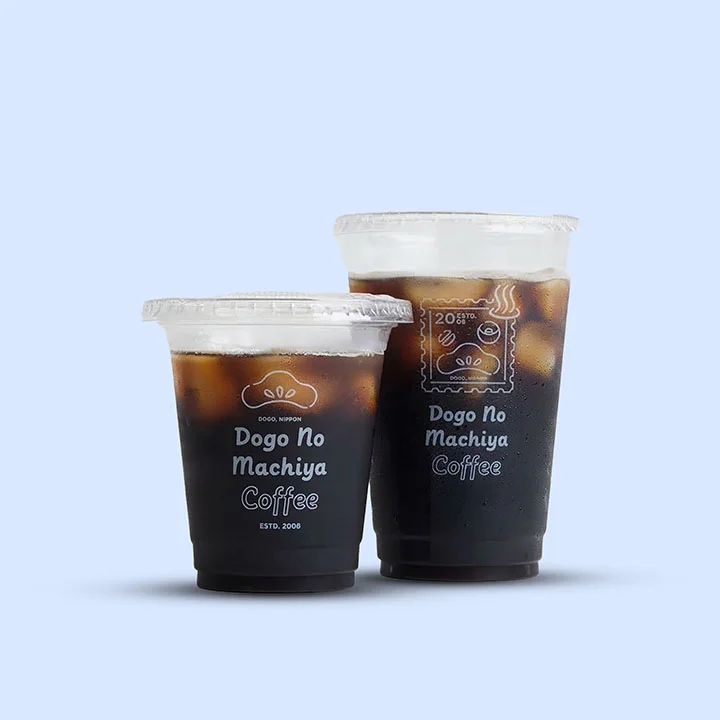
Custom Printed Disposable Plastic Cups

Clear disposable plastic cups are made from PET, which suits cold drinks and nothing else. PET starts to soften somewhere between 60 and 70°C, so a clear cup filled with hot coffee loses its shape in the hand. That one fact decides more about your order than the artwork ever will.

The second thing worth knowing before you order is that lids are not sized in ounces at all. A lid fits the rim diameter of the cup, and a 16 oz, a 20 oz and a 24 oz cup usually share the same 98 mm rim. One lid therefore covers all three of those sizes, which is why most cup and lid mismatches happen between suppliers rather than between sizes.

We print and supply custom printed disposable plastic cups at The Customized Boxes in sizes from 9 oz through 32 oz, with matching lids and straws. You tell us the drink, the size and how the cup gets carried, and we specify the material, the rim and the print method around that. Our minimum order is 5,000 cups per size and per design. Shipping is free across the United States on every order.

Get Custom Quote


Why Does the Lid Fit the Rim and Not the Ounces?

A disposable cup is a tapered cone so the same rim can sit on top of a short cup or a tall one. Manufacturers use that on purpose because it lets a venue stock one lid across three drink sizes instead of three separate lids.

That sharing is genuinely useful to a venue once somebody explains it. A café running 16 oz, 20 oz and 24 oz cold cups on a 98 mm rim buys one lid, holds one line of stock. Never runs out of the wrong size during a rush.

It is also the single most common source of trouble when someone changes supplier. Rim diameters are not standardized across the industry so a 16 oz cup from one factory can measure 95 mm while another measures 98 mm. Both are sold as 16 oz and neither lid fits the other cup.

So the number we actually need from you is the rim measurement rather than the volume. If you already hold cups and want lids that fit them measure across the outside of the rim and send us that figure in millimeters.

What Size Cup Do You Need?

These are the sizes we run most often, with the rim each one normally carries.

Cup sizes, volume, the rim each one normally carries and what it suits
Size Volume Usual rim Best for
9 oz 266 ml 78 mm Water, juice and tasting samples
12 oz 355 ml 92 mm Soda and smaller iced coffees
16 oz 473 ml 98 mm Iced coffee, beer and soda
20 oz 591 ml 98 mm Large fountain drinks
24 oz 710 ml 98 mm Smoothies and large iced teas
32 oz 946 ml 107 mm Sharing sizes and event drinks

Read the rim column rather than the volume column when you order lids. The 16 oz, 20 oz and 24 oz sizes share a 98 mm rim in this range which means one lid covers all three of them.

The 32 oz sits on its own and this catches people out regularly. Most 32 oz PET cold cups on the market use a 107 mm rim rather than 98 mm. So adding a 32 oz to an existing range usually means adding a second lid as well. Published charts do vary between factories so confirm the rim before you assume your existing lid will carry over.

Sixteen ounce is the size we print more than all the others combined. It suits iced coffee, soda and beer and it sits in the middle of the rim range so the lid works upward as well.

Which Material Suits Your Drink?

The material decides what the cup can hold before artwork enters the conversation at all.

Cup materials, how each looks, what temperature it takes and where it belongs
Material Look Temperature Where it belongs
PET Glass clear Cold drinks only, softens from around 60 to 70°C Iced drinks and standard clear cups
PP Translucent with a slight haze Hot drinks up to around 100°C Coffee, tea and soup
PS Clear but more brittle Cold drinks only Lower cost short run work
PLA Clear and plant based Cold drinks only Commercial composting programs

PET is what most people picture when they say clear plastic cup because it is the only one of the four that reads as genuinely glass clear. PP is the workhorse for anything hot and the trade off is that it never looks as clear as PET no matter what you do to it.

PLA looks almost identical to PET on a shelf, which is convenient for the customer and a problem at the recycling bin. The recycling section further down explains why that matters.

Why Are Clear Cups Only for Cold Drinks?

PET starts to lose its shape somewhere between 60 and 70°C, and published figures vary depending on how the material was processed. Coffee is normally served well above that so a clear PET cup filled with hot coffee softens in the hand. The rim can distort enough that the lid stops sealing.

None of that is a quality problem with the cup itself. It is the material behaving the way the material behaves and no supplier can print their way around it.

Polypropylene is the answer whenever any heat is involved. It holds up to around 100°C which covers coffee, tea and soup comfortably. What you give up is clarity because PP is translucent rather than transparent and a drink inside it looks hazy rather than sharp.

If your menu runs both hot and cold, order both materials rather than trying to find one cup that does everything. A single material that serves both does not exist at this price point.

Which Lid Should You Choose?

Lid styles and what each one is best suited to
Lid How it works Best for
Flat with a straw slot A cross cut or slot takes a straw Soda, iced coffee and iced tea
Strawless sip through A raised lip you drink from directly Venues cutting plastic straws
Dome Extra height above the rim Whipped cream, toppings and layered drinks
Flat with no hole A sealed lid with no opening Delivery and prepared drinks in transit
Sealing film Heat sealed across the rim Bubble tea and anything shaken

The strawless lid deserves more attention than it usually gets because in several states it is no longer just a preference.

New Jersey has required food service businesses to hand out single use plastic straws only when a customer asks since 4 November 2021. Businesses still have to keep an adequate supply on hand for those who do. California operates a similar rule for its own food service businesses. A sip through lid lets you serve a drink without opening that conversation at every order.

Dome lids cost more and take more space in storage so order them only for the drinks that need the headroom. A café serving both plain iced coffee and topped drinks usually runs flat lids as standard and keeps domes for the menu items that call for them.

How Are Custom Plastic Cups Printed?

Cups are printed round rather than flat which rules out most of the methods used on board packaging. Three processes cover almost everything we run in this category.

The three printing methods for cups and the trade off in each
Method How it works Best for Trade off
Dry offset The cup turns on a mandrel while ink transfers onto it Logos, solid colors and line artwork Setup per design so volume makes it work
Screen printing Ink is pushed through a mesh onto the cup Simple logos in one or two colors Heavier ink film, limited detail
Shrink sleeve A printed film is slid over the cup and shrunk on Photographs, gradients and full wraps Highest cost per cup and an extra material layer

Dry offset is where the volume sits and it is the reason our minimum is what it is. Plates and a mandrel are prepared around your specific artwork and cup and that preparation costs the same whether you then run 500 cups or 50,000. Spread across 5,000 the cost per cup makes sense, and spread across 500 it does not.

Screen printing is worth asking about when the quantity is genuinely small or the artwork is one flat color. It lays down a heavier film of ink than dry offset which gives strong solid color and struggles with fine detail.

Shrink sleeve is the option when the design has to cover the whole cup with photography or gradients. It gives you almost unlimited print freedom and it costs more per cup. The sleeve adds a second material that affects how the cup is handled at end of life.

Why Do Colors Look Different on a Clear Cup?

The reason is that there is no white surface behind the ink. Every other pack we print sits on white or brown board and that surface reflects light back through the ink to give a color its strength.

A clear PET cup has nothing behind it except the drink and whatever is on the other side of the room. Printed colors go translucent and the drink inside shifts them again so a pale brand blue can almost disappear against a dark cola.

The fix is a white underprint which is a layer of white ink laid down first with your artwork printed on top of it. That gives the color the same white base it would have on board and it makes brand colors behave the way your guidelines expect them to.

Ask for the underprint whenever the artwork uses pale tints or a specific brand color. Skip it when the design is a bold single color meant to read as translucent. Send us vector PDF or AI files with Pantone numbers named, and our artwork guidelines page covers the file setup in detail.

Is the Material Food Safe?

Yes and the specific regulation is worth naming because buyers are increasingly asked for it by their own customers.

Food contact plastics in the United States sit under 21 CFR Part 177 which covers polymers used as components of food contact surfaces. Two sections of it matter for cups in particular. PET is covered by 21 CFR 177.1630, listed as polyethylene phthalate polymers, and polypropylene is covered by 21 CFR 177.1520, listed as olefin polymers.

We supply the documentation for whichever material we are running on request. Ask for it at quote stage rather than after delivery. That is because a food service buyer or a retail account will very often ask you for it before they will list your product.

Can Your Customer Recycle the Cup?

PET carries resin code 1 and is one of the most widely collected plastics in the country. So a clean PET cup has a real route in most places. Whether your local facility actually accepts cups rather than only bottles is a separate question worth checking locally.

PLA is where the confusion happens and it is worth understanding before you print a claim on the cup. PLA and PET look almost identical, and PLA in a PET recycling stream is a contaminant rather than a bonus. It needs commercial composting instead which is a facility most areas do not have.

So a PLA cup is the right choice when your venue has access to commercial composting and the wrong choice when it does not. Choosing it without that access means the cup goes to landfill. Carrying a green claim on the side which is worse for the brand than a plain PET cup would have been.

A shrink sleeve complicates either of those routes considerably. The sleeve is a different material from the cup and it has to be separated before the cup can be processed, and very few customers will do that.

What Should You Send Us Before We Quote?

What we need from you and what we build from it
What you send us What we build from it
The drink and whether it is hot or cold PET, PP or PLA
The sizes you want to run Rim diameters and how many lids you need
A rim measurement if you already hold cups Whether your existing lids carry over
Your artwork and how much of the cup it covers Dry offset, screen or shrink sleeve
Whether the artwork uses pale or exact brand colors Whether a white underprint is needed
Whether straws are handed out or on request Flat, strawless or sealing film

If you already hold cups, measure the rim across the outside in millimeters and send us that number. It settles the lid question in one line and saves a round of samples.

Minimum Order, Lead Time, and Samples

  • Minimum order: 5,000 cups per size and per design because printing is set up around your artwork
  • Digital proof: 1 to 2 business days from your artwork
  • Physical sample: on demand, quoted alongside the job itself
  • Production: 12 to 15 business days after you approve the artwork
  • Indicative price: roughly $0.10 to $0.30 per cup depending on size, method and quantity
  • Setup and tooling: no separate charge, the plates and mandrel setup sit inside your unit price
  • Artwork: vector PDF or AI with Pantone numbers named and fonts outlined
  • Food contact: FDA 21 CFR compliant material with documentation on request
  • Shipping: free across the United States on every order

Cup size moves the price more than the number of colors does. A 32 oz cup uses roughly three times the material of a 9 oz cup while a second print color adds far less than that.

The 5,000 minimum is higher than the minimum on our printed board packaging and there is a reason for the difference. A box needs a cutting die which is quick to make and covers any quantity. A printed cup needs plates and a mandrel set up around one specific artwork. One specific cup and that setup only makes sense spread across a real production run.

Request a Quote

Send us the drink, the sizes you want and your artwork. If you already hold cups, add the rim measurement in millimeters so we can tell you straight away whether your current lids carry over. We will come back with a material, a rim, a print method and a unit price. You can also start on our quote page if you already have your sizes.

Size 9 oz, 12 oz, 16 oz, 20 oz, 24 oz, 32 oz. 16 oz is the most ordered
Volume 266 ml, 355 ml, 473 ml, 591 ml, 710 ml, 946 ml
Rim Diameter 78 mm, 92 mm, 98 mm, 107 mm. The lid fits the rim, not the ounces
Shared Lid 16 oz, 20 oz and 24 oz share a 98 mm lid. 32 oz normally needs 107 mm
Material Clear PET for cold drinks, PP for hot drinks, PLA for compostable programs
Temperature PET softens from around 60 to 70 C. PP holds to around 100 C
Lid Options Flat with straw slot, Strawless sip through, Dome, Flat with no hole, Sealing film
Printing Method Dry Offset, Screen Printing, Shrink Sleeve
Print Coverage Single color logo, Multi color artwork, Full 360 wrap on shrink sleeve
Color Scheme CMYK, Pantone. White underprint available for pale and exact brand colors
Add-Ons Matching lids, Straws, Sealing film, White underprint
Food Contact 21 CFR 177.1630 for PET and 21 CFR 177.1520 for PP. Documentation on request
Artwork Vector PDF or AI with Pantone numbers named and fonts outlined
Minimum Order 5,000 cups per size and per design
Indicative Price About $0.10 to $0.30 per cup depending on size, method and quantity
Cup Sample Digital Proof, 3D Mock-up, Physical Sampling (On Demand)
Setup and Tooling We do not charge a separate setup or tooling fee. The plates and the mandrel setup are included in your unit price
Turnaround Time 12 to 15 business days after you approve the artwork
Shipping Free across the United States
How To Order

How To Order Custom Boxes

Four steps from your first message to boxes on your dock. There are no setup or tooling fees at any stage, and delivery is free across the contiguous US.

  1. Tell Us About Your Product

    Send your product size, the packed weight and the quantity you need. We recommend the board grade and box style that fit, then quote a unit price with no setup fee.

  2. Approve Your Dieline

    Upload artwork as a vector PDF or AI file and we check it against our artwork guidelines for bleed, resolution and Pantone colors. If you have no artwork yet, our team draws it on our dieline for you.

  3. Check a Real Sample

    A plain structural sample takes 3 to 5 business days and a printed sample takes 7 to 10. You hold the actual box before the full run starts.

  4. Production and Free Delivery

    Production runs 8 to 10 business days after you approve the dieline. We pack your boxes and deliver them free across the contiguous US, with export orders quoted separately.

Start Your Quote

Minimum order is 100 boxes per size. Price breaks at 500 and 1,000 units.
Or build your own dieline first on our free dieline generator.

Build Your Dieline Free, Before You Order

Most suppliers send a dieline after you place an order. Ours is a live tool on this site. Pick a box style, type your own dimensions and download the file in a few seconds, with no account and no charge.

The Customized Boxes Download
Reverse Tuck End
reverse tuck · dust flaps Unit
mm cm in
Size
120120–200 6030–60 160100–550
Material Cardstock SBS (White) Generate
Details Ready to download. inside119.4 × 59.4 × 158.9 mm outside120.4 × 60.4 × 160.9 mm sheet375.5 × 309 mm boardSBS · 0.5 mm
CutCreaseBleed
Reverse tuck end dieline, 120 x 60 x 160 mm, from our generatorRed lines are cut, blue dashed lines are crease and the green outline is the bleed edge.
Sheet 375.5 × 309 mm Die 120 × 60 × 160 mm

Open the Dieline Generator

Every box style we make is in the tool, at any size you type. Exports to AI, PDF and SVG, and our design team checks your artwork on that dieline free of charge.

Plastic Cup Questions Buyers Ask

The answers below cover lid fit, materials, printing, food contact and recycling. Send us a rim measurement and your artwork if your question is not answered here.

What size lid fits a 16 oz cup?

A 98 mm lid is the usual answer for a 16 oz cold cup. The same lid normally fits 20 oz and 24 oz cups in the same range. That is because a lid fits the rim diameter rather than the volume, and those three sizes are built on one rim.

The 32 oz is the exception that catches people out. Most 32 oz PET cold cups use a 107 mm rim instead. So adding that size to your range usually means adding a second lid rather than extending the one you already stock.

Rim diameters are not standardized across the industry which matters more than anything else here. A 16 oz cup from one factory can measure 95 mm while another measures 98 mm and both are sold honestly as 16 oz cups.

If you already hold cups and need lids that fit them measure across the outside of the rim and send us that number in millimeters. That single measurement settles the question without a round of samples.

Can I use clear plastic cups for hot drinks?

No, and the reason is the material rather than the cup. Clear PET cups are built for cold drinks and they start losing their shape somewhere between 60. 70°C with published figures varying by how the material was processed.

Coffee is normally served a good way above that range. A PET cup filled with hot coffee softens in the hand. The rim can distort enough that the lid stops sealing properly which turns a drink into a spill.

Polypropylene is the material for anything hot and it holds up to around 100°C. That covers coffee, tea and soup comfortably and it is why hot cups are a different product rather than the same cup in a different size.

What you give up when you move to PP is clarity. It is translucent rather than transparent so the drink inside looks hazy rather than sharp, and no finish or additive makes it behave like clear PET.

Can you print full color photographs on plastic cups?

Yes, although not with the method most cups are printed by. Dry offset is the volume process and it handles logos, solid colors. Line artwork very well while detailed photographs and complex gradients are beyond what it does cleanly.

Shrink sleeve printing is the route to take for photographic artwork. A printed film is slid over the cup and shrunk into position which gives you close to unlimited coverage and complete freedom with color and gradients.

The two trade offs here are cost and extra material. A sleeved cup costs more per unit than a directly printed one and the sleeve is a second material wrapped around the first.

That second layer also affects recycling because the sleeve has to be separated from the cup before the cup can be processed. Very few customers will do that so weigh the print freedom against what happens to the cup afterward.

What is the minimum order for custom printed cups?

The minimum is 5,000 cups per size and per design. That is higher than the minimum on our printed board packaging and the difference comes down to how cups are printed rather than to any policy.

A printed box needs a cutting die which is made quickly and then covers any quantity you like. A printed cup needs plates and a mandrel prepared around one specific artwork. One specific cup shape and that preparation costs the same whether the run is 500 cups or 50,000.

Spread across 5,000 cups the setup makes sense and the unit price lands somewhere sensible. Spread across 500 it does not, and you end up paying more per cup than the cup is worth.

Screen printing is worth asking about if you genuinely need a smaller quantity. It suits simple one or two color artwork and carries less setup than dry offset so it can make a shorter run workable.

Why do my brand colors look wrong on a clear cup?

The reason is that no white surface sits behind the ink. Every printed box sits on white or brown board and that board reflects light back through the ink to give the color its strength.

A clear PET cup has nothing behind it except the drink and the room. Printed colors go translucent, and whatever is inside the cup shifts them again so a pale brand blue can nearly vanish against a dark cola.

The fix for that is a white underprint. A layer of white ink goes down first and your artwork prints straight on top of it. That gives the color the same white base it would have on board.

Ask for it whenever the artwork uses pale tints or a brand color that has to match a guideline. Skip it when the design is a bold single color that is meant to read as translucent because the effect can be attractive when it is deliberate.

Are PET cups recyclable and what about PLA?

PET carries resin code 1 and is one of the most widely collected plastics in the country. So a clean PET cup has a genuine route in most places. Whether your local facility takes cups as well as bottles is worth checking locally rather than assuming.

PLA is the material to be careful with here. It looks almost identical to PET on a shelf and that similarity is exactly the problem when the two end up in the same bin.

PLA in a PET recycling stream is a contaminant rather than a bonus because the two materials do not process together. PLA needs commercial composting instead and that is a facility most areas simply do not have.

So order PLA when your venue has access to commercial composting and avoid it when it does not. A compostable cup that goes to landfill while carrying a green claim on the side does more brand damage than a plain PET cup ever would.

Is the cup material food safe and can you prove it?

Yes and the regulation is worth naming because your own customers will increasingly ask you for it. Food contact plastics in the United States sit under 21 CFR Part 177, covering polymers used as components of food contact surfaces.

Two sections of it apply to cups specifically. PET falls under 21 CFR 177.1630, listed as polyethylene phthalate polymers, and polypropylene falls under 21 CFR 177.1520, listed as olefin polymers.

We supply documentation for the material we are running on request. Ask for it at quote stage rather than after delivery since a food service buyer or a retail account will usually want it before they list your product.

Keep the paperwork with your own records once you have it. It is the kind of document that gets asked for at short notice and is difficult to chase after the order has shipped.

Which lid should I order if we are cutting back on plastic straws?

A strawless sip through lid which has a raised lip the customer drinks from directly with no straw involved at all. It has become the standard answer for cold drinks in venues moving away from straws.

This is not only a preference question in several states. New Jersey has required food service businesses to provide single use plastic straws only when a customer asks since 4 November 2021. Businesses are still required to keep an adequate supply for customers who do ask. California operates a similar rule for its own food service businesses.

A sip through lid means you are not having that conversation at every order. The customer gets a drink they can carry and you keep straws behind the counter for anyone who wants one.

The lid does change the drinking experience so it suits some drinks better than others. Iced coffee and soda work well through a sip lid while anything with pulp, ice chunks or toppings still needs a straw or a dome.

Free of charge

Hold the Box Before You Commit

A quote is easy to compare on a screen. A sample is the only thing that tells you how the board feels in the hand and whether your product sits the way you expect. We send samples free, and you can pick the one that answers your question.

  • Plain Sample Unprinted, so you can judge the structure, the board and the fit around your product. 3 to 5 business days
  • Random Sample A box from recent production, so you can see our print quality and finishes in the hand. Ships from stock
  • Printed Pre-Production Sample Your own artwork on your own board, exactly as the run will be printed. 7 to 10 business days

Order a Sample Box

A flat view and a 3D mock-up come free before anything prints. Already know what you need? Get a quote instead.