


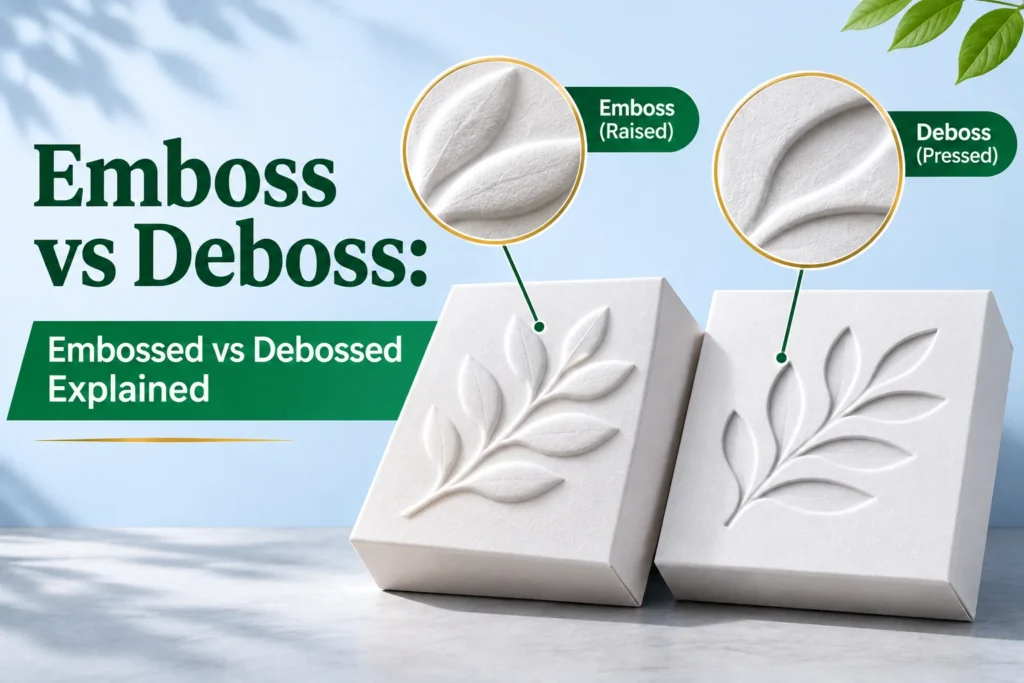
Emboss vs deboss is the choice between raising a design above the surface of a box and pressing it down into the surface. Both use a metal die and pressure, and both turn a flat logo into one that buyers can feel with a fingertip.
The two finishes look similar in a photo, so brands pick one by name and then get a box that feels different from what they pictured. The board, the line weight and the inside of the box all change the result.
This guide explains the difference, what debossed means, how each finish is made and which one suits a logo. It then covers cost drivers, foil combinations and the boards that hold each finish best.
Key takeaways
- Embossing raises a design above the box surface, while debossing presses the same design below it.
- Debossed means pressed into the board, which makes debossed the opposite of embossed on any material.
- Keep every line and gap at least 0.5 mm wide so the finish stays sharp.
- Cost follows area, depth levels and foil, and we charge no setup fees for the die.
- Emboss suits 300 to 400 GSM paperboard, and deboss suits wrapped rigid board or soft touch board.
What Is the Difference Between Embossing and Debossing?
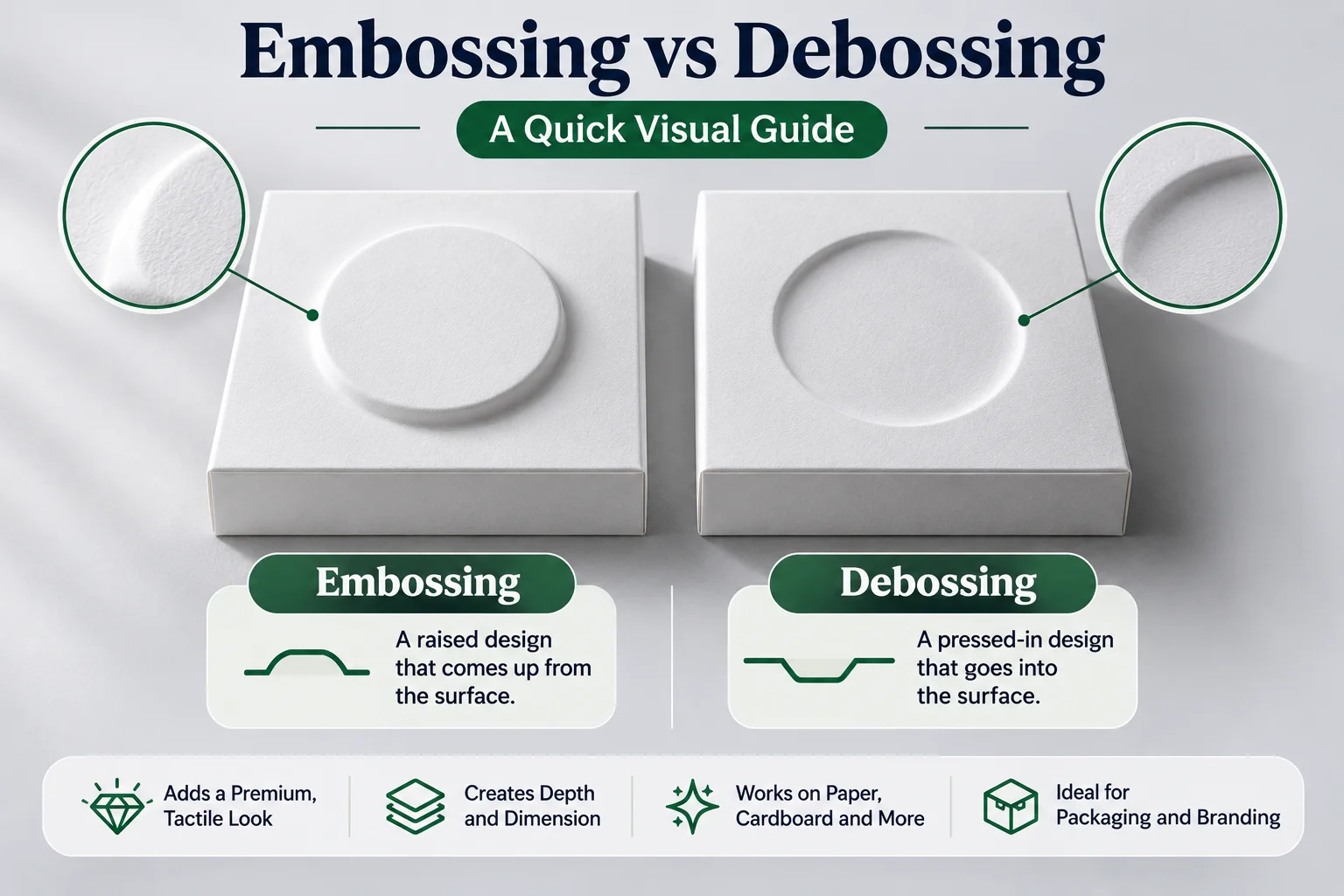
The difference between embossing and debossing is direction, because embossing raises the design above the board while debossing presses it below the board surface.
| Point | Embossing | Debossing |
|---|---|---|
| Direction | Raised above the surface | Pressed into the surface |
| Dies needed | A matched pair, one raised and one recessed | A recessed die pressing from the front, with a flat or matched back |
| Look in light | Catches light on the raised edges | Holds shadow inside the pressed area |
| Feel | A bump you can trace with a finger | A dip that feels carved into the box |
| Back of the panel | Shows a hollow dip on the inside | Shows a raised bump on the inside |
| Best boards | Paperboard and the wrap paper on rigid boxes | Thick rigid board and soft touch laminated board |
The back of the panel matters on a box, because buyers see the inside of the lid when they open it. An embossed logo on a lid leaves a hollow dip inside, which a printed liner or an insert card can hide.
The words embossed and debossed are used loosely in everyday talk, so the next section pins down what debossed means on packaging.
What Does Debossed Mean?
Debossed means a design has been pressed into a material so it sits lower than the surface around it, which makes debossed the opposite of embossed.
A debossed logo on a box looks stamped or carved, and the pressed area can stay plain or be filled with ink or foil. Leather wallets, book covers and premium boxes all use debossing for that quiet, built in look.
Debossing meaning stays the same across paper, leather and card, because the term describes direction and not material. The way the press makes that dip on a box is where packaging becomes more specific than leather or books.
How Are Embossing and Debossing Done on Boxes?
Embossing and debossing are done on boxes with heated metal dies on a press, before the box is die cut, folded and glued.
- We make the die from your vector artwork, with the raised or recessed shape cut into metal
- The printed sheet is placed between the die and its counter on a platen press
- Heat and pressure push the board up for an emboss or down for a deboss
- The sheet then goes to die cutting, where the box shape is cut and creased
- The box is folded and glued with the finish already locked into the board
| Die metal | Detail it can hold | Typical use |
|---|---|---|
| Magnesium | Clean single level shapes | Short runs and simple logos |
| Copper | Finer lines and longer life | Medium runs and repeat orders |
| Brass | Multi level and sculpted detail | Long runs, foil combinations and luxury boxes |
Embossing on a rigid box is done on the wrap paper before it is glued down. The 1.5 to 2 mm grayboard underneath is far too thick for a die to lift cleanly. Debossing can be pressed after wrapping, which gives a deeper and sharper dip in the finished lid.
Knowing how the die works makes the logo choice easier, and that is the question most brands bring to us first.
Which Looks Better on a Logo, Embossed or Debossed?
An embossed logo looks better when you want it to catch light and stand out. A debossed logo looks better as a quiet premium mark that feels pressed in.
- Choose emboss for bold wordmarks, crests and shapes with solid areas that look strong raised
- Choose deboss for minimal logos on dark or soft touch boxes where shadow does the work
- Choose emboss with foil when the logo is the hero of the box and needs shine and height
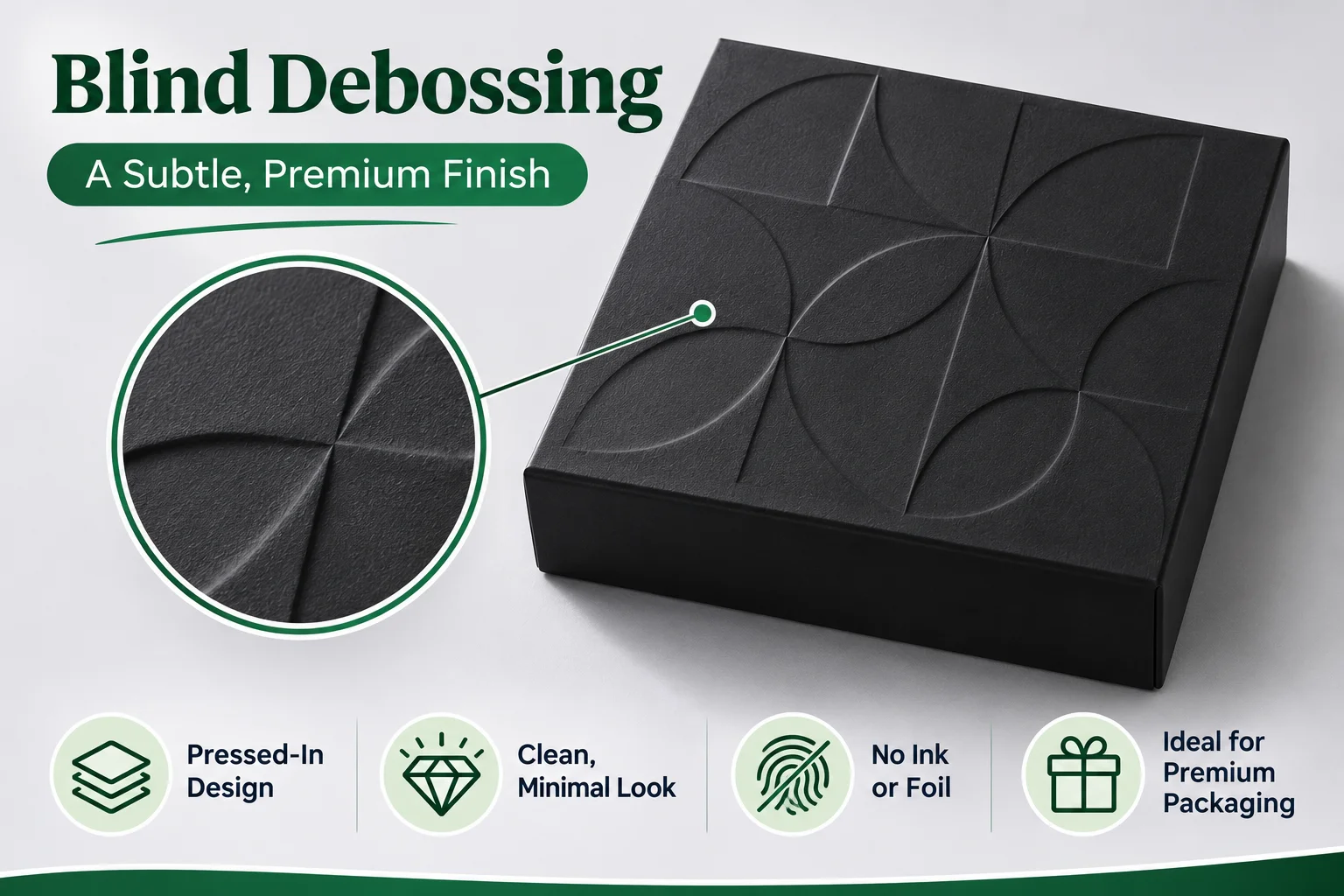
- Choose a blind deboss for tone on tone luxury, such as a black logo pressed into black board
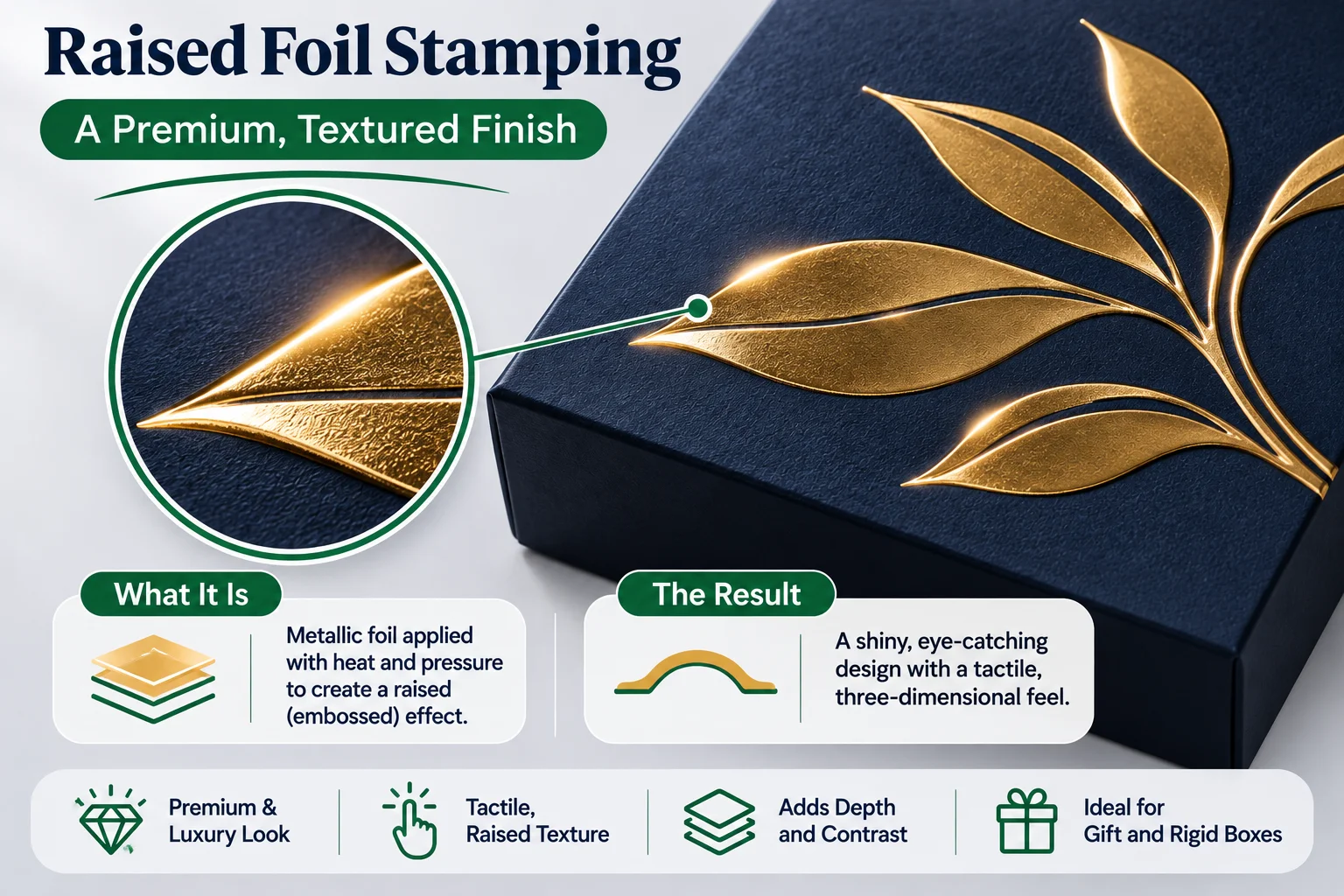
A blind finish uses no ink or foil, so the logo shows only through light and shadow. Blind debossing on matte black board is one of the most requested looks for rigid gift boxes because it feels expensive without any color.
Fine detail is where logos fail, so line weight matters as much as the choice between raised and pressed.
What Design Rules Keep an Embossed or Debossed Logo Sharp?
An embossed or debossed logo stays sharp when every line and gap is at least 0.5 mm wide and the artwork is supplied as clean vector paths.
- Keep lines and the gaps between them at least 0.5 mm wide, or they fill in and blur
- Keep small text at 10 point or larger in a bold weight so letters stay readable
- Supply the emboss or deboss area as a separate vector layer named for the finish
- Keep the design at least 3 mm away from folds and creases so the board does not crack
- Align printed ink with the raised area exactly when you want a registered emboss
A registered emboss lines the raised area up with the printed artwork, while a blind emboss has no ink at all. Registered work needs the die and the print to match within a fraction of a millimeter, so it uses one shared vector file.
Clean artwork also keeps the cost down, which is the next question every quote raises.
Want to feel the difference before you order?
Send us your logo and box size, and our team will return a dieline, a mockup and a price for an embossed or debossed box.
What Do Embossing and Debossing Cost?
Embossing and debossing cost depends on the size of the area, the depth levels and any foil. The direction of the press, up or down, does not change the price of the finish.
| Cost driver | Lower cost | Higher cost |
|---|---|---|
| Area of the design | A small logo of about 1 to 2 inches | A full panel pattern |
| Depth levels | Single level, flat topped | Multi level or sculpted |
| Die metal | Magnesium | Brass |
| Added finish | Blind, with no ink or foil | Combined with foil in one pass |
| Quantity | 1,000 units or more on one artwork | A short run of a few boxes |
We charge no setup fees, so the die sits inside the unit price on the first order and on every reorder. The finish adds one press pass per sheet, which is why the price per box falls as quantity rises.
Our price per box drops at 500 and again at 1,000 units on the same artwork. Foil is the most common add on to either finish, and it changes the look more than any other choice.
Where Do Embossing and Debossing Work Best on a Box?
Embossing and debossing work best on the lid or front panel of a box, where buyers touch first, and away from folds, glue flaps and barcodes.
- Lid center: the classic spot for a logo, where a thumb lands as the box is lifted
- Lid edge or corner: a small pressed mark in one corner that feels discreet and premium
- Side panel: a debossed brand name that shows when boxes stand side by side on a shelf
- Inside the lid: a blind deboss that buyers only find when they open the box
Keep the finish clear of any panel that carries a barcode or small legal text, because a raised or pressed edge distorts print nearby. Folds also crack when they run through a pressed area, so the 3 mm gap from creases is a firm rule.
Placement decides where the finish sits, and foil decides how loudly it speaks once it is there.
Can You Combine Embossing With Foil?
You can combine embossing with foil in one pass using a brass combination die, which raises the logo and applies metallic foil at the same time.
Foil with emboss gives a raised metallic logo that catches light from every angle, which is why perfume, spirits and jewelry boxes use it. Foil with deboss gives a pressed metallic logo that looks engraved and resists scuffing because it sits below the surface.
Our guide to foil stamping explains the gold, silver and holographic foils that pair with each finish. Whether foil or blind, the board underneath decides how deep and clean the result can be.
Which Boards Work Best for Embossing and Debossing?
The boards that work best are 300 to 400 GSM paperboard for embossing on folding cartons and wrapped 1.5 to 2 mm grayboard for debossing on rigid boxes.
| Board | Embossing | Debossing |
|---|---|---|
| SBS paperboard, 300 to 400 GSM | Very good, crisp raised edges | Good, shallow dip |
| Kraft paperboard | Good, with a softer edge | Good, natural pressed look |
| Rigid box wrap paper on grayboard | Very good when embossed before wrapping | Excellent, deep and sharp |
| Soft touch laminated board | Good | Excellent, the matte film shows shadow well |
| E flute corrugated | Poor, crushes the flute | Fair, light pressure only |
Corrugated board is a poor base because pressure flattens the flute and weakens the box. For mailer boxes, a printed logo with a spot gloss gives a similar raised feel without crushing the board.
Our rigid boxes and custom folding cartons take both of these finishes on every size. A coating applied on top changes the result again, which the next section covers in detail.
Do Coatings Change How Embossing and Debossing Look?
Coatings change how embossing and debossing look, because a matte coating shows shadow and depth while a gloss coating shows highlights on raised edges.
Soft touch lamination is the favorite partner for debossing, since the velvet film softens light and makes the pressed area look deeper. Gloss lamination suits embossing, because the shine runs along the raised edges and outlines the logo.
Lamination should go on before the press so the film stretches with the board, and our guide to aqueous coating compares the lighter coating option. With the board, coating and finish chosen, placing the order itself is a simple process.
How Do You Order Embossed or Debossed Boxes?
Order embossed or debossed boxes by sending vector artwork with the finish on its own layer, then approving a sample before the full run.
- Send your artwork as a vector PDF or AI file on our dieline with 3 mm bleed
- Mark the emboss, deboss or foil area on its own named layer in the same file
- Approve a printed sample, which takes 8 to 10 business days and shows the real depth
- Approve the dieline, and production takes 8 to 10 business days after that approval
Our custom packaging boxes start from 1 box with no minimum and free design support, and our team can set the layer up for you. The short answers below cover what designers ask us most about these two finishes before they order.
Frequently asked questions
Designers and brand owners ask us these questions before choosing a raised or pressed finish, and the short answers are below.
The short version
Emboss vs deboss comes down to direction, because embossing raises a design and debossing presses it in. Both use a metal die and pressure, and both add a finish buyers can feel.
Choose emboss for logos that need to catch light and deboss for a quiet premium mark. Keep every line at least 0.5 mm wide and supply the finish on its own vector layer.
Use paperboard for embossed folding cartons and wrapped rigid board for debossed premium gift boxes. Send us your logo and box size and our team will return a dieline, a mockup and a price.
Ready to add texture to your boxes?
You can order from a single box with no setup fees, free design support and free shipping across the US. A printed sample takes 8 to 10 business days and shows the real depth of the finish.
