




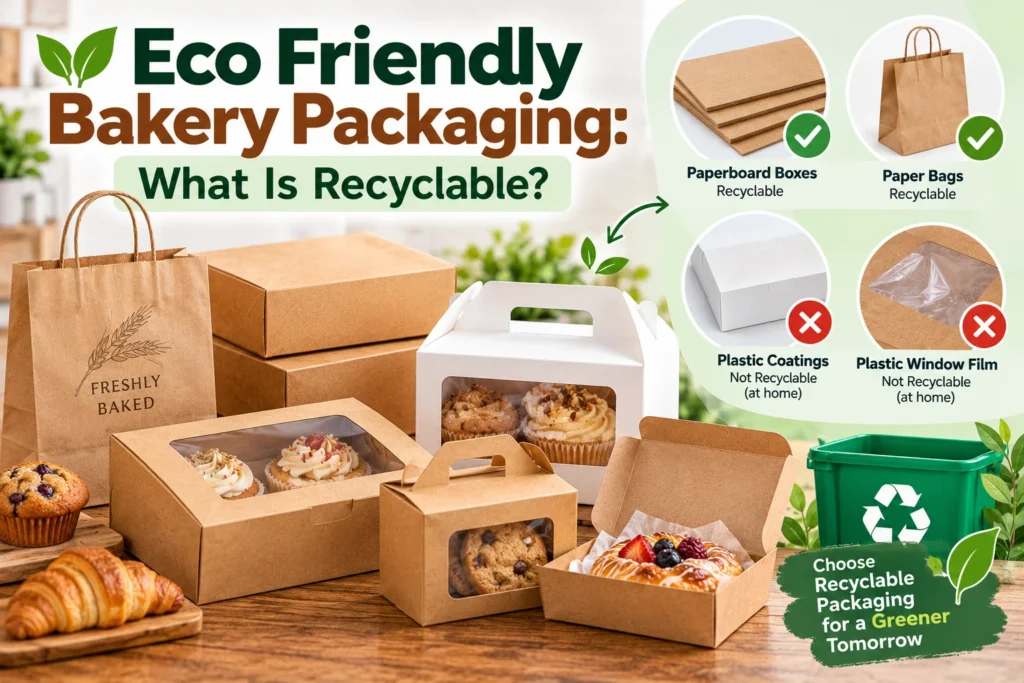
Eco friendly bakery packaging sounds simple until a buttery croissant leaves a grease ring on the box. Bakery packaging touches fat, sugar and moisture every day, and those three things decide whether a box can go back into the paper stream.
Many bakeries want packaging that customers can recycle without guessing. They also want to print a green message on the box without breaking the rules on environmental claims.
This guide explains which bakery boxes and bags recycle and what grease, windows and coatings do to them. It also compares kraft and white board and shows what the Federal Trade Commission lets you say on the box.
Key takeaways
- Clean paperboard bakery boxes recycle with paper in most US programs, and paper and paperboard are among the most recycled materials in the country.
- Grease soaked board is refused by many recycling programs, so a water based barrier on the inside face helps the box stay clean enough to recycle.
- A PET window should come off before recycling, which is why a box without a window or with a small window is the easier choice.
- Aqueous coating keeps board recyclable, while plastic lamination and wax make it much harder to recycle.
- Under the FTC Green Guides a plain recyclable claim needs recycling access for at least 60 percent of your buyers.
What Makes Bakery Packaging Eco Friendly?
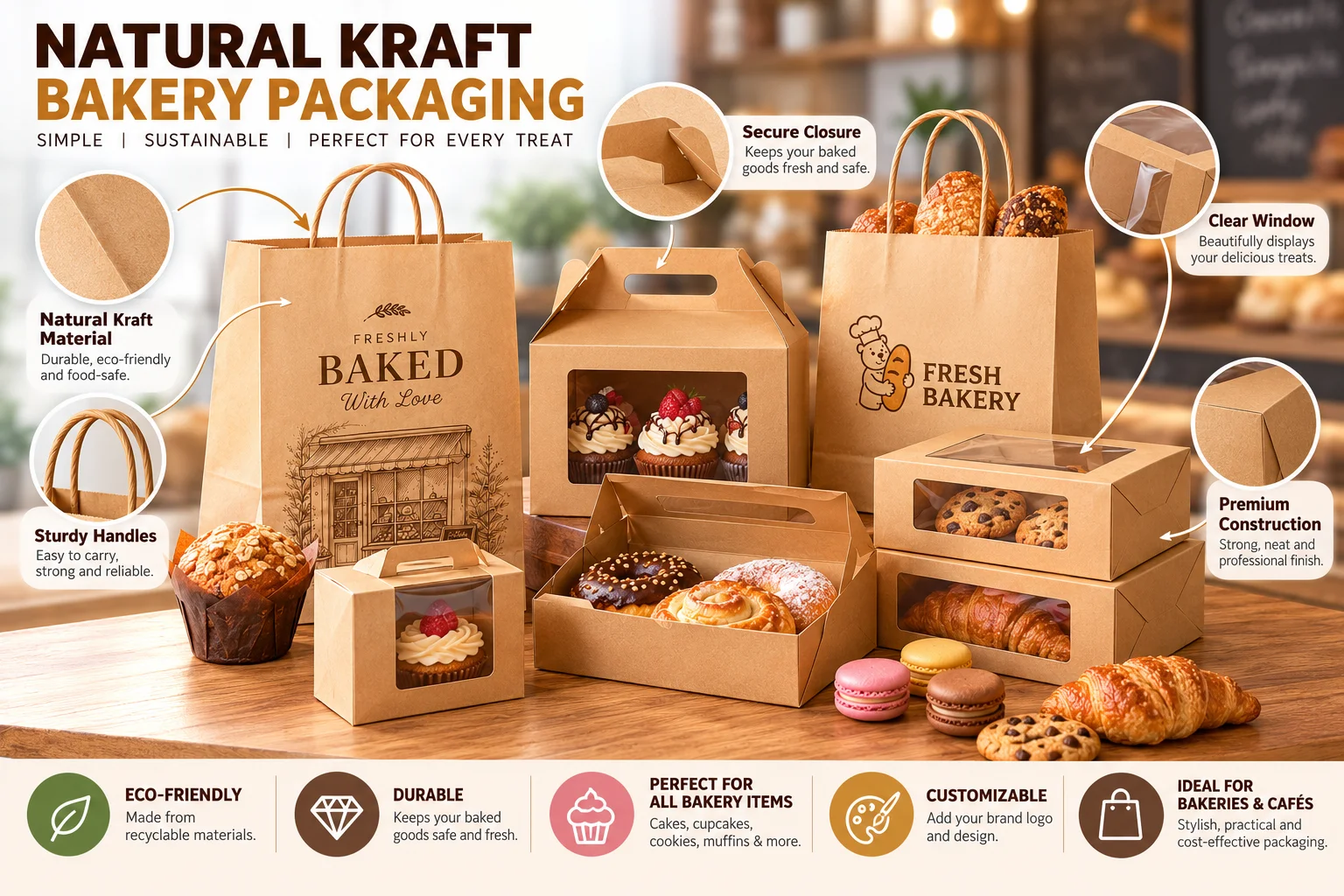
Bakery packaging is eco friendly when it uses less material, comes from fiber that recycles and carries only claims you can prove. A box that does all three is better for the planet and safer for your brand than a box that only looks green.
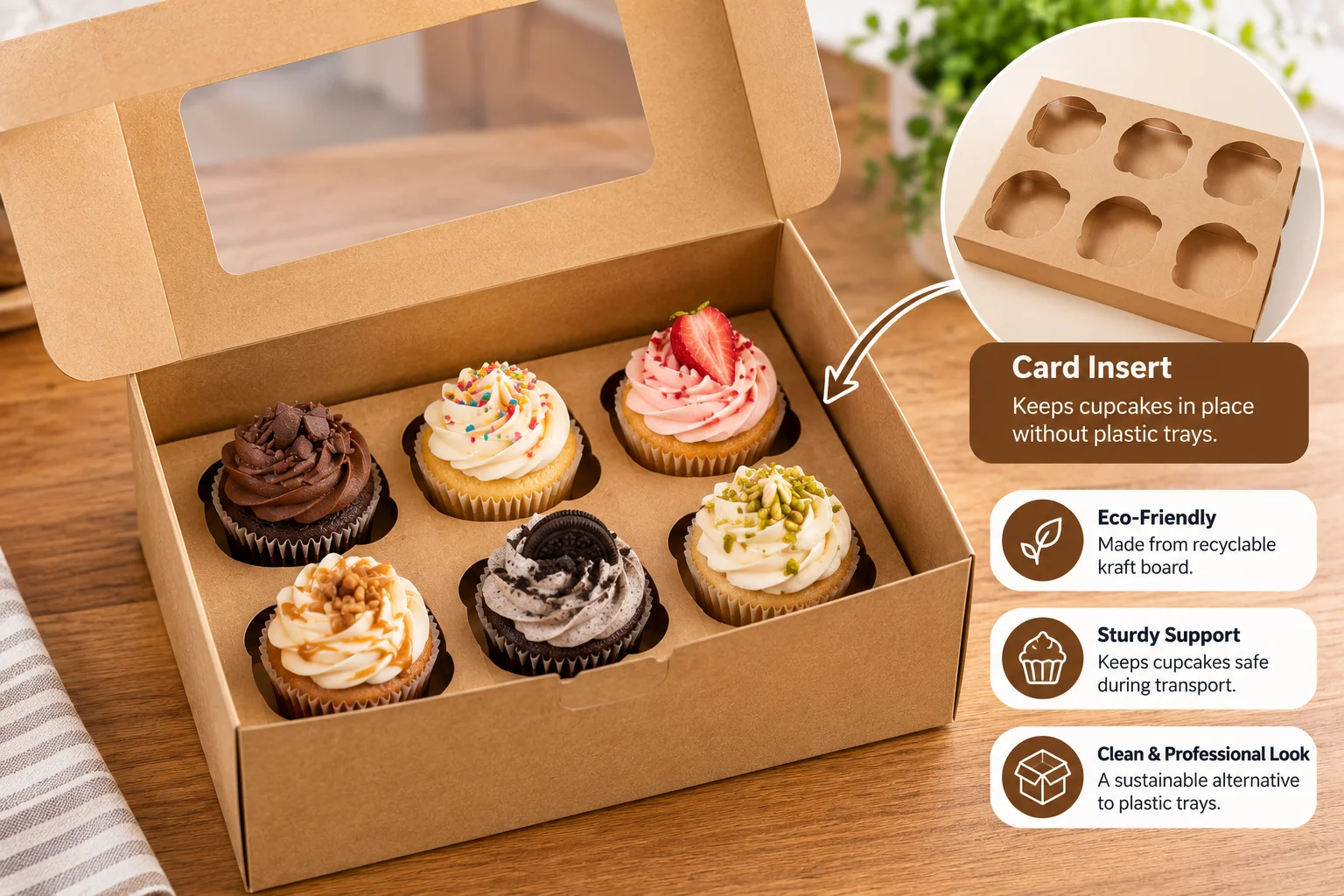
Less material starts with a box cut to the right size for the product inside. A box 6 mm wider than the product with an insert from the same board uses less fiber than a stock box with a plastic tray.
| What to aim for | How a bakery box does it | Why it matters |
|---|---|---|
| Less material | Inside size at product plus 6 mm, card insert from the same board | Less fiber per box and no plastic tray |
| Recyclable fiber | Paperboard with water based coatings, small or no window | The box goes back into the paper stream |
| Honest claims | Wording that matches what local programs accept | Keeps you inside the FTC Green Guides |
Recyclable fiber is the second part of the answer, and it is also where most questions start. The first question is whether a paperboard bakery box recycles at all.
Is Paperboard Bakery Packaging Recyclable?
Paperboard bakery packaging is recyclable with mixed paper when it is clean and dry. Paper and paperboard are among the most recycled materials in the United States. EPA data puts their recycling rate at about two thirds of what is produced.
Recycling mills pulp the board in water and screen out anything that is not fiber. Folding cartons made from solid board break down into pulp easily in that water. That is why a printed bakery box goes in the same bin as a cereal carton.
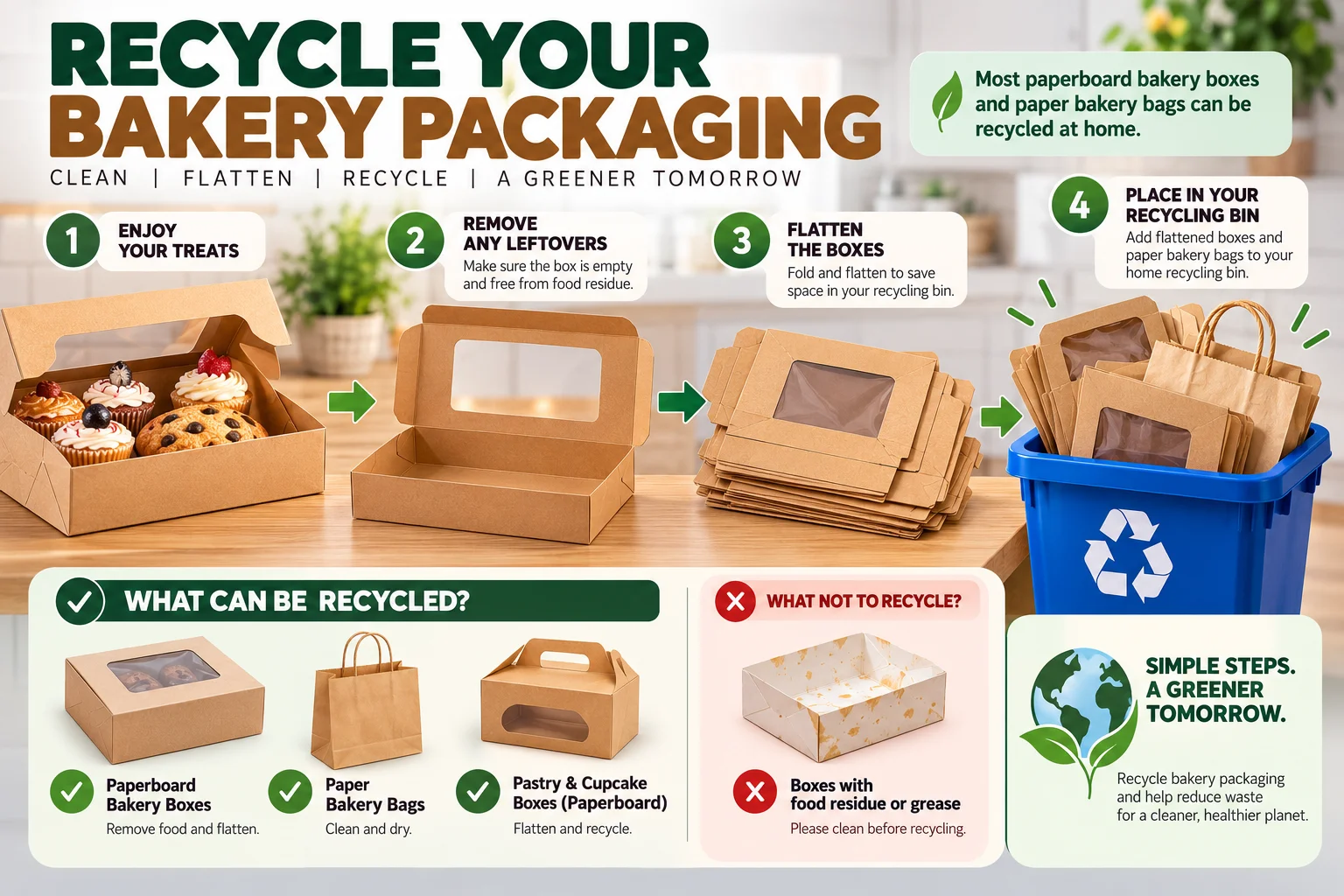
The catch for a bakery is the food left behind on the board. Mills want fiber and not frosting, which makes grease the biggest question for any bakery box.
Can Greasy Bakery Boxes Go in the Recycling Bin?
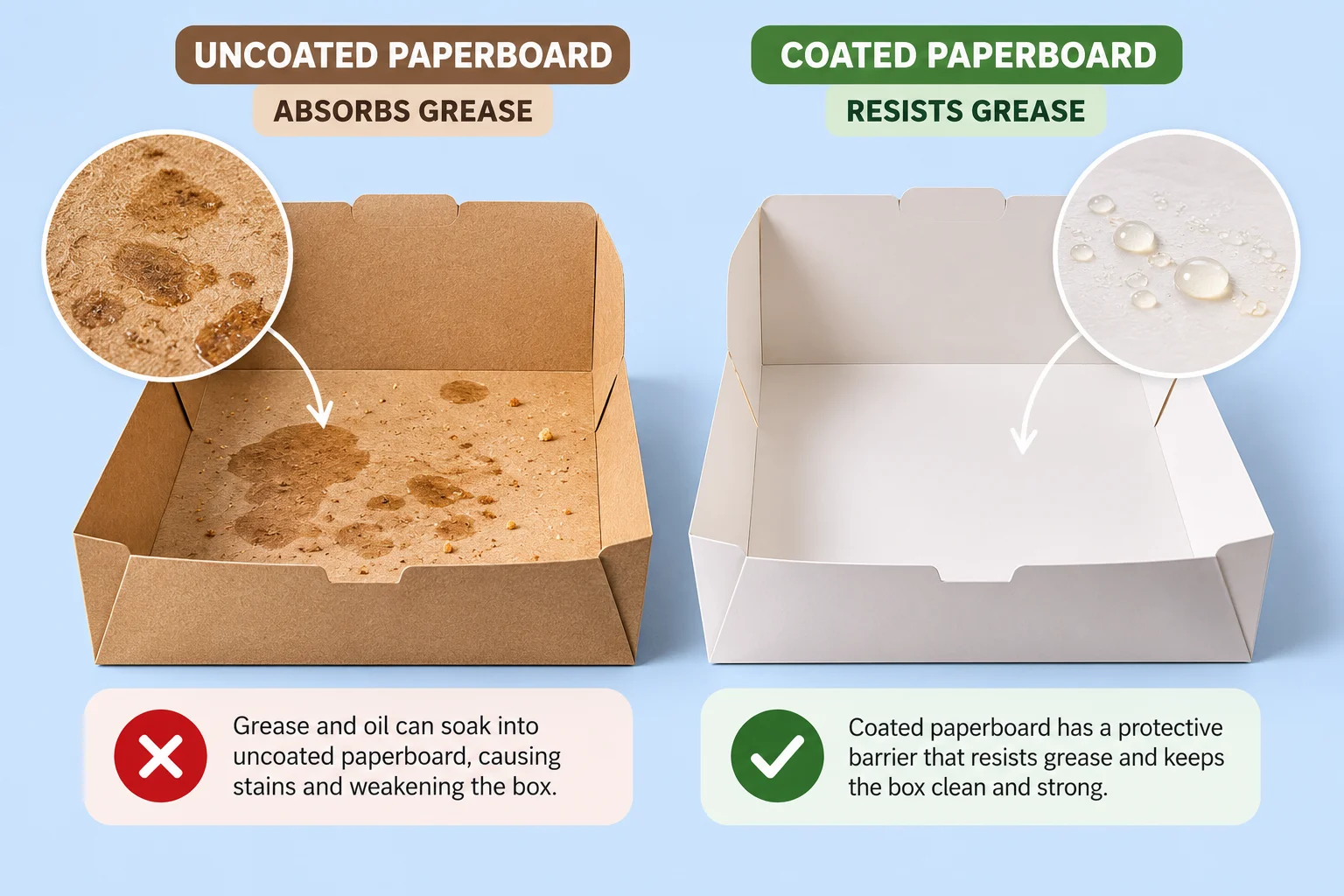
Grease soaked bakery boxes are refused by many recycling programs because oil stops the fibers from bonding into new paper. A box with a few crumbs is fine but a base dark with butter belongs in the trash or the compost where your town allows it.
Rules differ from one town to the next and the honest advice to your customers is to check the local program. One simple habit helps a lot when a box is only partly stained. Tear off the greasy base and recycle the clean lid and sides.
The box itself can make recycling easier before it ever reaches the bin. A water based barrier coating on the inside face holds butter and oil on the surface so less of it soaks in.
| Bake | Grease level | What helps the box recycle |
|---|---|---|
| Bread and rolls | Low | Plain board, no barrier needed |
| Dry cookies and biscotti | Low to medium | Light aqueous barrier inside |
| Frosted cupcakes | Medium | Aqueous barrier inside and a card insert |
| Donuts and croissants | High | Aqueous barrier inside and a liner sheet of greaseproof paper |
A barrier coating solves the grease problem from the inside. The next part of a bakery box that raises recycling questions is the window on the lid.
Want bakery boxes that recycle with paper?
Tell us the bake, the size and the board you like. We return a dieline and a price with water based coatings.
Are Window Bakery Boxes Recyclable?
Window bakery boxes are recyclable once the plastic film is removed, because the board recycles and the film does not belong in the paper stream. Many mills screen a small film patch out of the pulp. Removing it first is the safe instruction to print on the box.
We close bakery windows with PET film between 150 and 250 micron glued around a die cut opening. A smaller window means less film to remove and a window placed away from the folds peels off in one piece.
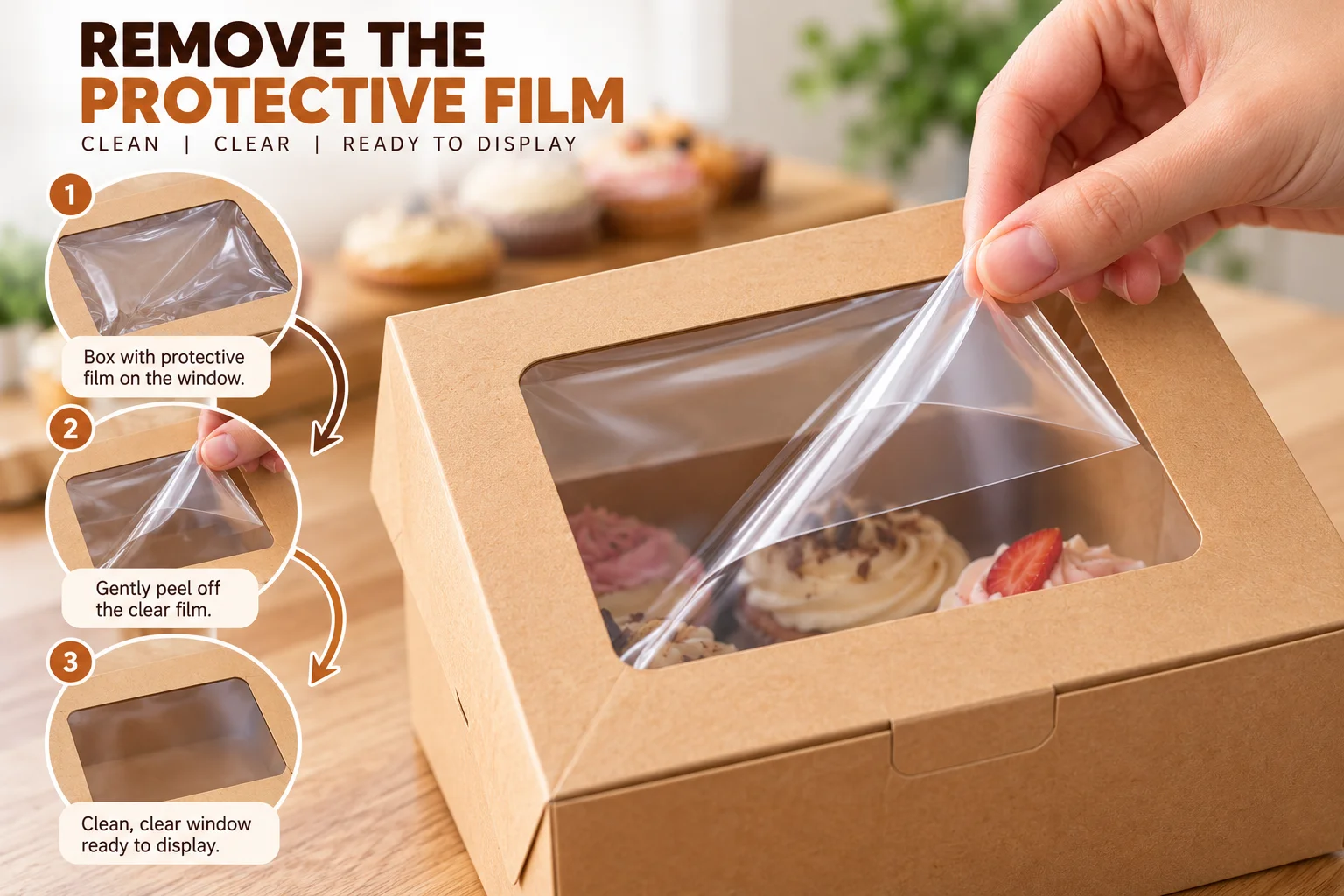
If your customers rarely remove film then a box without a window is the cleaner choice. A printed photo of the product on the lid can sell it almost as well as a window does.
Window film is one layer that affects recycling, and the coatings printed on the board itself matter just as much.
Which Coatings Keep a Bakery Box Recyclable?
Water based aqueous coatings keep a bakery box recyclable, while plastic lamination and wax make it much harder to recycle. Aqueous coating breaks down in the pulping water, so the fiber underneath comes free.
| Coating | Recycles with paper | Notes |
|---|---|---|
| Aqueous varnish or barrier | Yes | Water based, breaks down when the board is pulped |
| UV coating | Yes in most mills | Thin layer, sold for print gloss |
| Plastic lamination | Hard to recycle | A plastic film bonded to the board |
| Wax coating | No in most programs | Wax does not separate from the fiber |
Our guide to aqueous coating explains how it protects print and holds back grease without a plastic layer. For most bakery boxes an aqueous varnish outside and an aqueous barrier inside give you protection and recyclability together.
Coating is only half of the material choice for a bakery box. The board under the coating is the other half, and bakers ask most about kraft.
Is Kraft Board More Eco Friendly Than White Board?
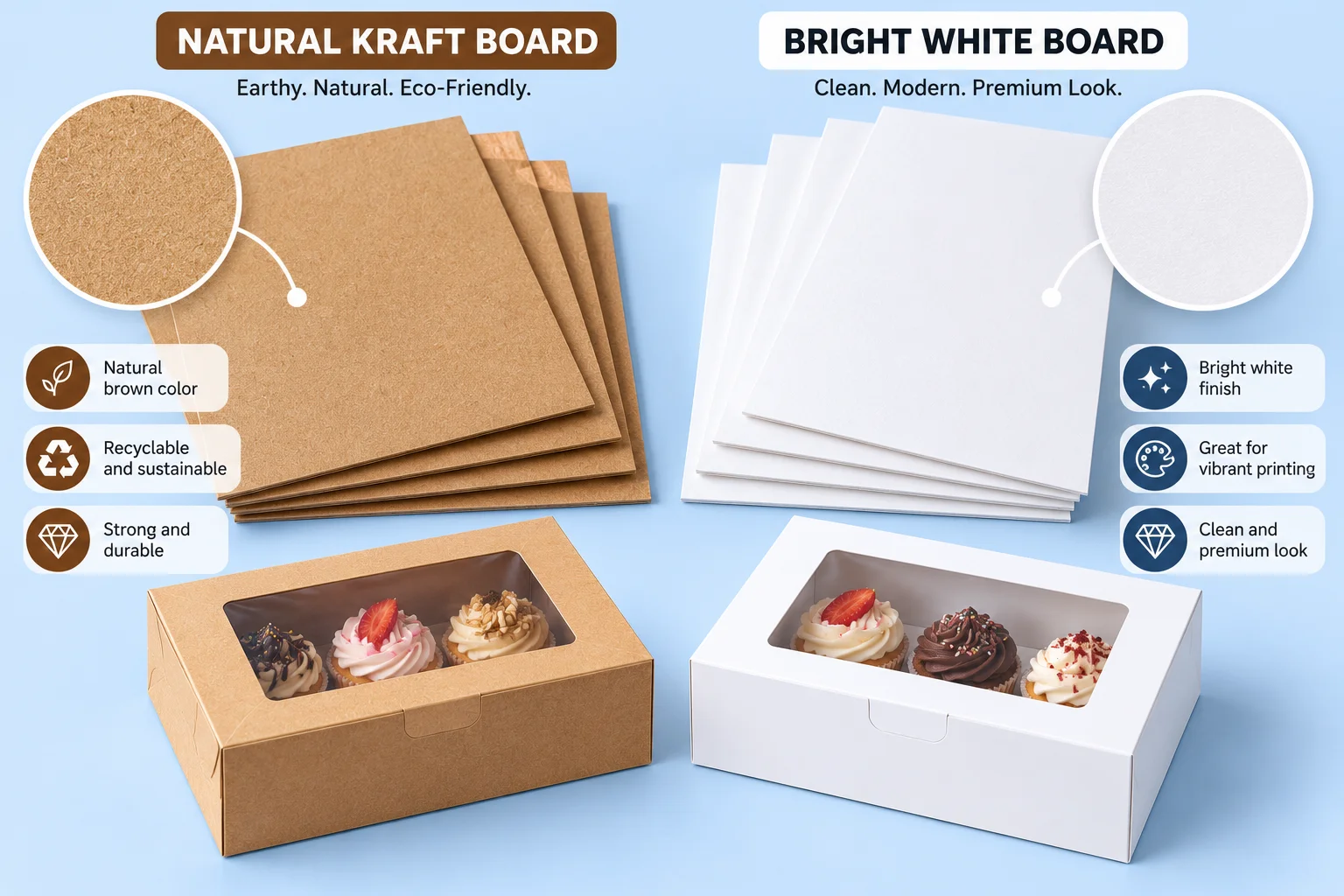
Kraft board skips the bleaching step and that is why many bakeries see it as the more eco friendly choice. White SBS board is bleached for a bright print surface, and both recycle in the same paper stream.
The right choice also depends on which bake touches the board inside the box. Virgin SBS board is made for direct food contact with moist and fatty foods under 21 CFR 176.170. Recycled board can touch food when it meets the rules for recycled fiber in 21 CFR 176.260. It suits dry bakes or an outer carton best because frosting never touches it.
| Board | Look | Food contact | Best for |
|---|---|---|---|
| Natural kraft | Brown, unbleached | With an aqueous barrier for fatty foods | Rustic and natural brands |
| White SBS | Bright white, bleached | Direct contact under 21 CFR 176.170 | Frosted and buttery bakes, full color print |
| Recycled board (CRB) | Gray inside, white top | Under 21 CFR 176.260 rules | Dry bakes and outer cartons |
A natural kraft look also tells your customer the box is plain fiber without saying a word. That message is worth something but the words you print on the box need more care than the look.
Is Compostable Bakery Packaging Worth It?
Compostable bakery packaging is only worth it when your customers can reach a facility that takes it. The FTC Green Guides say a compostable claim needs reliable scientific evidence that every material in the box breaks down safely into usable compost.
The same section asks you to qualify the claim when composting facilities are not available to a substantial majority of your customers. Few US towns collect food packaging for composting at the curb today. An unqualified compostable claim is hard to support for most bakeries.
That is why we do not claim our boxes are compostable or biodegradable. We make boxes that recycle with paper when they are clean and the window film is removed, and we say exactly that.
Honest wording is more than good practice for a bakery brand. It is a federal rule, and it decides what you can print on the box.
What Can You Print on a Box About Recycling?
You can print an unqualified recyclable claim only when recycling programs for that box are available to at least 60 percent of the people where it is sold. Section 260.12 of the Green Guides sets that 60 percent line as a substantial majority.
Below that line you add a qualifier that tells the customer where or how the box recycles. A short line such as recyclable where paper cartons are collected keeps you inside the rule.
| Situation | Claim you can print | Rule |
|---|---|---|
| Recycling available to 60 percent or more of buyers | Recyclable | 16 CFR 260.12, substantial majority |
| Recycling available to fewer than 60 percent | Recyclable where paper cartons are collected | Qualified claim |
| Box has a plastic window | Remove the window and recycle with paper | Tells the customer how |
| Composting not widely available | No compostable claim, or a qualified one with proof | 16 CFR 260.7 |
A recycling message works best next to a clear instruction such as remove the window before recycling. With the wording settled you can turn every choice in this guide into a box order.
How Do You Order Eco Friendly Bakery Boxes?
You order eco friendly bakery boxes by choosing kraft or SBS board, an aqueous barrier inside, an aqueous varnish outside and a small window or none at all. Send those choices with your product size through our quote form and we return a dieline with a price.
Our custom bakery boxes and custom bakery bags both come in natural kraft with water based barriers. Ask for card inserts in place of plastic trays and the whole package stays fiber from the lid to the insert.
- Minimum order is 100 boxes per size and design and the price per box falls as the run grows
- Price breaks arrive at 500 and 1,000 units on one artwork
- Production takes 8 to 10 business days after dieline approval and 10 to 12 for rigid gift boxes
- A plain sample takes 3 to 5 business days and a printed one takes 7 to 10
- No setup or tooling fees apply on the first order or any reorder
- Shipping is free across the United States on every order
Test a plain sample with your own bakes to check the barrier before the printed run. Every one of these custom packaging boxes is cut to your size and no board goes into empty space.
Frequently asked questions
The short version
Eco friendly bakery packaging is paperboard that recycles, sized to the product and printed with honest claims. Use water based coatings, keep the window small or leave it out and replace plastic trays with card inserts.
Print recyclable only when your buyers can recycle it, and tell them to remove any window film. We make these boxes from 100 boxes per size and design with free shipping across the United States.
Ready to switch to recyclable bakery boxes?
At The Customized Boxes we print from 100 boxes per size and design with no setup fees, production in 8 to 10 business days after dieline approval and free shipping across the United States.
