



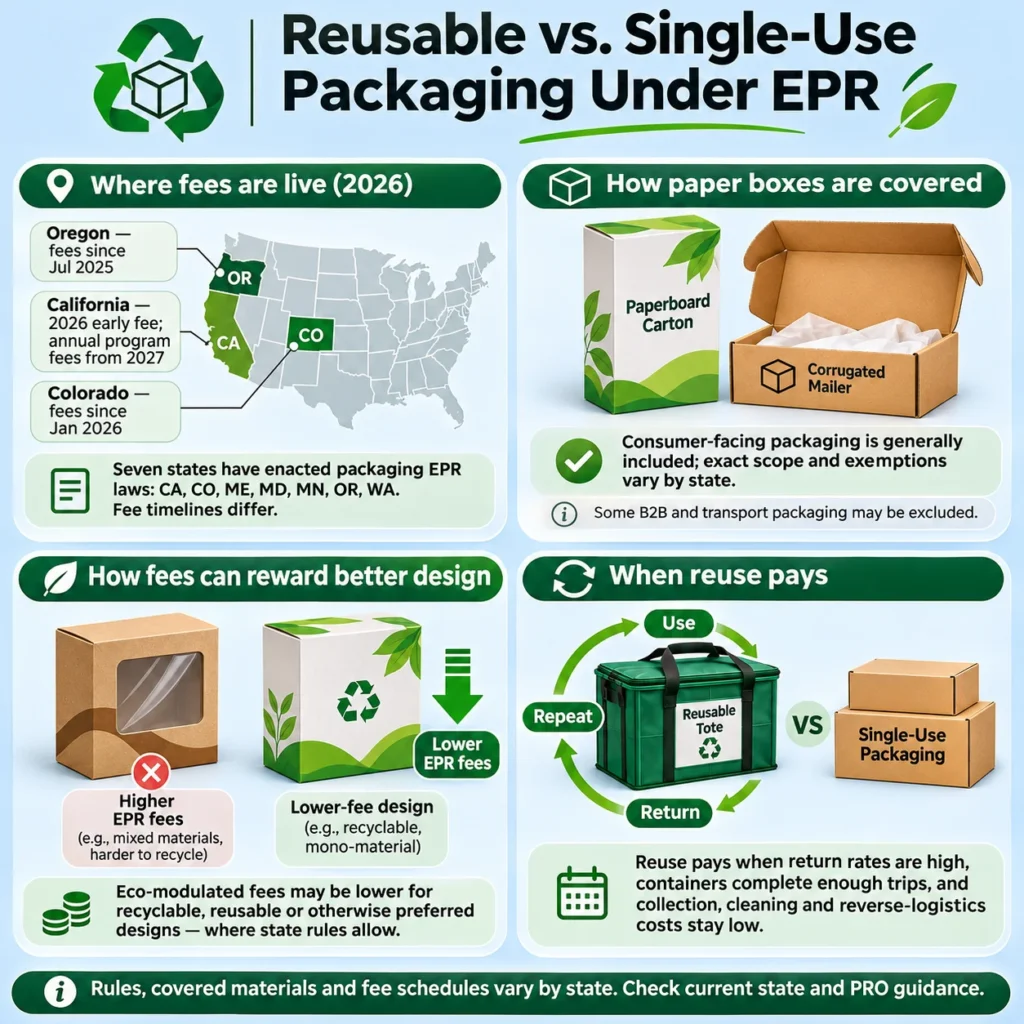
Reusable vs single use packaging used to be a question about brand values, and under EPR it has become a question about cost. Seven states now make the brand that sells a product pay for the packaging it puts into the market.
EPR stands for extended producer responsibility, and it moves the cost of collecting and recycling packaging from cities to the brands that create it. Every printed box, mailer and label you buy for your products now counts toward those fees.
This guide explains which states run packaging EPR programs, how paper boxes are covered and how fees reward better packaging. It then shows when switching to reusable packaging lowers the bill and when it simply moves the cost elsewhere.
Key takeaways
- Seven states have packaging EPR laws, and Oregon and Colorado already charge producer fees.
- Paper and paperboard packaging is covered in five of the seven states, so printed boxes count toward the fee.
- Fees follow weight and recyclability, so light boxes in one recyclable material cost the least.
- Reusable packaging lowers your fees only when each package makes several trips back to you.
- For most brands that ship to the public, light recyclable single use packaging keeps total cost lowest.
What Is Packaging EPR and Who Pays for It?
Packaging EPR is a state law that makes the producer of a product pay for collecting and recycling the packaging it sells into that state each year.
In most of these laws the producer is the brand owner whose name appears on the product. When there is no brand owner in the state, the duty falls to the licensee or the company that first imports the product.
Producers do not pay the state directly, so they join a producer responsibility organization known as a PRO. The PRO collects reports and fees and uses that money to fund local recycling.
Circular Action Alliance is the PRO approved or contracted in six of the seven states, according to the state by state comparison at EPR Atlas. The next question is which states those are and how far along each program has come.
Which States Have Packaging EPR Laws Right Now?
Seven states have packaging EPR laws: Oregon, Colorado, California, Maine, Minnesota, Maryland and Washington, and two of them already charge producer fees.
| State | Program status | Paper and paperboard covered | Small producer test |
|---|---|---|---|
| Oregon | Producer fees already active through Circular Action Alliance | Yes | Under 1 metric ton into the state or under 5 million dollars in global revenue |
| Colorado | Producer fees already active through Circular Action Alliance | Yes | Under 1 ton or under about 5.8 million dollars in global revenue |
| California | Early fees invoiced while the full program plan is reviewed | Single use packaging of any material | Under 1 million dollars in California sales, on application |
| Maine | No fees yet because no PRO is under contract | No paper products | Under 1 ton or under 2 million dollars in revenue |
| Minnesota | Producer reporting first, fees later | Yes | Under 1 ton or under 2 million dollars in global revenue |
| Maryland | Registration and simple reporting first, fees later | Yes | Under 1 ton or under 2 million dollars in global revenue |
| Washington | Early fees announced with first invoices to follow | Yes | Under 1 ton or under 5 million dollars in global revenue |
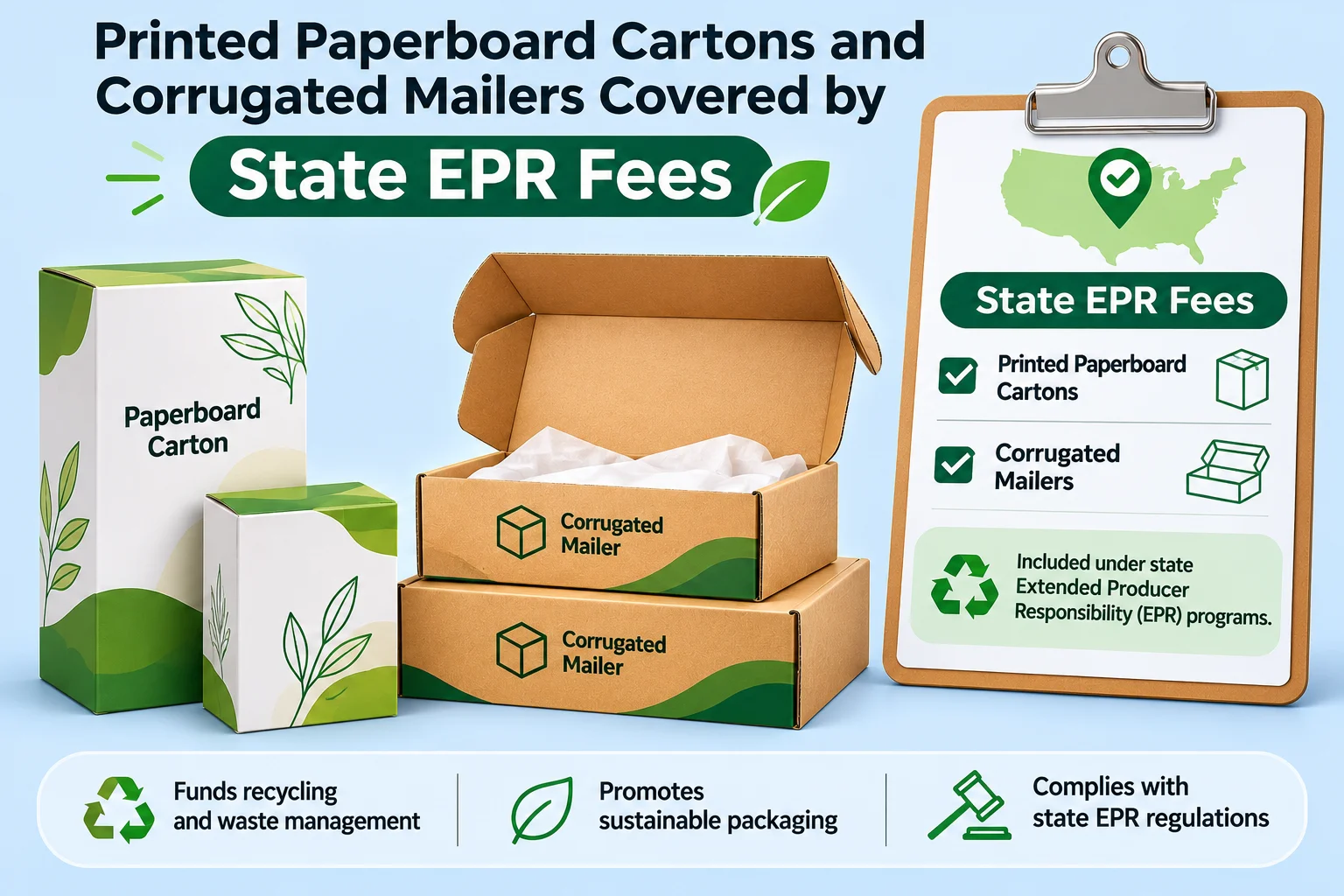
Paper and paperboard packaging is covered in five of the seven states with EPR laws. A printed folding carton or mailer box counts toward the fee just like plastic does.
Small brands get a real break, because a producer under one ton of packaging or under the revenue line is exempt in most states. Check the test in each state you ship to before you assume the rule applies.
Coverage tells you whether you pay, while the fee formula tells you how much, and that formula is where reusable vs single use packaging starts to matter.
How Are EPR Fees Set for Paper and Plastic Packaging?
EPR fees are set by weight and material, then adjusted up or down for how recyclable each package is, which programs call eco modulation.
A producer reports the tons of each packaging material it sold into the state, and the PRO sets a fee rate for each material. The rate for a hard to recycle material runs higher than the rate for a material with a strong recycling market.
- Weight drives the base fee: a lighter box cut close to the product costs less in every state
- Material drives the rate: corrugated and paperboard carry some of the lowest rates because they recycle well
- Recyclability changes the total: Maine doubles the fee for materials that are not readily recyclable
- Bonuses reward better design: Oregon and Colorado offer bonuses for packaging that meets their design criteria
This is good news for every brand that already uses paper packaging for its products. A plain corrugated mailer or a paperboard carton with water based ink sits in the cheapest part of every fee schedule.
Fees reward weight and recyclability, so the real comparison is what reuse does to the weight you report each year.
Does Reusable Packaging Lower Your EPR Fees?
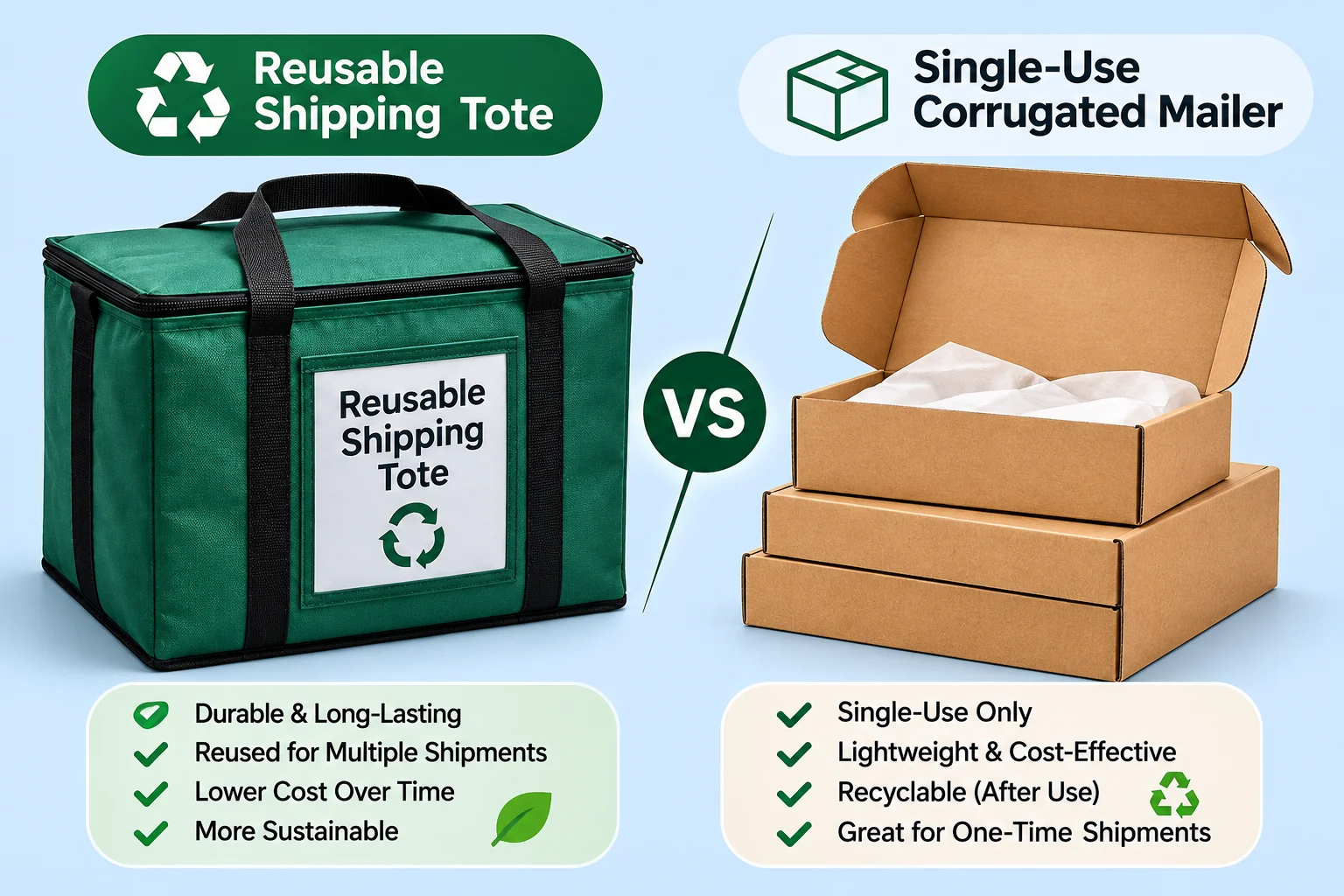
Reusable packaging lowers EPR fees only when the same package makes enough trips to cut the total weight of packaging you put into the state each year.
Oregon includes reusable packaging in its scope, so a reusable box is still reported when it enters the market. The saving comes later, when the box makes a second, third and fourth trip without adding new weight.
California goes further on plastic, because SB 54 sets a target to cut single use plastic packaging and counts a switch to reuse or refill toward that cut. CalRecycle runs that reduction program alongside the producer fees it collects through the PRO.
A reusable package is heavier than the single use package it replaces, because it has to survive many trips. If it only makes one or two trips, you report more weight and pay a higher fee than before.
So the first test for reuse is the return rate, and the next section shows how to work out the point where reuse starts to save money.
When Does Reuse Beat Single Use on Total Cost?
Reuse beats single use on total cost when the package comes back enough times to pay for its extra weight, the return shipping and the cleaning between trips.
| Cost line | Single use mailer | Reusable shipping box |
|---|---|---|
| Weight per package | 250 grams of corrugated | 700 grams of heavier board or plastic |
| Trips per package | 1 | 6 on average |
| Weight reported per 1,000 shipments | 250 kilograms | About 117 kilograms |
| Return shipping | None | Paid on every trip back |
| Cleaning and inspection | None | Labor on every return |
| Best fit | Shipments to the public with no return path | Closed loops between your own sites, stores or repeat customers |
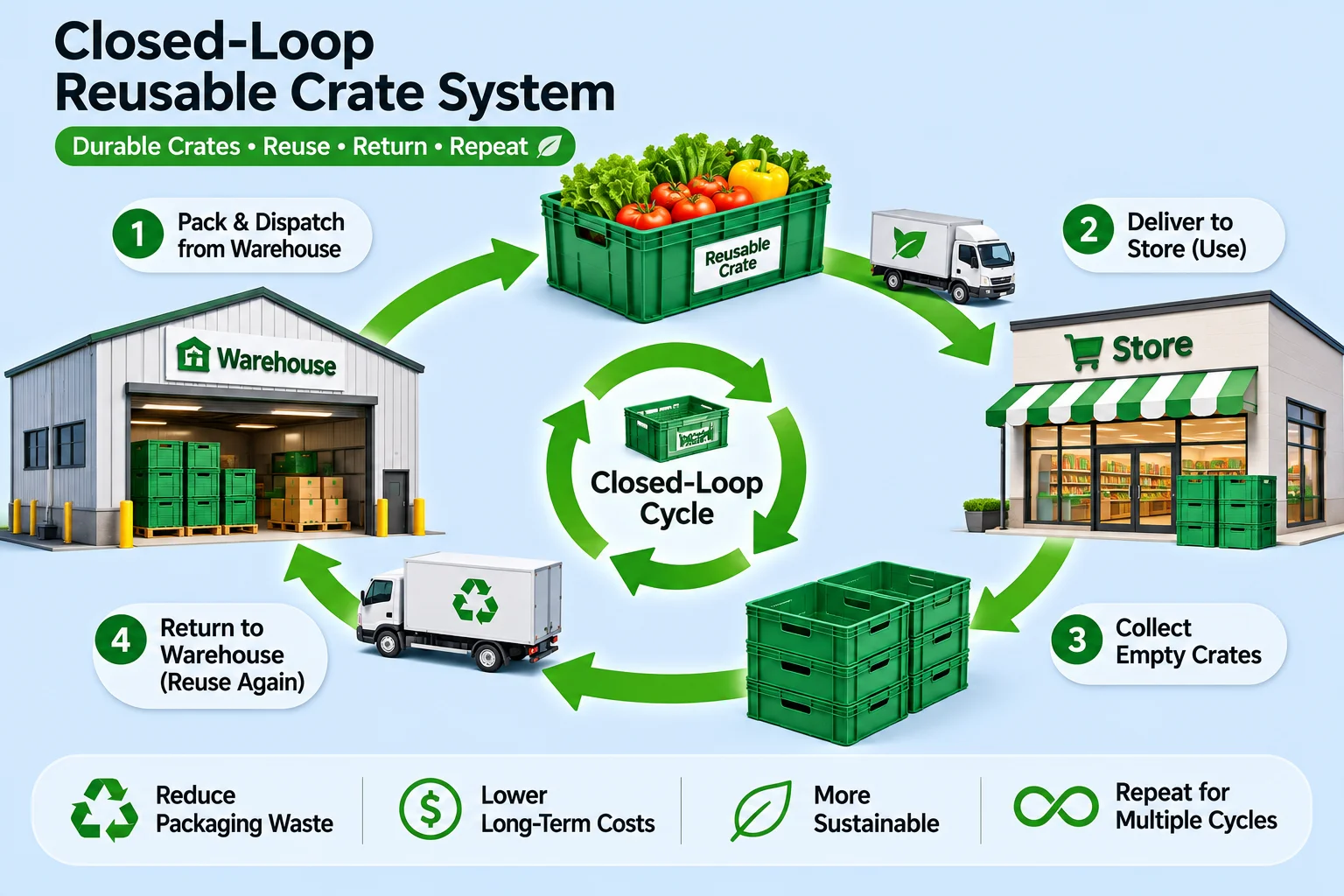
The weight saving is real once the box makes several trips, yet return postage and handling cost more than the fee you save. Reuse wins on the fee line and loses on the logistics line for most direct to consumer brands.
This is why reusable transport packaging works so well between factories, warehouses and stores. The loop is closed, the trips are frequent and nobody has to persuade a customer to post a box back.
Most brands selling to the public end up with a mix, and the next section shows how to lower fees with single use packaging done well.
Want to cut the weight of your packaging?
Send us your current box and tell us a little about the product it carries. We return a lighter design in one material with a dieline and a price.
How Do You Lower EPR Fees With Single Use Packaging?
You lower EPR fees with single use packaging by cutting weight, choosing one recyclable material and printing with inks and coatings that do not block recycling.
- Size every box to the product so you are not paying fees on empty air and filler
- Choose corrugated or paperboard over mixed plastic and paper wherever the product allows it
- Drop plastic windows, foam inserts and laminated films that turn a recyclable box into mixed material
- Use water based inks and an aqueous coating in place of a plastic lamination film
- Replace plastic void fill with a fitted paperboard insert that holds the product still
- Keep a record of the weight and material of every package you sell into each state
Our guide to aqueous coating explains the water based finish that protects print without a plastic film. A fitted paperboard insert does the same job as foam in most of the product boxes we print.
Single use paper packaging done this way costs less in fees than a reusable system costs in logistics. The supply chain side of the comparison adds one more factor that every brand should weigh.
What Are the Supply Chain Benefits of Reusable vs Single Use Packaging?
The supply chain benefits of reusable packaging are steadier costs and less reliance on fresh supply, while single use packaging wins on flexibility and speed.
- Reusable packaging: a stock of crates or totes on hand protects you from supply shortages and sudden price jumps in new packaging
- Reusable packaging: heavy duty containers protect products better on repeat routes between the same sites
- Single use packaging: printed boxes ship anywhere with no return path to manage or track
- Single use packaging: you change the size, the artwork or the supplier between orders with no stock of old containers left over
For a brand that ships to customers all over the country, single use printed packaging stays the practical choice. The task is to make it light, recyclable and well recorded so the EPR fees stay low.
Reporting is the part brands find hardest, so the last section turns the rules into a simple checklist.
How Should a Brand Prepare for Packaging EPR Reporting?
A brand should prepare for packaging EPR reporting by listing every package it sells, its weight and material, and the states it ships into.
- List every package format you use, including the shipper, the product box, inserts, labels and tape
- Weigh each component and record its material so the PRO can apply the right rate
- Record how many units of each package you sell into each EPR state every year
- Check the small producer test in each state before you register with the PRO
- Join Circular Action Alliance or the PRO named in each state where you are not exempt
- Ask your packaging supplier for the board grade, ink type and coating of every box
We give you the board, weight and finish of every box we print, so your report starts from real data. Our custom mailer boxes and folding cartons ship as single material paper packaging with water based ink as standard.
If you are planning a redesign around these rules, start with our custom packaging boxes and send us your current pack. Our team will show you where the weight and the mixed materials can come out.
Frequently asked questions
Brands meeting EPR for the first time ask us the same questions about reusable vs single use packaging, and the short answers are below.
The short version
Seven states now charge brands for the packaging they sell, and paper packaging is covered in five of them. Fees follow weight and recyclability, so light boxes made from one recyclable material cost the least.
Reusable packaging saves fees only when each package makes several trips, and return shipping can cost more than the saving. Closed loops between your own sites and stores are the places where reuse wins on cost.
For brands that ship to the public, light recyclable single use packaging keeps the total cost lowest. Send us your current box and our team will show you where the weight can come out.
Ready to redesign your packaging for EPR?
We print with no minimum order and no setup fees, plus free design support and free shipping across the United States. Folding cartons and mailers take 8 to 10 business days after you approve the dieline.
