





A press kit costs between $18 and $180 per unit once everything is counted, and most brands are surprised by which line moves that number.
Most people focus on the box, but it usually makes up less than a third of the total cost. The rest hides in assembly, in the printed pieces nobody budgeted, in the outer shipper, and in the freight that gets quoted after the kits are already sitting in a warehouse.
This article breaks a press kit into every line that appears on a real invoice. Then it builds three complete budgets at three price points so you can see how the money actually distributes.
I am writing this from the supplier side, which means I see the invoices. I also see the moment a marketing manager realizes the number they pitched internally covered the box and nothing else.
The short version
- The box is the line everyone prices first, yet in the sample budgets below it is only 9 to 13 percent of the total. The rest hides in the product, assembly, printed pieces and freight.
- Freight is often the largest single line. In a 500 unit sample led send it is nearly half the budget, so estimate it in week one.
- Budgets are set by how many you send far more than by what you send. Unit costs across the three budgets differ by nearly seven times, while totals differ by less than double.
- A video box runs $35 to $90 per unit with a 100 unit minimum and 20 to 25 business days lead time. It works for 100 to 300 recipients, not 1,000.
- Never cut the outer shipper, address verification, the physical sample or the hand written note. They are the cheapest insurance in the whole budget.
Why nobody can answer this question in one number
Ask five agencies what a press kit costs and you will get five answers that are all correct.
The phrase covers a $14 mailer with a sample and a printed card. It also covers a $240 rigid box with a video screen, a custom foam tray, and a hand-written note. Both go to journalists. Both are called press kits.
So the useful question is not what a press kit costs. It is which lines your kit has, and what each of them runs at your quantity.
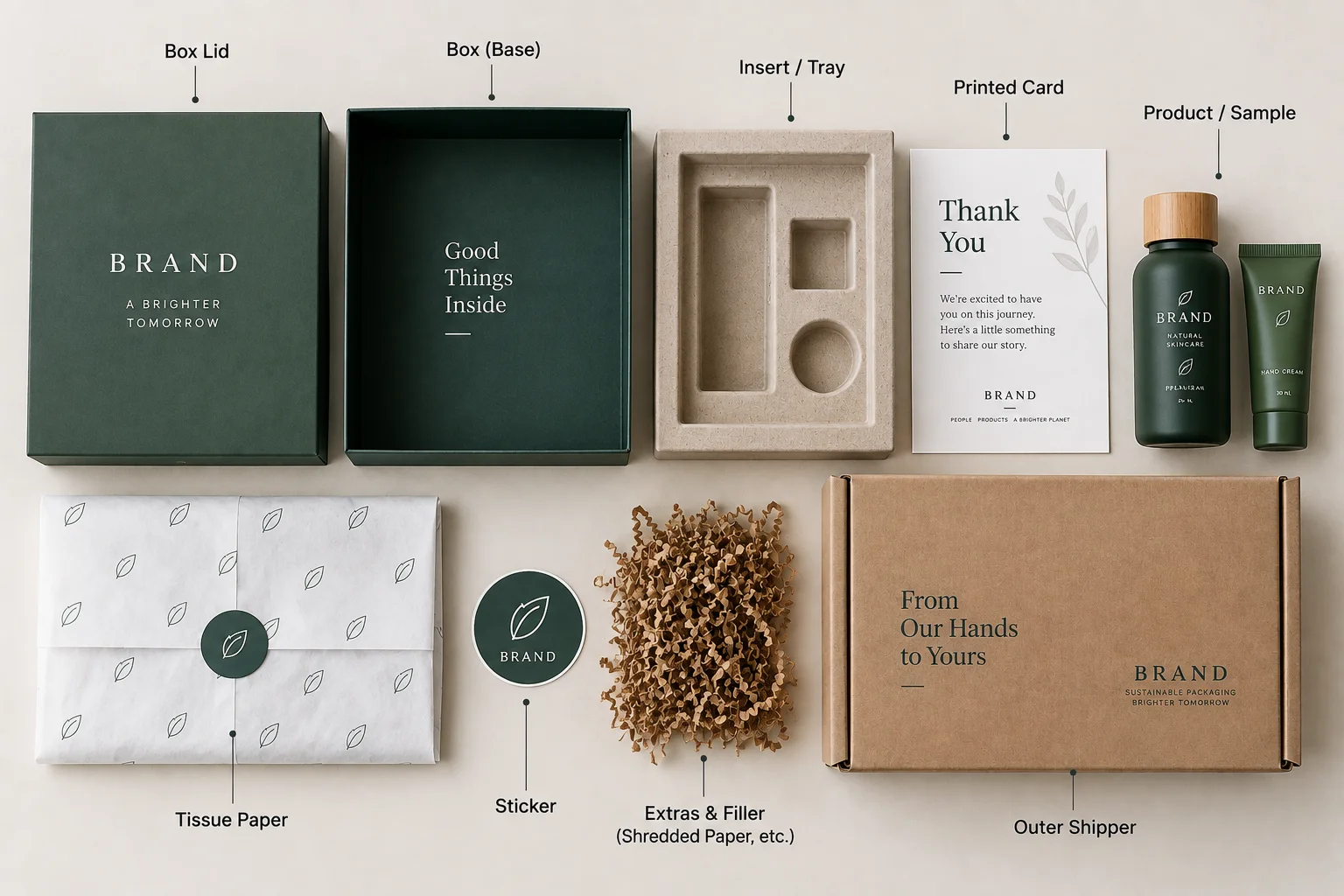
Here is the full list. Very few kits have all of them.
| Line | Typical share of total | Skippable? |
|---|---|---|
| The box | 20 to 35 percent | No |
| The insert or tray | 5 to 15 percent | Sometimes |
| Printed matter inside | 3 to 10 percent | Sometimes |
| The product or sample | 10 to 40 percent | No |
| Extras and filler | 2 to 8 percent | Yes |
| Video module | 40 to 60 percent when used | Yes |
| Assembly and kitting | 5 to 15 percent | No |
| Outer shipper | 3 to 6 percent | No |
| Freight and duties | 10 to 25 percent | No |
| Tooling and samples | One time, $150 to $900 | No |
The two lines that catch people are assembly and freight. Both are real, both are invoiced, and neither appears in the quote you get for the box.
Line 1: the box
This is the part you probably already priced.
At press kit quantities the structure decides almost everything. A folding carton ships flat and costs the least. A corrugated mailer costs slightly more and survives the trip better. A rigid setup box costs the most and feels like the box you would keep.
| Structure | 100 units | 250 units | 500 units |
|---|---|---|---|
| Printed folding carton | $2.20 to $3.60 | $1.60 to $2.60 | $1.10 to $2.00 |
| Corrugated mailer | $3.40 to $5.50 | $2.40 to $4.00 | $1.80 to $3.10 |
| Rigid setup box | $6.50 to $12.00 | $4.80 to $9.00 | $3.90 to $7.50 |
| Rigid box with magnetic closure | $8.00 to $15.00 | $6.00 to $11.00 | $4.80 to $9.00 |
Those ranges move with size, finish, and how many colors you print. A single color logo on natural kraft sits at the bottom. Full coverage print with soft touch lamination, foil, and embossing sits at the top or above it.
The jump from 100 to 500 is the most useful thing in that table. Tooling and setup get spread across more units, so the per unit price falls faster in the first few hundred than it ever will again.
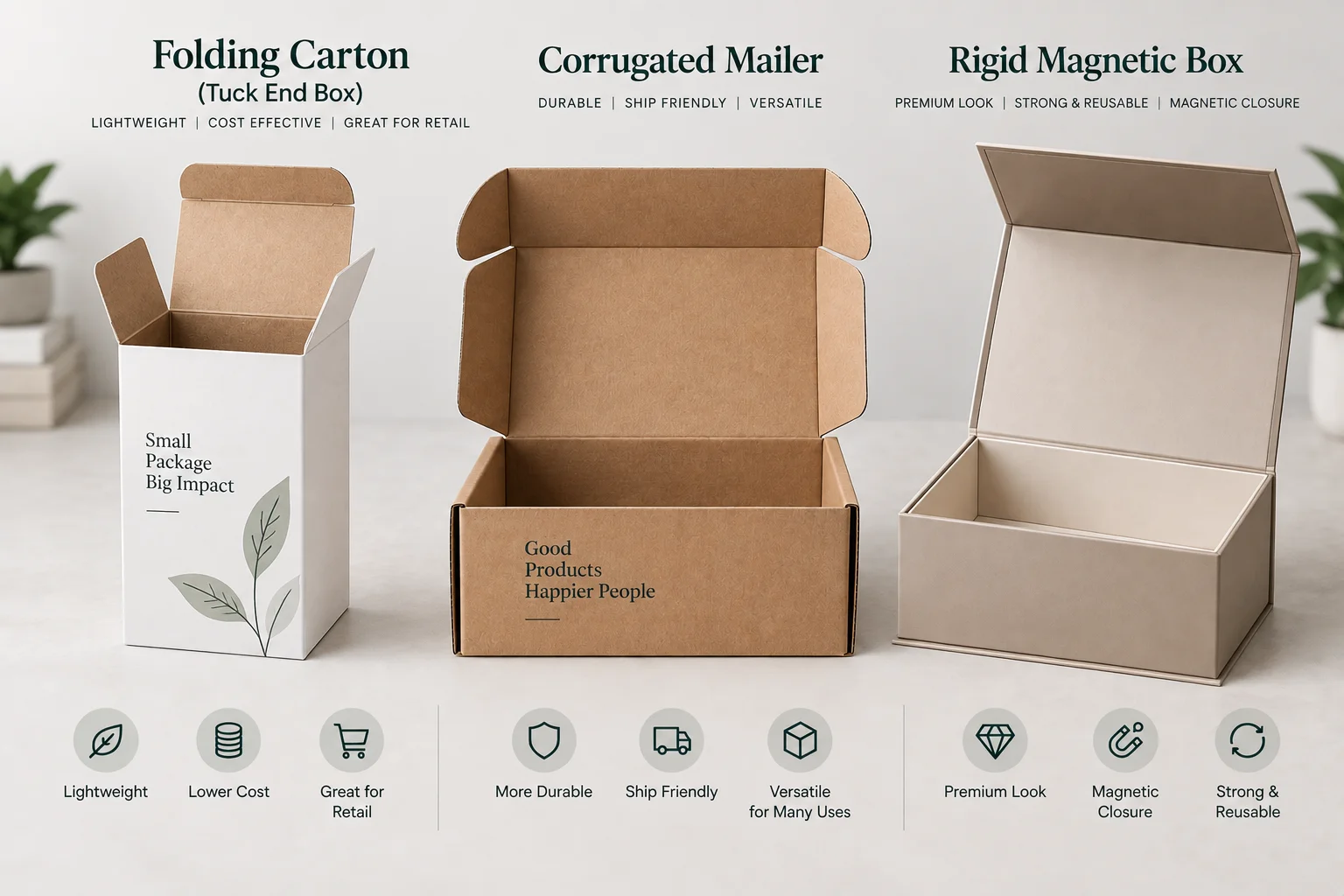
If you want the structure comparison in more depth, our custom rigid boxes and custom mailer boxes pages cover what each construction handles.
Line 2: the insert
The insert is where a kit stops looking like a shipment and starts looking like a presentation.
It is also where budgets get quietly doubled. A die cut paperboard insert is cheap. A foam tray cut to your product outline is not.
| Insert type | Per unit at 250 | What it suits |
|---|---|---|
| Printed paperboard platform | $0.60 to $1.40 | Flat items, cards, small boxes |
| Die cut corrugated insert | $0.80 to $1.90 | Bottles, jars, anything with weight |
| Molded pulp tray | $1.60 to $3.50 | Round products, sustainability story |
| Foam insert, plain black | $1.80 to $4.00 | Electronics, tools, fragile items |
| Foam with fabric wrap | $3.50 to $8.00 | Jewelry, watches, luxury goods |
There is a decision hiding here that has nothing to do with money. An insert holds the product in a fixed position, which means it controls what the recipient sees first when the lid comes off. That is worth more than the two dollars it costs.
A press kit with everything loose in tissue paper photographs badly. A press kit with a tray photographs itself.
Line 3: the printed matter inside
Almost every kit has paper in it. Almost no budget includes it at the start.
A one page product sheet on decent stock runs $0.35 to $0.80 at a few hundred pieces. A folded four page piece runs $0.80 to $2.20. A saddle stitched booklet of eight to sixteen pages runs $1.60 to $4.50.
Then there is the note. A printed note card costs almost nothing. A hand written note costs whatever an hour of somebody’s time is worth, divided by how many they can write in that hour, which is usually about twenty.
That works out to roughly $1.50 per kit at a modest hourly rate. It is the single highest return line in this entire article and it never appears on a supplier quote.
One thing worth saying plainly. If you are sending to journalists, they need the facts in a form they can copy. A QR code to a press page with images, specs, and boilerplate does more than a beautiful brochure they have to retype.
Line 4: the product
This line is yours, not your packaging supplier’s, but it belongs in the budget.
Use your landed cost, not your retail price. Finance will ask.
For beauty and food samples this line often runs $3 to $12. For consumer electronics it can be $40 to $300. For a full size luxury item it can exceed everything else in the kit combined.
There is a strategic call here that shows up in the numbers. Sending a full size product to 400 people costs more than sending it to 120 people and putting the difference into how it arrives. The second option almost always produces more coverage per dollar, because a kit that gets photographed reaches more people than a kit that gets used.
Line 5: extras and filler
Small lines, and they add up faster than anyone expects.
- Tissue paper with a printed pattern: $0.15 to $0.45
- Custom sticker or seal: $0.08 to $0.30
- Ribbon or fabric tie: $0.25 to $0.90
- Crinkle paper or shredded filler: $0.10 to $0.35
- Branded card sleeve or belly band: $0.30 to $0.70
- Silica gel or protective film: $0.05 to $0.20
Add all six and you are at roughly $1.00 to $2.90 per kit. On 500 kits that is up to $1,450 for things nobody put on a spreadsheet.
I am not saying skip them. Tissue and a seal change the opening moment more than their cost suggests. I am saying count them, because they are the classic source of a budget that comes in eleven percent over.
Line 6: the video module
This is the line that changes the shape of the whole budget.
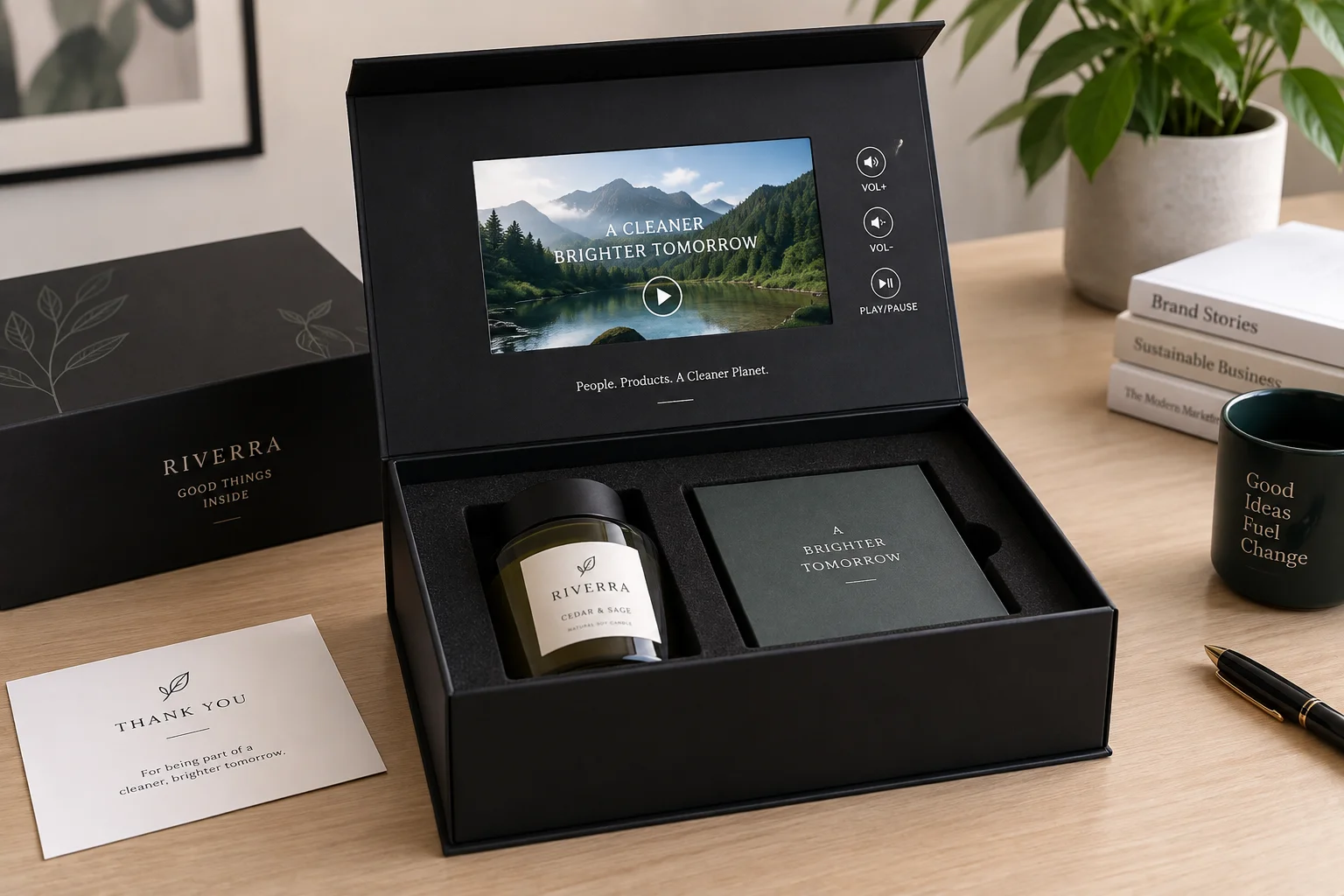
A custom video box runs $35 to $90 per unit depending mostly on screen size. That figure includes the module, the rigid box it sits in, printing, and the video loaded at the factory.
| Screen | Rough unit cost | When it makes sense |
|---|---|---|
| 2.4 inch | $35 to $45 | A short personal message, tight budget |
| 4.3 inch | $42 to $55 | Product demo where the product is the focus |
| 5 inch | $50 to $65 | The common middle choice |
| 7 inch | $60 to $78 | Most requested. Comfortable to watch across a desk |
| 10 inch | $75 to $90 | Hero kits, investor and buyer meetings |
Notice what this does to a budget. A 250 piece run of $12 kits costs $3,000. A 250 piece run with a 7 inch video module costs about $17,500 plus everything else.
That is not an argument against it. It is an argument for cutting the list. Video kits work at 100 to 300 recipients, not at 1,000.
The minimum order is 100 boxes per configuration and lead time runs 20 to 25 business days from artwork and video approval. Both matter for the budget, because a rushed timeline is where money leaks.
Line 7: assembly and kitting
Somebody has to put the kit together. That somebody charges for it.
Assembly is priced by touches. A touch is one action, such as placing an item, folding tissue, applying a sticker, or closing a lid.
| Kit complexity | Touches | Cost per kit |
|---|---|---|
| Simple. Product, insert, card, close | 4 to 6 | $0.90 to $1.80 |
| Standard. Tissue, seal, product, two printed pieces | 7 to 10 | $1.70 to $3.20 |
| Complex. Multiple products, wrapping, hand note, ribbon | 11 to 18 | $3.00 to $6.50 |
| Personalized. Named card or variable insert per recipient | Add 2 to 4 | Add $1.20 to $2.80 |
Personalization is the line that surprises people most. Adding a printed name to each kit does not just cost the print. It removes every efficiency from the assembly line, because now each kit is a specific kit that has to reach a specific address.
If you personalize, personalize once and make it count. A named card is enough. A named card plus a named box plus a named video creates a matching problem that will cost you a full day of somebody’s attention.
Line 8: the outer shipper
Your press kit should not travel naked.
If the presentation box is also the shipping box, it arrives scuffed, taped, and covered in courier labels. The unboxing moment you paid for gets used up by the courier.
A plain corrugated outer with void fill runs $0.90 to $2.40 depending on size. That is the cheapest insurance in this entire budget.
There is one exception. A well built corrugated mailer with a locking tuck can ship on its own and still look intentional. Rigid boxes cannot. Anything with a screen definitely cannot.
Line 9: freight, duties, and the number that ruins budgets
Here is where a clean budget goes sideways.
Domestic ground shipping for a kit of typical size and weight runs $9 to $22 per parcel in the US. International express runs $35 to $90 per parcel and can go higher.
Dimensional weight is the trap. Couriers charge on volume when volume exceeds actual weight. A large light kit gets billed as though it were heavy. Adding an inch to each dimension of the outer carton can move a shipment into the next billing bracket without adding a single gram.
Then there are duties. If you ship internationally, somebody pays import duty and tax at the destination. If you do not specify DDP terms, that somebody is the journalist you were trying to impress. There are few faster ways to have a kit refused at the door.
And if there is a battery inside, air freight is regulated. That is a whole subject of its own and I have written it out in detail in how to ship a product with a lithium battery inside. The short version is that the paperwork is manageable when you plan for it and expensive when you do not. The rules come from the IATA dangerous goods regulations, and they apply to your kit whether or not anyone told you.
Line 10: the list
The list is not a packaging cost. It is still a cost.
Building or buying a clean media list runs from free to a few thousand dollars a year for a database subscription. Verifying addresses takes time. Chasing the six percent that bounce takes more.
Here is the part worth budgeting for directly. Every kit sent to a wrong or stale address is a full unit cost thrown away, plus the freight, plus the return handling if it comes back. On a $60 kit with $18 shipping, a ten percent bad address rate on 250 kits burns roughly $1,950.
Spending two days verifying addresses is cheaper than that. It is not glamorous work and it is the highest return work in the project.
Line 11: the one time costs
These do not scale with quantity, which means they hurt most at low quantities.
| One time cost | Typical range | Notes |
|---|---|---|
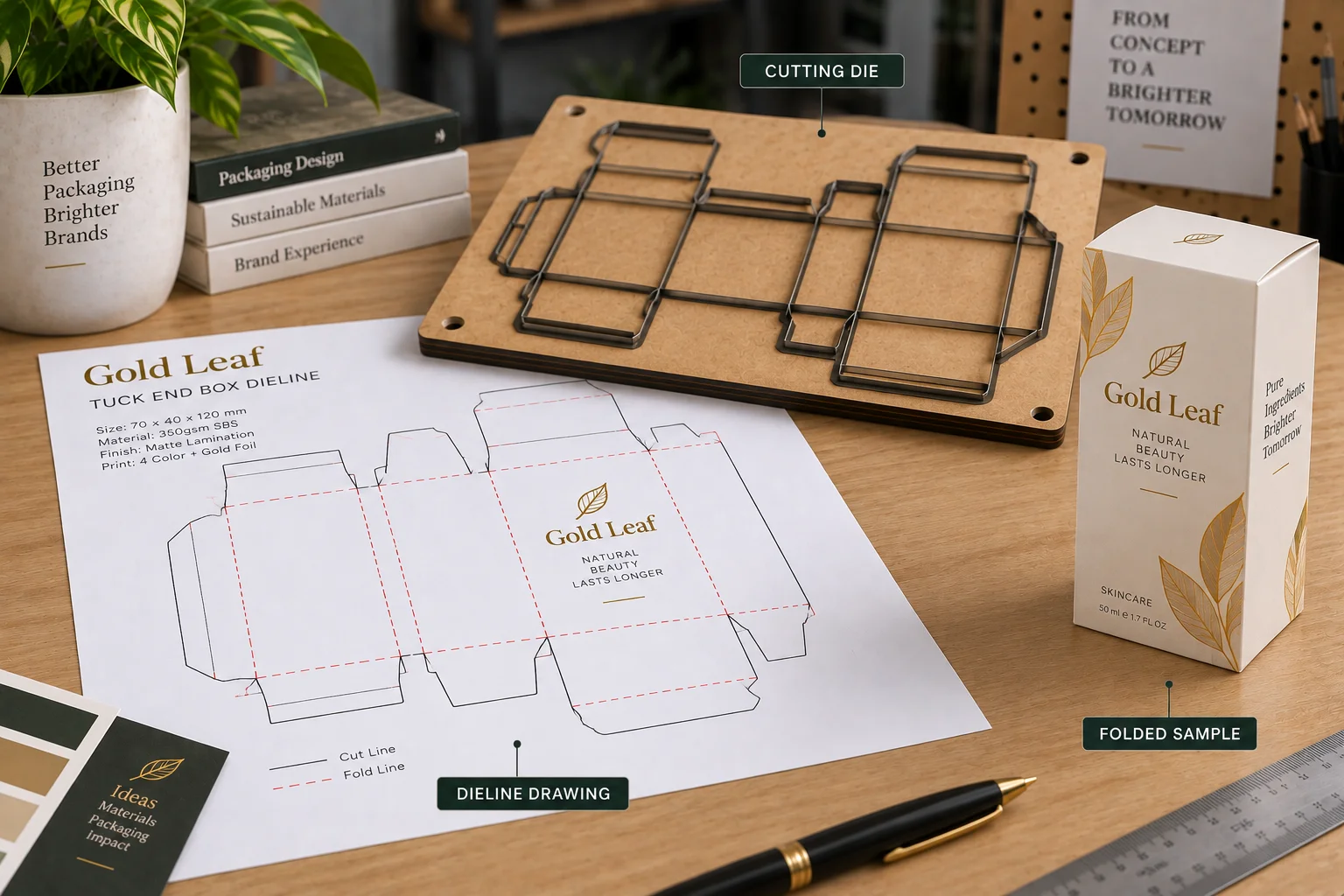
| Die and tooling | $150 to $450 per size | Reusable on repeat orders |
| Printing plates or setup | $80 to $300 | Waived on some digital runs |
| Plain mock up sample | $60 to $150 | 3 to 5 business days |
| Printed pre production sample | $150 to $400 | 7 to 10 business days |
| Structural design or dieline | $0 to $350 | Often free with the order |
| Video production | $800 to $15,000 | Entirely separate from packaging |
On a 100 unit run, $600 of tooling adds $6.00 per kit. On a 500 unit run it adds $1.20. This is the real reason small runs feel expensive.
Tooling is also reusable. If you expect to run the same kit again next quarter, the second run drops meaningfully because the die already exists.
Three complete budgets
Numbers in isolation are hard to use. Here are three real shaped budgets.
Budget A: the volume kit. 500 units, sample led
For a beauty, food, or consumer goods launch going wide.
| Line | Per unit | Total |
|---|---|---|
| Printed corrugated mailer | $2.30 | $1,150 |
| Die cut insert | $1.10 | $550 |
| Product sample | $4.50 | $2,250 |
| Printed card and product sheet | $0.90 | $450 |
| Tissue, sticker, filler | $0.70 | $350 |
| Assembly, 6 touches | $1.50 | $750 |
| Outer shipper and void fill | $1.20 | $600 |
| Domestic shipping | $12.00 | $6,000 |
| Tooling and samples, one time | $0.90 | $450 |
| Total | $25.10 | $12,550 |
Look at where the money is. Shipping is 48 percent of this budget. The box is 9 percent.
Budget B: the considered kit. 250 units, rigid box
For a product launch to a tighter list where the package has to feel deliberate.
| Line | Per unit | Total |
|---|---|---|
| Rigid box, magnetic closure, foil | $8.40 | $2,100 |
| Foam insert | $3.20 | $800 |
| Product | $22.00 | $5,500 |
| Printed booklet and hand written note | $3.10 | $775 |
| Tissue, seal, ribbon | $1.40 | $350 |
| Assembly, 10 touches | $2.90 | $725 |
| Outer shipper | $1.80 | $450 |
| Shipping, mixed domestic and international | $21.00 | $5,250 |
| Tooling and samples, one time | $2.60 | $650 |
| Total | $66.40 | $16,600 |
The product is now the largest line. That is normal and it is fine. Notice that the entire packaging spend is $17.10 of a $66.40 kit, or about a quarter.
Budget C: the video kit. 120 units, hero send
For a launch where the top of the list gets something nobody else is sending.
| Line | Per unit | Total |
|---|---|---|
| 7 inch video box, printed, video loaded | $72.00 | $8,640 |
| Foam tray upgrade | $4.50 | $540 |
| Product | $45.00 | $5,400 |
| Printed insert and hand written note | $3.40 | $408 |
| Assembly, 9 touches | $2.70 | $324 |
| Outer shipper, protective | $2.60 | $312 |
| Shipping, express with battery documentation | $34.00 | $4,080 |
| Tooling, samples, certification handling | $5.20 | $624 |
| Total | $169.40 | $20,328 |
Three budgets. Roughly $12,500, $16,600, and $20,300. The unit costs differ by nearly seven times and the totals differ by less than double.
That is the most useful thing on this page. Press kit budgets are set by how many you send far more than by what you send.
Want these tables filled in for your kit?
Send us the product size and weight, the quantity and the destinations. We will come back with a line by line quote in the same format as the budgets above.
Cost per placement, which is the only number that matters
A kit does not have a cost. It has a cost per outcome.
Take Budget A. 500 kits at $12,550. If eight percent produce coverage, that is 40 placements at $314 each.
Take Budget C. 120 kits at $20,328. Video kits go to a short curated list, so a 30 percent response is realistic. That is 36 placements at $565 each.
Now change one assumption. If the curated list responds at 45 percent because you actually knew those 120 people, it is 54 placements at $376 each. The expensive kit and the cheap kit converge.
The variable that moves this most is not the kit. It is the quality of the list. A great kit to a stale list loses to an average kit to the right forty people, every single time.
Where to cut, and where not to
If you have to bring a budget down, cut in this order.
- The quantity. Always first. Halving the list saves more than every other cut combined.
- Specialty finishes. Foil, soft touch, and spot gloss look excellent and cost real money. One of them is a design choice. Three of them is a bill.
- Printed matter. Replace the booklet with one good card and a QR code.
- Filler and extras. Keep the tissue and the seal. Drop the ribbon.
- Insert material. Foam to molded pulp, or foam to printed paperboard, if the product allows it.
Do not cut these.
- The outer shipper. Cutting it saves $1.50 and risks the whole kit.
- Assembly quality. A rushed kit looks rushed and people can tell instantly.
- Address verification. Cheapest saving available and nobody does it.
- The hand written note. Highest return line per dollar in the entire budget.
- Samples before production. Approving a kit you have never held is how a whole run goes wrong.
The timeline is part of the budget
Rushing costs money in ways that never look like rush charges.
A normal timeline for a kitted send is six to eight weeks. Two weeks for structure and artwork. One to two weeks for samples and approval. Two to three weeks for production. One week for kitting. Then freight.
For a video box add time, because lead time is 20 to 25 business days after the video is approved and the modules are loaded before the boxes are finished.
Compress that and here is what happens. Air freight instead of sea. Overtime at the assembly line. A skipped physical sample, which means a mistake gets discovered in 250 finished units instead of one. Express courier instead of ground for the whole send.
Any one of those adds ten to twenty percent. All four together can add sixty.
Build the timeline backwards from the event date and add two weeks. That two weeks is the cheapest line item in this article.
What people actually get wrong
In rough order of how often I see it.
Budgeting the box and calling it the kit budget. The box is a quarter of it. Sometimes less.
Forgetting freight until the end. Freight is often the largest single line. It should be estimated in week one, not week six.
Ordering the quantity they wish they needed. Then storing 180 kits in a cupboard for eighteen months.
Skipping the physical sample to save four days. This is the one that turns into a real loss.
Shipping DDU internationally. The recipient gets a customs bill for a gift. Some of them refuse it.
Personalizing more than one element. Every extra personalized item multiplies the matching risk at assembly.
Not knowing the dimensional weight. Two inches of unnecessary box can move every parcel into the next bracket.
What to do with the kits you do not send
Almost every project over orders, and the leftovers are worth planning for rather than storing.
Hold back ten percent deliberately. Names get added late. A journalist moves publication. Somebody important is missed on the first pass. A small reserve is more useful than a precise order.
Use them for sales. A press kit is a very good sales sample. The structure, the insert, and the printed matter all work in a meeting.
Use them internally. New hires, partners, and your own team. A kit sitting on a desk inside your company is doing more than a kit in a cupboard.
Do not store them past a season. Printed dates, prices, and product names go stale, and a kit sent six months late with last quarter’s price sheet in it does damage rather than nothing.
The better answer is to order the list you have and reorder if it grows. Tooling is already paid for by then, so a top up run costs meaningfully less per unit than the first one did.
One number to hold on to
If you remember nothing else from this article, remember that the box is roughly a quarter of a press kit and freight is roughly another quarter. Whatever you think the kit costs, the box quote is about a quarter of the answer.
Budget the other three quarters first and the box will look inexpensive rather than surprising.
Frequently asked questions
Before you sign off on the budget
Run through this list before the number goes to finance.
- Every line above is either priced or deliberately excluded
- Freight is estimated on the real outer carton size, not a guess
- Dimensional weight has been checked against the courier’s brackets
- International parcels are quoted DDP
- The quantity is the list you actually have, not the list you hope to build
- A physical sample is scheduled and there is time to reject it
- Tooling is listed separately so the reorder price is obvious
- Assembly is quoted by touch count, not estimated
- There are two spare weeks between the finish date and the event date
Want a real number for your kit rather than a range?
Send us the product dimensions and weight, the quantity, the destinations, and the date it has to land. We will come back with a dieline, a 3D mock up, and a line by line quote that looks like the tables above.
