
Home Custom Cosmetic Boxes Custom Contact Lens Boxes
Main Product

Custom Contact Lens Boxes

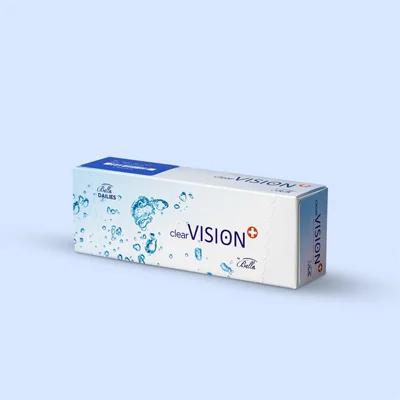
A contact lens is a medical device rather than a cosmetic and that single fact decides the carton. Soft hydrophilic lenses are Class II when they are intended for daily wear and Class III when they are intended for extended wear. The panel therefore carries device wording that no beauty carton ever needs.

We make custom contact lens boxes at The Customized Boxes for lens brands and private label sellers and optical retailers. Contact lens packaging boxes get built from the blister strip you send us and the lens count the carton holds. Everything on the panel comes out of your own regulatory file rather than our judgment. The minimum order is 100 boxes per size and design and shipping is free across the United States. We charge no setup or tooling fee on any order.

Get Custom Quote


  • Custom Sizes Built around your product
  • MOQ 100 Boxes Per size, per style
  • Free Design Support Every file checked
  • No Setup Charges No die or plate fees
  • 8 to 10 Day Turnaround After dieline approval
  • Free US Shipping Across the US

Why Is a Lens Carton a Device Package Rather Than a Cosmetic One?

Classification under 21 CFR 886.5925 turns on the wear schedule the lens is intended for. Daily wear soft hydrophilic lenses sit in Class II and extended wear soft lenses sit in Class III. An extended wear lens needs approval before it reaches commercial distribution.

A cosmetic carton carries an ingredient list and a net quantity statement, while a device carton carries identifiers and prescription wording instead. We print what your regulatory file tells us to print and we do not advise on device classification.

Wear schedule against device class
Intended wear Where the lens sits
Daily wear soft hydrophilic lens Class II under 21 CFR 886.5925
Extended wear soft hydrophilic lens Class III under 21 CFR 886.5925
Extended wear before it reaches the market Approval needed before commercial distribution

Where Do the Rx Statement and the Device Identifier Sit?

Contact lenses are prescription devices and 21 CFR 801.109(b) governs how the label says so. The label carries either the short "Rx only" statement or the full caution statement in its place. That longer wording reads "Caution: Federal law restricts this device to sale by or on the order of a" and then names the practitioner your own labeling specifies.

21 CFR 801.20 requires a unique device identifier on the label of every medical device and on every device package. A retail carton is a device package in its own right, so the identifier prints on the carton and not only on the blister inside it. We hold both elements in fixed panel positions before the artwork wraps around them.

Which Variable Fields Does Every Lens Carton Carry?

A lens carton holds far more variable data than any beauty carton we print. Lot number and expiration date move with the filling batch while base curve, diameter, power and water content move with the lens itself. We leave a clear coding window on the panel so a date coder prints onto white board rather than over artwork.

How Does a Multi Power Range Print on One Dieline?

A lens brand ships one lens design in dozens of powers and every power needs its own carton. One dieline covers the whole range because the blister and the lens count never change between powers. The number of versions then decides which press we quote for the job.

Digital printing carries no plates, so thirty short versions cost close to what one short run costs per box. Offset needs a plate set for every version and a deep run per power spreads that plate cost far enough to win.

How Do You Size a Carton Around a Blister Strip?

No useful catalog figure exists for a lens carton and we would rather say that plainly. A sealed strip changes with the lens count and the sealing film and the tooling your filler runs. Send us the strip you actually fill and we measure the sealed unit before cutting a dieline.

Our guide to measuring a box covers the gap between inside and outside dimensions. A box insert holds the strips in a row where a loose carton rattles.

Which Board, Structure and Finish Does a Lens Carton Need?

Retail lens cartons run on 300 to 350 GSM board, roughly 0.35 to 0.46 mm in caliper. Board coated on one side gives a clean inside face where a pharmacy opens the carton across a counter. Our guide to choosing a packaging material walks through the same decision across the board grades we stock.

Structure follows your filling method more closely than it follows the retail shelf. A carton filled by hand runs as a straight or reverse tuck box with a tight closure. A carton filled on a line runs as a seal end so the flaps glue shut at speed.

Board and structure for a lens carton
Specification What we run
Material White SBS folding carton board coated on one side
Board weight 300 to 350 GSM for retail cartons
Box structure Straight tuck end, reverse tuck end, seal end for a line filled carton
Insert Printed inner tray or partitions holding the blisters in a row

Minimum Order, Lead Time, and Samples

  • The minimum order is 100 boxes per size and design, so each power version counts on its own
  • Folding cartons run 8 to 10 business days after you approve the dieline
  • Rigid and magnetic presentation boxes run 10 to 12 business days after dieline approval
  • A plain sample takes 3 to 5 business days and a printed sample takes 7 to 10
  • Price breaks land at 500 and 1,000 units on the same artwork

Request a Quote

Send your power count and your run quantity per power to our quote form with one sealed blister strip. We measure the strip here and quote a tuck end and a seal end carton on one dieline.

Size Built from your blister strip and the lens count the carton holds
Device Class Soft lenses are Class II for daily wear and Class III for extended wear under 21 CFR 886.5925
Prescription Statement Rx only, or the full caution statement under 21 CFR 801.109
Unique Device Identifier Required on the device label and on every device package under 21 CFR 801.20
Panel Fields Lot number, expiration date, base curve, diameter, power, water content
Material White SBS folding carton board, coated one side for a clean inside face
Board Weight 300 to 350 GSM for retail cartons, roughly 0.35 to 0.46 mm
Box Structure Straight tuck end, reverse tuck end, seal end for a carton filled on a line
Insert Printed inner tray or partitions holding the blisters in a row
Color Scheme CMYK process, Pantone spot colors for the brand mark
Coatings Matte or gloss lamination, aqueous coating
Finishing Options Foil stamping, embossing, debossing, spot UV
Artwork Vector PDF or AI on our dieline, 3 mm bleed, Pantone identified
Minimum Order 100 boxes per size and design
Price Breaks 500 and 1,000 units on the same artwork
Estimated Price Range $0.50 to $3.50 per box for a printed folding carton. The range moves with size, board and finish
Box Sample Flat View, 3D Mock-up, Physical Sampling (On Demand)
Setup and Tooling We do not charge setup or tooling fees. The die and the printing plates are included in your unit price, on the first order and on every one after it
Turnaround Time 8 to 10 business days after you approve the dieline
Shipping Free across the United States
How To Order

How To Order Custom Boxes

Four steps from your first message to boxes on your dock. There are no setup or tooling fees at any stage, and delivery is free across the contiguous US.

  1. Tell Us About Your Product

    Send your product size, the packed weight and the quantity you need. We recommend the board grade and box style that fit, then quote a unit price with no setup fee.

  2. Approve Your Dieline

    Upload artwork as a vector PDF or AI file and we check it against our artwork guidelines for bleed, resolution and Pantone colors. If you have no artwork yet, our team draws it on our dieline for you.

  3. Check a Real Sample

    A plain structural sample takes 3 to 5 business days and a printed sample takes 7 to 10. You hold the actual box before the full run starts.

  4. Production and Free Delivery

    Production runs 8 to 10 business days after you approve the dieline. We pack your boxes and deliver them free across the contiguous US, with export orders quoted separately.

Start Your Quote

Minimum order is 100 boxes per size. Price breaks at 500 and 1,000 units.
Or build your own dieline first on our free dieline generator.

Build Your Dieline Free, Before You Order

Most suppliers send a dieline after you place an order. Ours is a live tool on this site. Pick a box style, type your own dimensions and download the file in a few seconds, with no account and no charge.

The Customized Boxes Download
Reverse Tuck End
reverse tuck · dust flaps Unit
mm cm in
Size
120120–200 6030–60 160100–550
Material Cardstock SBS (White) Generate
Details Ready to download. inside119.4 × 59.4 × 158.9 mm outside120.4 × 60.4 × 160.9 mm sheet375.5 × 309 mm boardSBS · 0.5 mm
CutCreaseBleed
Reverse tuck end dieline, 120 x 60 x 160 mm, from our generatorRed lines are cut, blue dashed lines are crease and the green outline is the bleed edge.
Sheet 375.5 × 309 mm Die 120 × 60 × 160 mm

Open the Dieline Generator

Every box style we make is in the tool, at any size you type. Exports to AI, PDF and SVG, and our design team checks your artwork on that dieline free of charge.

Contact Lens Box Questions Buyers Ask

The answers below cover the device wording and the identifier rule and the variable fields. Send us one sealed blister strip if your question is not answered here.

Does a contact lens box have to say Rx only?

It carries that wording or the longer caution statement that 21 CFR 801.109 sets out. The full version restricts sale to the order of the practitioner your labeling names. We print whichever form your regulatory file specifies and we hold it in one fixed spot.

Does the unique device identifier go on the retail carton?

Yes, because 21 CFR 801.20 requires that identifier on the label of every medical device and on every device package. A retail carton counts as a device package in its own right. The identifier therefore prints on the carton rather than sitting only on the blister.

How many boxes does a full power range start at?

The minimum is 100 boxes per size and design and a power version counts as its own design. A twenty power range on one carton size therefore starts at 2,000 cartons in total. Price breaks at 500 and 1,000 units still apply power by power.

What size should a custom contact lens box be?

It comes from the sealed blister strip and the lens count the carton holds. No catalog figure covers that, because strips change with the filler and the sealing film. Send us the strip you fill and we measure the real unit before cutting a dieline.

Which fields have to stay variable on the panel?

Lot number and expiration date move with every batch and get coded after the carton is printed. Base curve, diameter, power and water content move with the lens itself instead. We leave a clear coding window so a date coder prints onto white board.

Do you advise on device classification for our lenses?

No, and we are plain about that limit from the start. Classification under 21 CFR 886.5925 turns on the wear schedule your own submission states. Your regulatory advisor settles the class and the wording and we print exactly what that file says.

Free of charge

Hold the Box Before You Commit

A quote is easy to compare on a screen. A sample is the only thing that tells you how the board feels in the hand and whether your product sits the way you expect. We send samples free, and you can pick the one that answers your question.

  • Plain Sample Unprinted, so you can judge the structure, the board and the fit around your product. 3 to 5 business days
  • Random Sample A box from recent production, so you can see our print quality and finishes in the hand. Ships from stock
  • Printed Pre-Production Sample Your own artwork on your own board, exactly as the run will be printed. 7 to 10 business days

Order a Sample Box

A flat view and a 3D mock-up come free before anything prints. Already know what you need? Get a quote instead.