





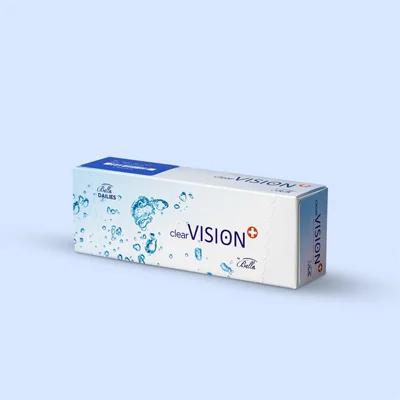


Why Is a Lens Carton a Device Package Rather Than a Cosmetic One?
Classification under 21 CFR 886.5925 turns on the wear schedule the lens is intended for. Daily wear soft hydrophilic lenses sit in Class II and extended wear soft lenses sit in Class III. An extended wear lens needs approval before it reaches commercial distribution.
A cosmetic carton carries an ingredient list and a net quantity statement, while a device carton carries identifiers and prescription wording instead. We print what your regulatory file tells us to print and we do not advise on device classification.
| Intended wear | Where the lens sits |
|---|---|
| Daily wear soft hydrophilic lens | Class II under 21 CFR 886.5925 |
| Extended wear soft hydrophilic lens | Class III under 21 CFR 886.5925 |
| Extended wear before it reaches the market | Approval needed before commercial distribution |
Where Do the Rx Statement and the Device Identifier Sit?
Contact lenses are prescription devices and 21 CFR 801.109(b) governs how the label says so. The label carries either the short "Rx only" statement or the full caution statement in its place. That longer wording reads "Caution: Federal law restricts this device to sale by or on the order of a" and then names the practitioner your own labeling specifies.
21 CFR 801.20 requires a unique device identifier on the label of every medical device and on every device package. A retail carton is a device package in its own right, so the identifier prints on the carton and not only on the blister inside it. We hold both elements in fixed panel positions before the artwork wraps around them.
Which Variable Fields Does Every Lens Carton Carry?
A lens carton holds far more variable data than any beauty carton we print. Lot number and expiration date move with the filling batch while base curve, diameter, power and water content move with the lens itself. We leave a clear coding window on the panel so a date coder prints onto white board rather than over artwork.
How Does a Multi Power Range Print on One Dieline?
A lens brand ships one lens design in dozens of powers and every power needs its own carton. One dieline covers the whole range because the blister and the lens count never change between powers. The number of versions then decides which press we quote for the job.
Digital printing carries no plates, so thirty short versions cost close to what one short run costs per box. Offset needs a plate set for every version and a deep run per power spreads that plate cost far enough to win.
How Do You Size a Carton Around a Blister Strip?
No useful catalog figure exists for a lens carton and we would rather say that plainly. A sealed strip changes with the lens count and the sealing film and the tooling your filler runs. Send us the strip you actually fill and we measure the sealed unit before cutting a dieline.
Our guide to measuring a box covers the gap between inside and outside dimensions. A box insert holds the strips in a row where a loose carton rattles.
Which Board, Structure and Finish Does a Lens Carton Need?
Retail lens cartons run on 300 to 350 GSM board, roughly 0.35 to 0.46 mm in caliper. Board coated on one side gives a clean inside face where a pharmacy opens the carton across a counter. Our guide to choosing a packaging material walks through the same decision across the board grades we stock.
Structure follows your filling method more closely than it follows the retail shelf. A carton filled by hand runs as a straight or reverse tuck box with a tight closure. A carton filled on a line runs as a seal end so the flaps glue shut at speed.
| Specification | What we run |
|---|---|
| Material | White SBS folding carton board coated on one side |
| Board weight | 300 to 350 GSM for retail cartons |
| Box structure | Straight tuck end, reverse tuck end, seal end for a line filled carton |
| Insert | Printed inner tray or partitions holding the blisters in a row |
Minimum Order, Lead Time, and Samples
- The minimum order is 100 boxes per size and design, so each power version counts on its own
- Folding cartons run 8 to 10 business days after you approve the dieline
- Rigid and magnetic presentation boxes run 10 to 12 business days after dieline approval
- A plain sample takes 3 to 5 business days and a printed sample takes 7 to 10
- Price breaks land at 500 and 1,000 units on the same artwork
Request a Quote
Send your power count and your run quantity per power to our quote form with one sealed blister strip. We measure the strip here and quote a tuck end and a seal end carton on one dieline.
 The Customized Boxes