



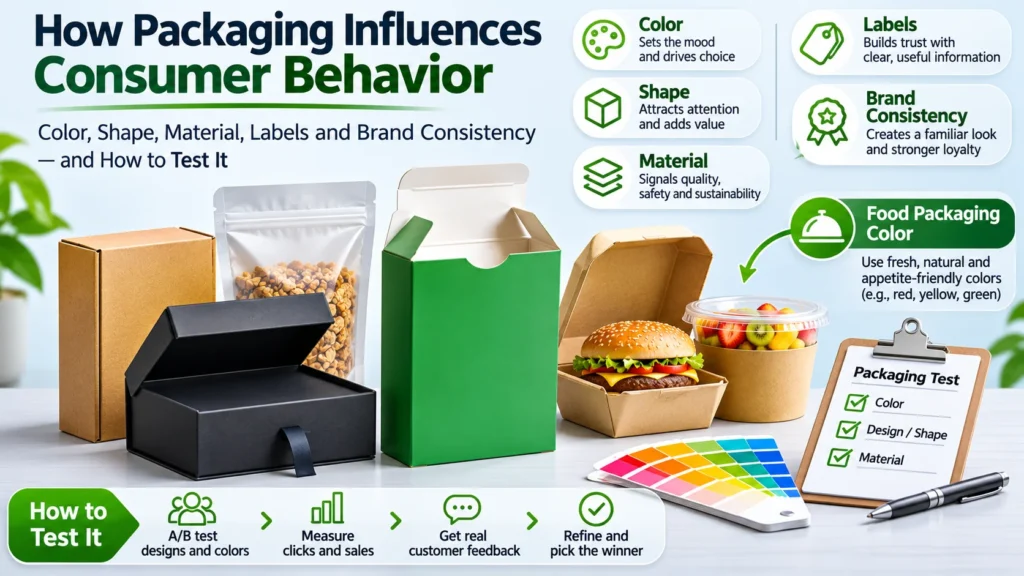
How packaging influences consumer behavior comes down to a few seconds of attention, because a shopper scans a shelf or a product page and decides fast. The box has to say what the product is, who it is for and why it is worth the price.
Packaging does that job through color, shape, material, words and the consistency of the brand across every box. Each of these choices sends a signal before the buyer ever touches the product.
This guide explains how each signal works, why food packaging color matters so much and which factors decide the right material. It ends with a simple way to test whether your own packaging is doing its job.
Key takeaways
- Packaging influences consumer behavior through attention, recognition, expectation, understanding and trust in the first few seconds.
- Packaging color signals the category, flavor and price level before the shopper reads a word.
- In food, shoppers expect color to match flavor, and a window lets the product sell itself.
- Brand color consistency needs Pantone references and a printed proof on the real board.
- Test packaging with two designs and a short run, then keep the signals that win.
How Does Packaging Influence Consumer Behavior?
Packaging influences consumer behavior by catching attention, setting expectations about quality and price and making the product easy to understand and choose.
- Attention: a color or shape that stands out from the shelf earns the first look
- Recognition: a consistent brand color and logo let a repeat buyer find you in seconds
- Expectation: weight, finish and material signal whether the product inside is premium or everyday
- Understanding: clear words tell the buyer what the product is and why it suits them
- Trust: honest claims and complete information remove the last doubt a buyer has before purchase
These signals work together, so a premium finish on a box with confusing words still loses the sale. The strongest packaging lines up every one of these signals behind one clear message for the buyer.
Color is the first signal most shoppers notice, so it is the place to start.
How Does Packaging Color Influence Consumer Choice?
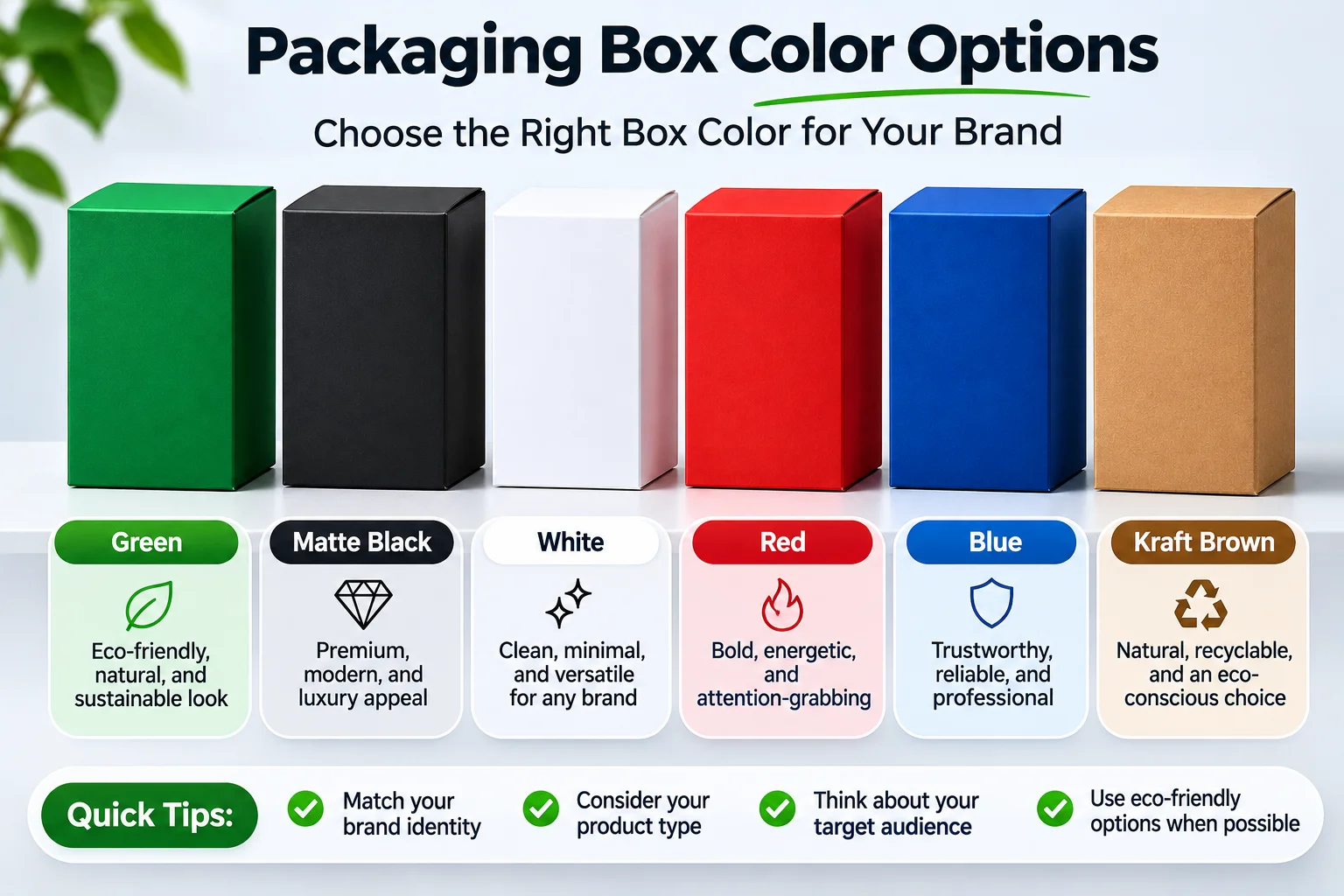
Packaging color influences consumer choice by signaling the category, the flavor or scent and the price level before the shopper reads a single word.
| Color | What shoppers read into it | Where you see it most |
|---|---|---|
| Green | Natural, plant based or healthy | Organic food, supplements and eco products |
| Black | Premium, bold or exclusive | Luxury goods, spirits, tech and fragrance |
| White | Clean, simple and pure | Skincare, dairy and minimalist brands |
| Red | Energy, appetite and urgency | Snacks, sauces and sale packaging |
| Blue | Trust, cool and fresh | Water, cleaning products and pharmacy items |
| Kraft brown | Earthy, handmade or recycled | Bakeries, soap makers and craft brands |
These signals are conventions and not fixed laws, so each category has its own rules. A black box reads as luxury in fragrance, while the same black in a snack aisle can read as a strong flavor.
The safest approach is to learn the color rules of your category first, then break one rule on purpose to stand out. Food is the category where those color rules are strongest and hardest to break.
How Does Food Packaging Color Influence What People Buy?
Food packaging color influences what people buy by telling them the flavor, the freshness and the type of product before they read the label.
In the snack aisle, shoppers expect color to match flavor, such as red for strawberry or spicy and yellow for cheese or lemon. A box that breaks that code makes the shopper stop and check, and many simply move on.
A window or a clear photo of the food does even more work, because buyers trust what they can see. Bakery and candy packaging with a window lets the product sell itself on the shelf.
Our custom food boxes are printed on food grade board with room for a window, a flavor color and the required panels. Color also changes how buyers judge food online, where the box shows up as a small thumbnail.
How Does Packaging Design Influence Consumers Online?
Packaging design influences consumers online through the product thumbnail, the unboxing moment and the photos customers share after delivery.
- Thumbnail: a bold shape and a clear logo still read at the size of a phone screen tile
- Unboxing: a printed interior and a tidy insert turn delivery into a moment worth sharing
- Reviews: customers mention good packaging in reviews, which other buyers read closely before ordering
- Returns: a box that protects the product cuts damage and the returns that follow it
Online, the box is seen twice, once as a picture before purchase and once in the hand after delivery. Both views need to match, or the buyer feels the product was oversold in the photos.
What the buyer feels in the hand comes from shape, size and material, which set expectations of their own.
How Do Shape, Size and Material Change What Buyers Expect?
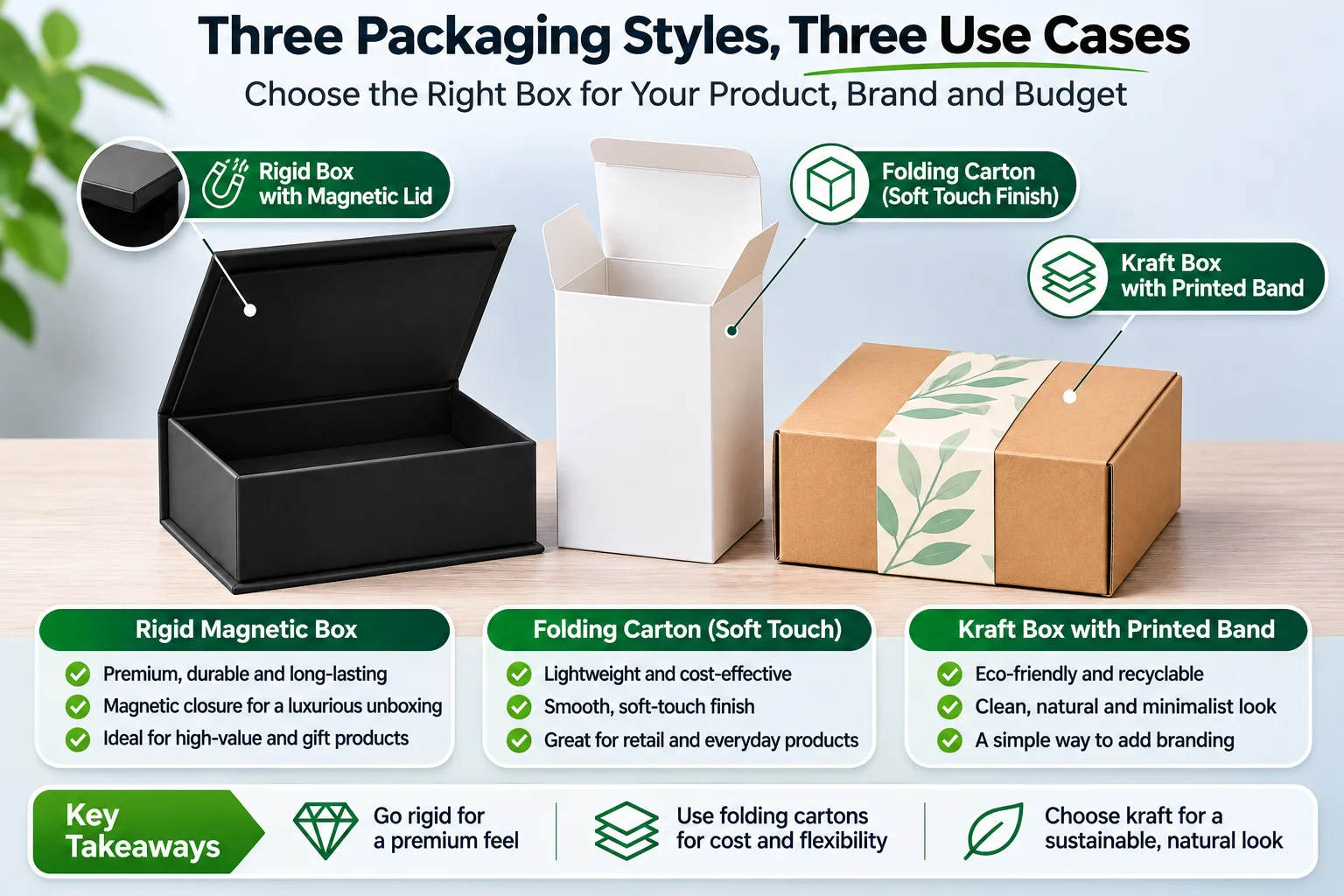
Shape, size and material change what buyers expect because they signal quality, value and care before the box is even opened.
| Choice | Expectation it creates | Good fit |
|---|---|---|
| Rigid board with a magnetic lid | A premium product worth keeping | Jewelry, fragrance, tech and gifts |
| Folding carton with a soft touch finish | A quality everyday product | Skincare, supplements and candles |
| Kraft board with one ink color | A natural or handmade product | Soap, coffee and bakery goods |
| Unusual shape such as a pillow or hexagon | A gift or a limited edition | Favors, samples and seasonal sets |
| A box far larger than the product | Waste and poor value | Nothing, so avoid it |
Weight matters too, because a heavier box feels more valuable when the buyer holds it in the hand. That is why premium brands choose grayboard and fitted inserts even for small products.
Our rigid boxes use 1.5 to 2 mm grayboard for exactly that reason, even on small sizes. Material choice sets the tone, while brand consistency makes sure the tone is recognized every time.
Want packaging that sends the right signal?
Send us your product, your brand colors and the shelf it will sit on, and our team will return a design, a dieline and a price.
How Does Branding Influence the Packaging of a Product?
Branding influences the packaging of a product by fixing the colors, logo and type that every box must repeat, so buyers recognize the brand at a glance.
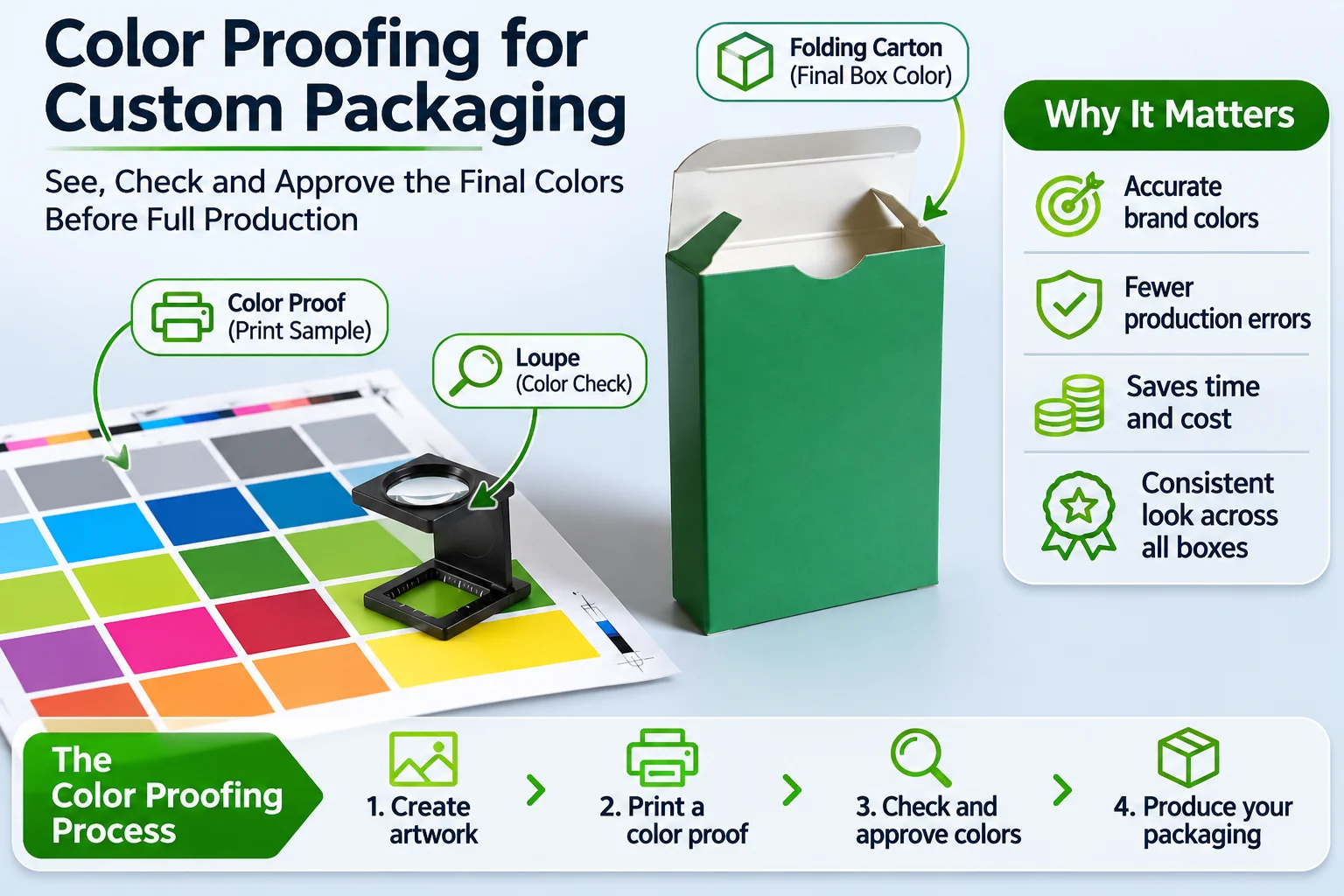
Brand color consistency is the hardest part, because the same color prints differently on white board, kraft board and plastic. A red that looks right on a white carton can turn brown on kraft.
- Name every brand color as a Pantone reference and not just a screen color
- Ask for a printed proof on the actual board before you approve the full run
- Keep one color standard for all box sizes and for every supplier you work with
- Expect kraft and colored boards to shift a color and adjust the artwork for them
- Check the first boxes off the press against your approved proof in natural daylight
Our guide to CMYK printing explains why some brand colors need a Pantone spot ink to stay consistent. A consistent color builds recognition over time, while the words printed on the box build trust.
Which Packaging Information Influences Buying Decisions?
The packaging information that influences buying decisions most is a clear product name, the main benefit, the size or quantity and honest claims the buyer can check.
- Product name and type: the buyer should know what it is from three feet away
- Main benefit: one line that answers why the buyer should pick this product over the next one
- Size and quantity: net weight or count printed on the panel where the buyer looks first
- Ingredients and materials: full lists for food, cosmetics and anything that is worn on skin or eaten
- Claims and marks: only claims you can prove, such as recyclable board or a real certification
Vague claims such as eco friendly with no detail behind them make careful buyers suspicious. A specific line such as printed on recyclable paperboard with water based ink earns more trust than any slogan.
Trust wins the first sale, and the experience after purchase decides whether there is a second one.
How Does Packaging Influence Repeat Purchases?
Packaging influences repeat purchases through an easy opening, a box worth keeping and a design the buyer can find again on the next visit.
A box that tears, sticks or needs scissors leaves a poor last memory of the product. A clean tear strip, a magnetic lid or a smooth tuck tab ends the experience on a good note.
A box the customer keeps for storage keeps your logo in sight for months. A consistent look across your range lets that customer spot your next product on a crowded shelf.
Getting these effects right starts with the material you choose, and several factors decide that choice.
Which Factors Influence the Choice of Materials for Packaging?
The factors that influence the choice of materials for packaging are product protection, brand position, cost per unit, sustainability and any rules for the product.
| Factor | Question to ask | Typical answer |
|---|---|---|
| Protection | How heavy, fragile or greasy is the product? | Corrugated for shipping, grease resistant board for food |
| Brand position | Is the product premium or everyday? | Rigid board for premium, folding carton for everyday |
| Cost per unit | What can the margin carry? | Folding carton at the low end, rigid at the high end |
| Sustainability | Will buyers expect recyclable packaging? | Single material paperboard with water based ink |
| Rules | Does the product need food grade or child resistant packaging? | Food grade board or a tested child resistant component |
Our guide to types of paperboard compares the boards behind each of these answers. Once the material is set, you can test whether the finished box works on real buyers.
How Can You Test Whether Your Packaging Influences Buyers?
You can test whether your packaging influences buyers by comparing two designs in real sales, on a real shelf or in a short survey of your customers.
- Run two product images with different box designs on your online store and compare the click and sale rates
- Place two box versions side by side in a store and count which one shoppers pick up first
- Ask recent customers three questions about what the box told them and what they expected inside
- Order a short test run, even a few boxes, to try a new design before a full order
- Keep the winning signals and change one thing at a time on the next test
Small test runs make this practical, and our custom packaging boxes start from a single box with no minimum order. Testing turns guesses about color and shape into real numbers that you can act on with confidence.
Frequently asked questions
Brands planning a new box design ask us the same questions about how packaging influences buyers, and the short answers are below.
The short version
Packaging influences consumer behavior through attention, recognition, expectation, understanding and trust before a single word is read. Color, shape, material and words each send a signal before the buyer touches the product.
Learn the color rules of your category, keep brand colors consistent with Pantone references and printed proofs, and print only claims you can prove. An easy opening and a box worth keeping are what bring buyers back for a second order.
Test two designs with a short run of boxes and keep the signals that win the most sales. Send us your product and brand colors and our team will return a design, a dieline and a price.
Ready to test a new box design?
We print in any quantity from 1 box with no setup fees, free design support and free shipping across the United States. Production takes 8 to 10 business days after you approve the dieline for your custom boxes.
